
Key facts: Signs your siding needs replacing
Replacement signs: the short answer
When siding needs replacing: the short answer
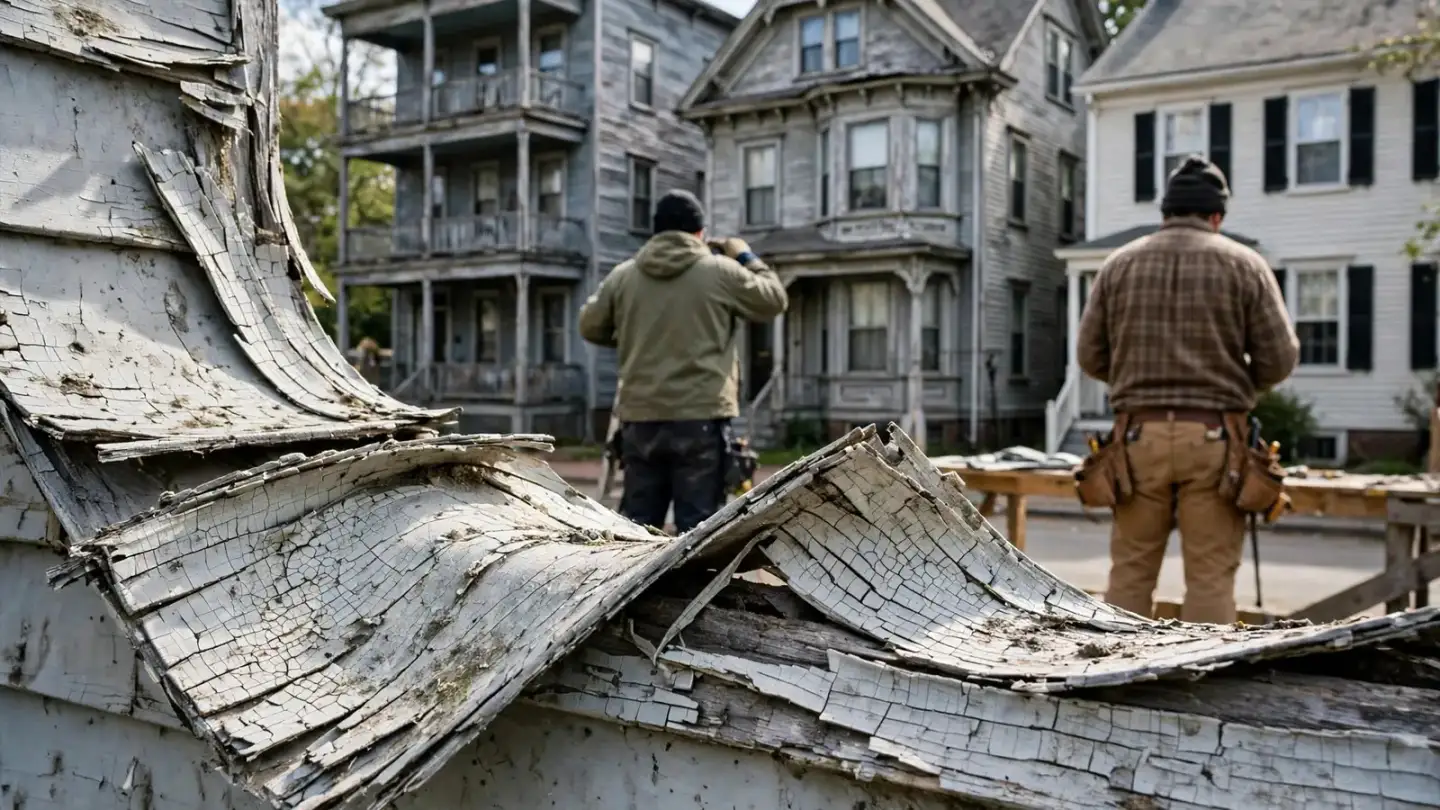
Siding needs replacing when the problems are spread across the house rather than in one spot: rot or soft sheathing on several walls, vinyl that cracks whenever it is touched in winter, paint that fails across whole walls within a few years, or two and three layers stacked up hiding what is underneath. One cracked panel or one rotted board is a repair. A pattern is a replacement.
What you see and what it means
Replacement warning signs at a glance
| What you see | Likely cause | What to do |
|---|---|---|
| Cracks on many vinyl panels | Brittle, sun-aged vinyl | Plan a re-side |
| Soft boards on several walls | Long-term water behind siding | Have walls opened and assessed |
| Paint peeling on whole walls | Moisture pushing out of the wall | Check barrier and flashing; consider re-siding |
| Panels wavy all over | Tight nailing across the job | Re-hang or re-side |
| Old aluminum dented and chalky | End of finish life | Re-side when convenient |
| Stains or mold inside on outside walls | Leaks behind siding | Call promptly |
Signs figure
Ground-level checks
Checks you can safely do from the ground
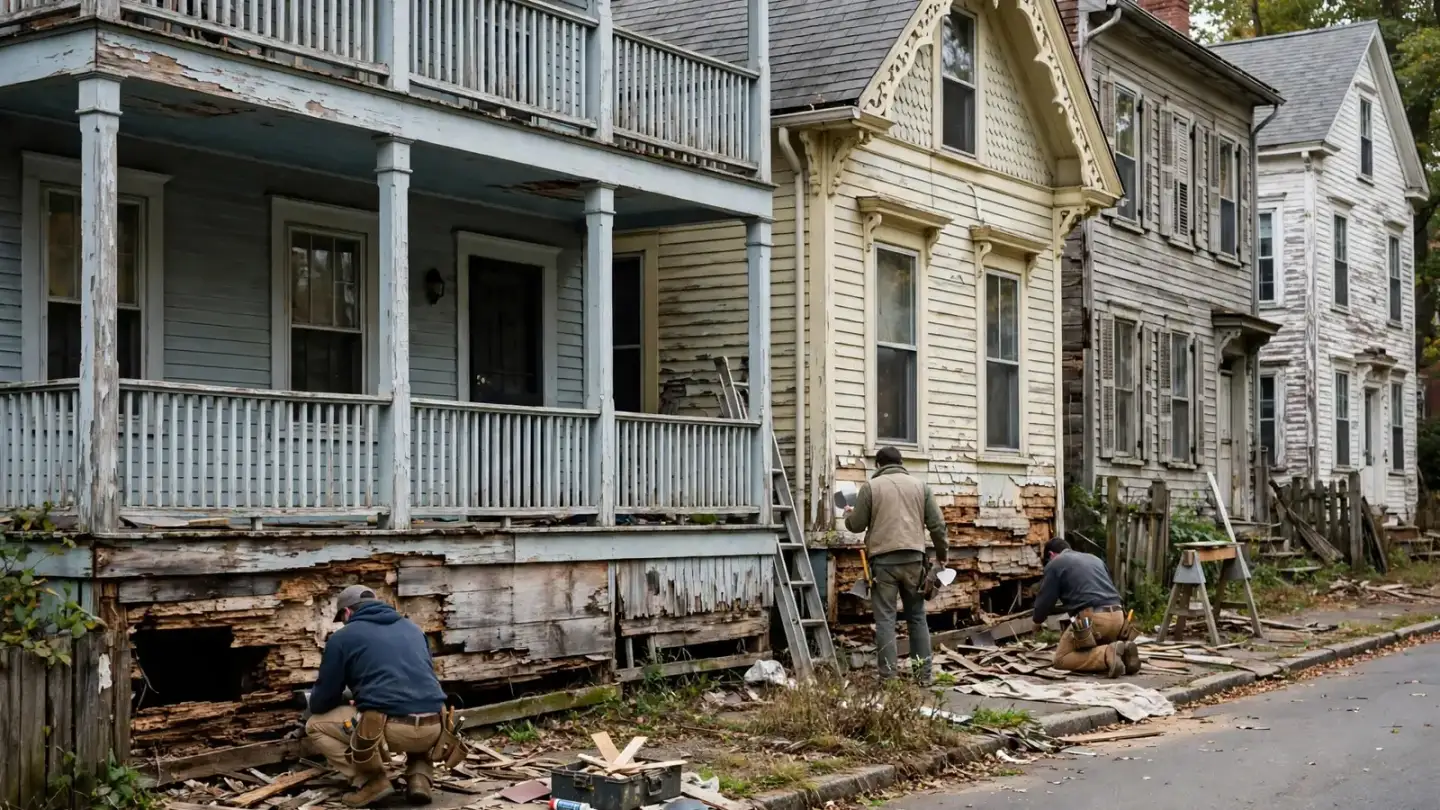
- Walk around the house on a dry day and look along each wall from the corner for waves and bulges.
- Press gently on wood siding at the bottom course and under windows to feel for softness.
- Look at the house in low morning or evening light, which shows cracks and dents.
- Check inside for peeling paint, stains or damp smells on exterior walls.
- Look for siding touching soil, mulch, decks or roofs.
- Count the layers where siding ends at the foundation or near a vent.
Rot spreading on several walls
Rot that appears on more than one side
Rot in one spot usually has one cause, such as a missing drip cap over a window. Rot on several walls means the whole wall system is letting water in or not letting it dry. That might be missing housewrap, failed flashing throughout, or old layers trapping moisture. Fixing one spot at a time rarely catches up with it, which is why widespread rot is the clearest sign that the whole house needs re-siding.
Brittle, faded vinyl
Old vinyl that cracks at a touch
Vinyl ages in the sun. Over years the surface turns chalky, colors fade unevenly from wall to wall, and the material loses flexibility. When a contractor tries to unlock old panels in winter, they snap. At that point even simple repairs damage neighboring panels, and matching is nearly impossible. Replacing the siding gives a uniform, flexible wall again.
Too many layers
Two or three layers of siding already on the wall
Many Boston houses carry vinyl over aluminum or asbestos-cement shingles over original clapboard. Each layer adds weight, traps moisture and pushes window trim deeper into the wall. When a fourth layer is proposed, most contractors recommend stripping instead, so the sheathing can be inspected and flashing done properly.
How a contractor confirms it
How a contractor decides between repair and replacement
- 1
Walk the house
They look at every wall and note the pattern of damage.
- 2
Open test areas
They remove a panel or board in suspect spots to see the barrier and sheathing.
- 3
Check layers and hazards
They identify old layers and whether lead paint or asbestos is involved.
- 4
Compare options
They explain what repair would involve versus re-siding, and what each leaves behind.
Repair or replace siding
Making the call between repair and replacement
If damage is limited to one wall or a few spots, and the sheathing is dry, repair is usually sensible. If the problems repeat around the house, the material is brittle, or layers are hiding damage, replacement is the better long-term fix. Planned window replacements or a wish for better insulation also tip the balance toward re-siding, since both are easiest with the walls open.
Signs on Boston house types
What replacement signs look like on Boston's house types
On a triple-decker, the first signs usually appear on the back and side walls, which see less attention and more weather. Porches stacked three high send water down the wall at every floor line, and the narrow side yards keep walls shaded and damp. Look for rot below porch roofs, stains at floor lines and panels that have dropped out of their lock high up near the cornice.
On a Victorian in Jamaica Plain or Dorchester, decorative shingles on gables and bays are often the first to go. Shingles cup, split and fall out, and the trim around them rots at the joints. Repainting may hide the problem for a season, but shingles that break when touched are telling you the material is spent.
On a mid-century colonial or cape in West Roxbury or Hyde Park, the signs are usually aluminum or early vinyl that has faded, dented and loosened, sometimes over original wood that has never been checked. Bottom courses near driveways and garden beds often show the worst damage.
On Charlestown and South Boston rowhouses, clapboard fronts take weather from the street and the harbor, and party walls limit access to side walls. Paint failure on the front facade is often the most visible sign.
Hidden signs
Signs that only show up inside or after opening the wall
Some of the strongest signs never appear on the outside. Plaster that cracks and stains near windows, wallpaper that lifts on exterior walls, damp smells in closets on outside walls and frost on interior wall surfaces in deep cold all point to problems in the wall. If you see these, mention them on your call. A contractor will usually open a small test area to see the sheathing and barrier.
Insect activity is another clue. Carpenter ants prefer wet wood, so ants around exterior walls or sawdust-like debris near baseboards can mean moisture in the framing.
Prevention
Making new or existing siding last longer
- Keep gutters clean and downspouts directed away from walls.
- Keep soil and mulch below the bottom of the siding.
- Trim shrubs and branches back from the house.
- Re-seal open trim joints each spring.
- Fix small cracks and loose panels before winter.
Tell the contractor
What to tell the contractor when you call
- The age and type of house, and how many stories.
- The siding material and any layers you know of.
- Where the damage is and how long you have noticed it.
- Any interior stains, drafts or damp smells on exterior walls.
- Whether the house is in a historic district.
Replacement questions
Questions about replacing siding
How do I know if my siding is just dirty or actually failing?
Dirt and mildew wash off with a soft brush. Failing siding has cracks, soft spots, waves, loose panels or paint that peels again soon after painting. If cleaning does not change it, it is a material problem.
Can I replace siding on just one side of the house?
Yes, if the damage is limited to that side. Matching color and profile with the other walls is the challenge, especially on older vinyl.
Does old siding affect my energy bills?
Siding itself adds little insulation, but a re-side lets you seal air leaks and add exterior insulation, which can help drafty rooms.
Is it worth replacing siding before selling a Boston house?
That depends on its condition and the market. Badly failing siding can raise concerns for buyers and inspectors. A contractor can tell you whether repairs would address the visible problems.
Should I replace siding and windows together?
It is often the best sequence. New windows can be flashed into the new barrier, and trim can be built to suit the new wall thickness.