

Key facts: Siding after hail or wind damage
Storm damage: the short answer
What to do first after storm damage to siding
Stay safe, then photograph everything, cover any exposed sheathing you can reach from the ground, and check inside for water. Call a contractor to secure higher areas and look behind the damaged panels. Contact your insurer before permanent repairs if you plan to file a claim.
Storm symptoms decoded
Storm damage symptoms and what they mean
| What you see | Likely cause | What to do |
|---|---|---|
| Panels missing | Wind unlocked and tore them off | Cover the area quickly; collect pieces |
| Panels bulging | Lock popped free | Have them relocked before the next storm |
| Cracks on one wall | Hail or wind-blown debris | Photograph; repair or replace that wall |
| Dents in aluminum | Hail | Mostly cosmetic; replace if panels are loose |
| Water stains inside | Water got behind siding | Have the wall opened and dried |
Storm figure
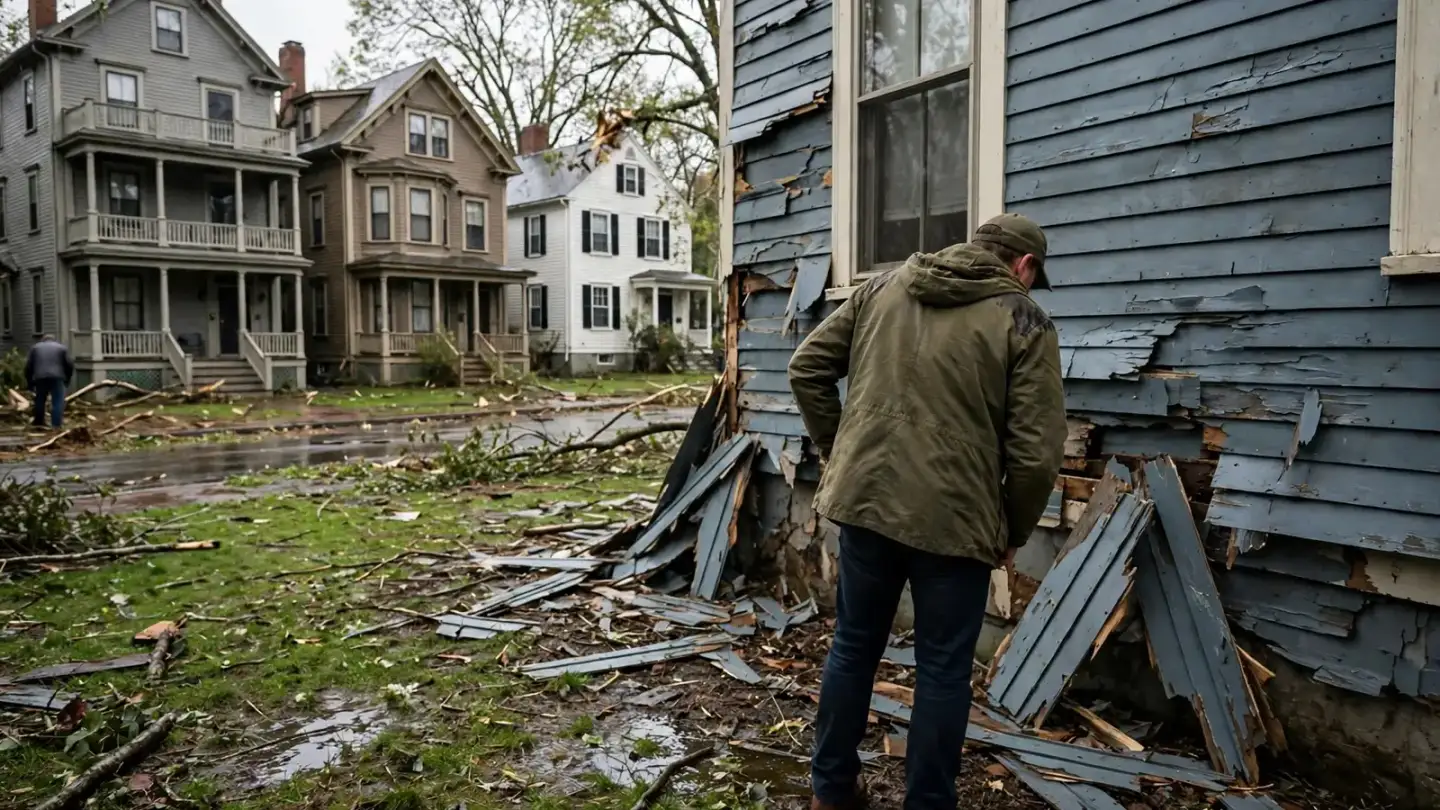
Safe checks after a storm
Safe checks after the storm passes
- Stay away from downed wires and report them to the utility.
- Photograph each wall from a distance and close up.
- Look at the wall that faced the storm first.
- Collect blown-off panels for matching.
- Cover exposed areas you can reach from the ground.
- Check attic and interior walls for water.
Wind damage explained
How wind pulls siding off
Wind pushes on the windward wall and pulls on walls downwind and at corners. Vinyl panels hang on nails and lock into each other, so suction can pop the lock and let a panel flap until it tears. Panels nailed poorly, or old and brittle, go first.
Hail damage explained
How hail cracks siding
Hail strikes the side of the house facing the storm. Vinyl cracks or punctures, especially when cool. Aluminum dents. Painted wood chips. Fiber cement usually resists. Damage often shows best in low-angle sunlight.
How a contractor assesses storm damage
How contractors assess storm-damaged siding
- 1
Secure
Remove or fasten anything loose that could fall.
- 2
Document
Photograph the damage before removal.
- 3
Open
Remove damaged panels to inspect the barrier and sheathing.
- 4
Dry and repair
Replace wet or damaged sheathing and patch housewrap.
- 5
Replace
Install matched siding with correct nailing.
Patch or re-side after a storm
Repair or re-side after a storm
Limited damage on one wall is usually repaired. Damage across several walls, or on old, discontinued siding that cannot be matched, may point toward re-siding. Your insurer's position on matching affects the decision too, so ask before work starts.
Boston storm exposure
Which Boston houses take the most storm damage
Houses facing open water, such as those along the South Boston shore, the East Boston waterfront and Dorchester's coastal edges at Savin Hill and Neponset, take the strongest winds in nor'easters. Hilltop streets in Roxbury and Jamaica Plain catch gusts too, and tall triple-deckers rise above sheltering trees and neighbors. Corner lots and houses at the end of streets that open onto parks or water see more wind than mid-block houses.
Tree-lined streets bring a different risk: limbs. In West Roxbury and Jamaica Plain, many storm calls involve branches that struck siding and gutters rather than wind on the siding itself.
Insurance and storm siding
Working with your insurer after storm damage
Coverage depends on your policy. Sudden wind and hail damage is often covered subject to a deductible, while wear and long-term leaks usually are not. Photograph damage before cleanup, keep blown-off pieces and save receipts for temporary protection. Ask your insurer how the policy handles matching if repaired siding will not match the rest of the wall. A contractor can describe what they find, but the claim decision belongs to the insurer.
Storm damage on older layers
When storm damage exposes older layers
When vinyl blows off an older Boston house, it often reveals aluminum, asbestos-cement shingles or painted clapboard. Paid work disturbing old paint must follow lead-safe practices, and asbestos-cement shingles should be left intact unless a licensed abatement contractor removes them. This can change a simple panel swap into a bigger decision about re-siding the wall.
Preparing for next time
Preparing siding for the next storm
- Clip loose panels back in after each storm.
- Trim tree limbs that overhang the house.
- Secure gutters and downspouts.
- Store or tie down patio furniture and bins before storms.
What to tell the contractor after a storm
What to tell the contractor after a storm
- When the storm hit and which walls were affected.
- Whether anything is exposed now.
- Any interior water.
- Whether you plan to file an insurance claim.
- Whether trees or limbs were involved.
After the storm checklist
A simple checklist for the week after a storm
Day one: stay safe, photograph, cover exposed areas you can reach and check inside for water. Day two or three: call a contractor to secure upper areas and inspect behind damaged panels, and contact your insurer about their process. Within a week or two: have wet sheathing dried or replaced and the wall closed with matched siding. Keep every photo, receipt and note in one folder. Then check the house again after the next storm to make sure the repair held.
Storm guide questions
Questions about siding after storms
Is it safe to leave missing siding until a contractor arrives?
For a short time, if the area is covered. Exposed sheathing absorbs water quickly, so cover it with plastic or wrap and check it after rain.
How do I know hail hit my siding?
Look for cracks, holes or dents concentrated on one side of the house, and check nearby cars, gutters and outdoor equipment for dents.
Should I call my insurer or a contractor first?
Take photos and protect the house first. Then contact your insurer about their process. A contractor can secure and assess the wall in the meantime.
Can I reattach a loose vinyl panel myself?
On the first floor, a loose panel can sometimes be relocked by hand or with a zip tool. Anything higher, or any cracked panel, is best left to a contractor.
Why do storms keep damaging the same wall?
That wall may face prevailing storm winds, have weaker nailing or older panels. A contractor can check how it was installed.
Can a contractor match siding that blew off?
Often, if the profile is still made. Faded colors are harder to match exactly, and contractors may move panels from a hidden wall to make the repair blend.
Do I need a permit to fix storm-damaged siding in Boston?
Replacing siding falls under Boston's Short-Form permit. [3] Temporary protection does not. Historic districts still need approval for visible changes.
What if my neighbor's tree damaged my siding?
Photograph the damage and the tree, then talk to your insurer. Who pays depends on the circumstances and the policies involved.