
Key facts: East Boston
- Eagle Hill in East Boston is listed on the National Register of Historic Places as a historic district, with most of its houses built between about 1834 and 1900 [1].
- Boston's coastal resilience planning for East Boston identifies the neighborhood as vulnerable to sea-level rise and coastal flooding [2].
- Massport's residential sound insulation program, funded with FAA grants, has treated homes near Logan Airport with new windows and doors [3].
- Siding replacement in East Boston needs a Short-Form permit from Boston's Inspectional Services Department [4].
East Boston coverage
East Boston areas covered
The contractor network accepts calls from East Boston's ZIP code. Coverage can change, so call to confirm.
- 02128: all of East Boston, including Eagle Hill, Jeffries Point, Maverick Square, Central Square, Orient Heights and the Day Square area. [1]
East Boston housing
What East Boston's houses are like
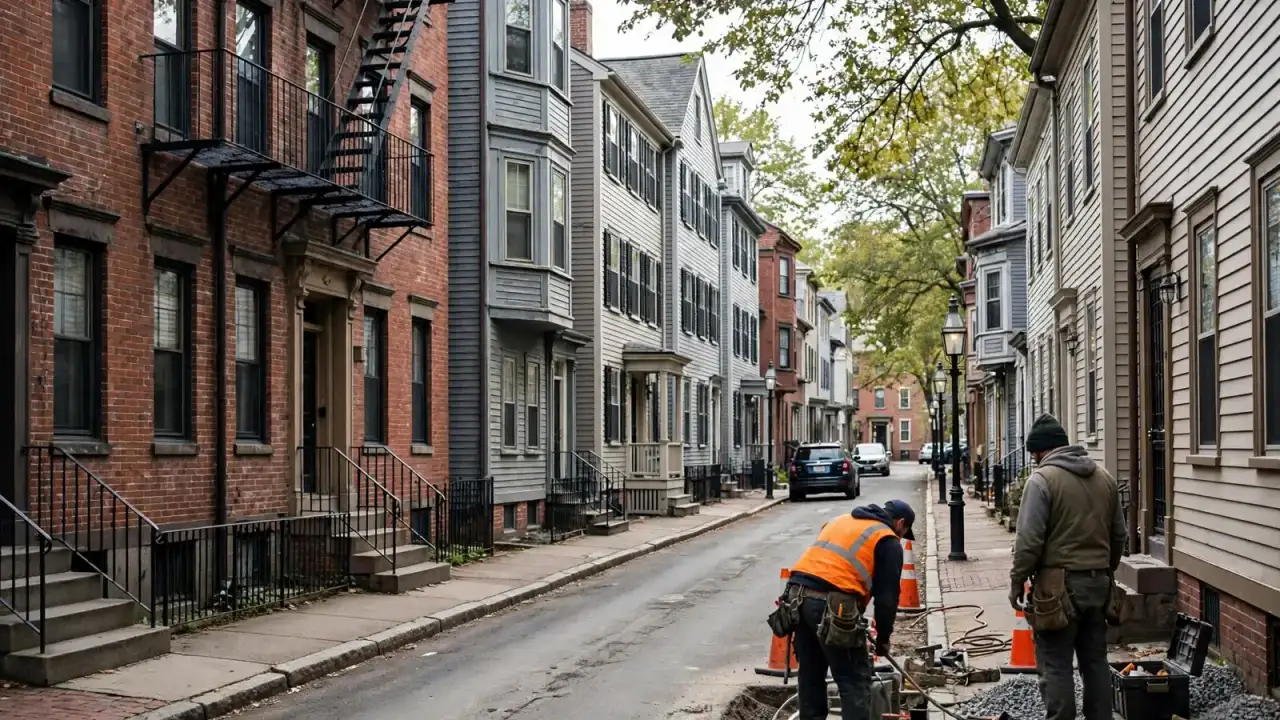
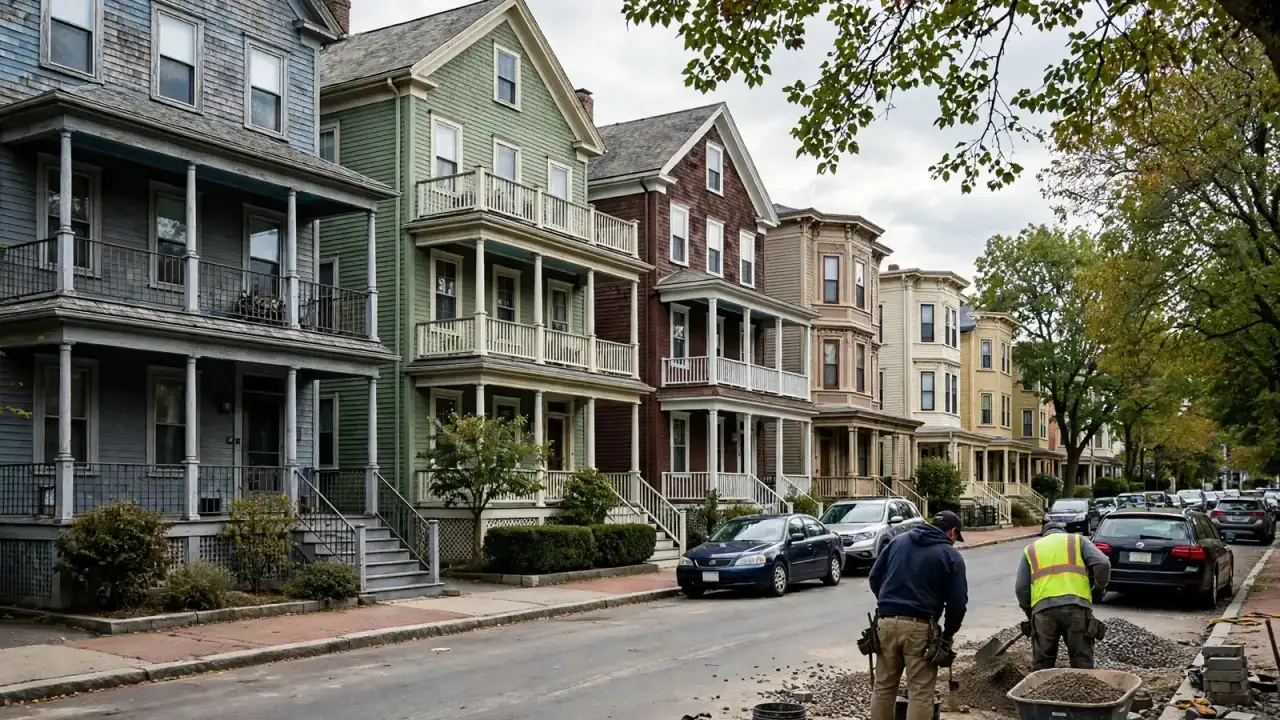
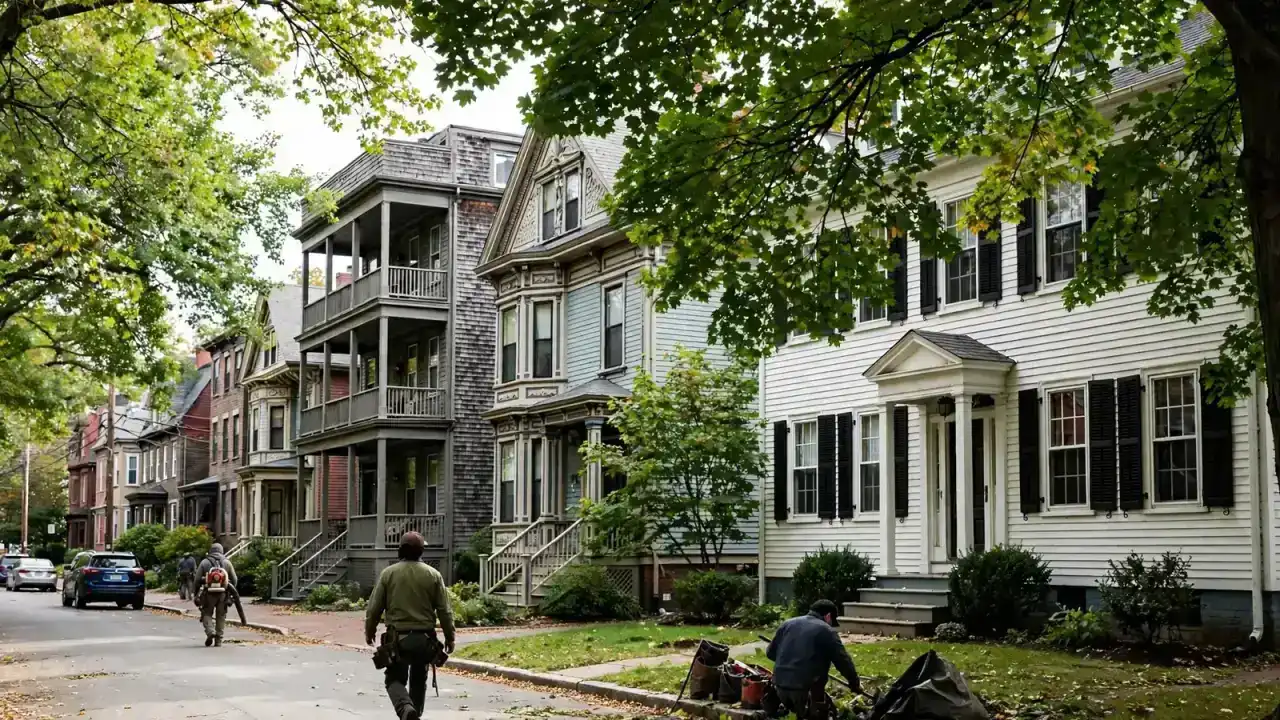
East Boston was laid out in the 1830s on islands that were later joined by landfill. Its oldest streets, around Maverick Square, Jeffries Point and Eagle Hill, filled with wood-frame houses through the mid and late nineteenth century as shipbuilding and port work drew residents. Eagle Hill holds a concentration of Italianate, Greek Revival and Victorian houses, and the area is listed on the National Register of Historic Places.
Later development brought triple-deckers and two-families to the flatter streets around Central Square and Day Square, and single-family and two-family houses to Orient Heights on its hill to the north. Recent years have added many new buildings, especially near the waterfront, clad in fiber cement and panels.
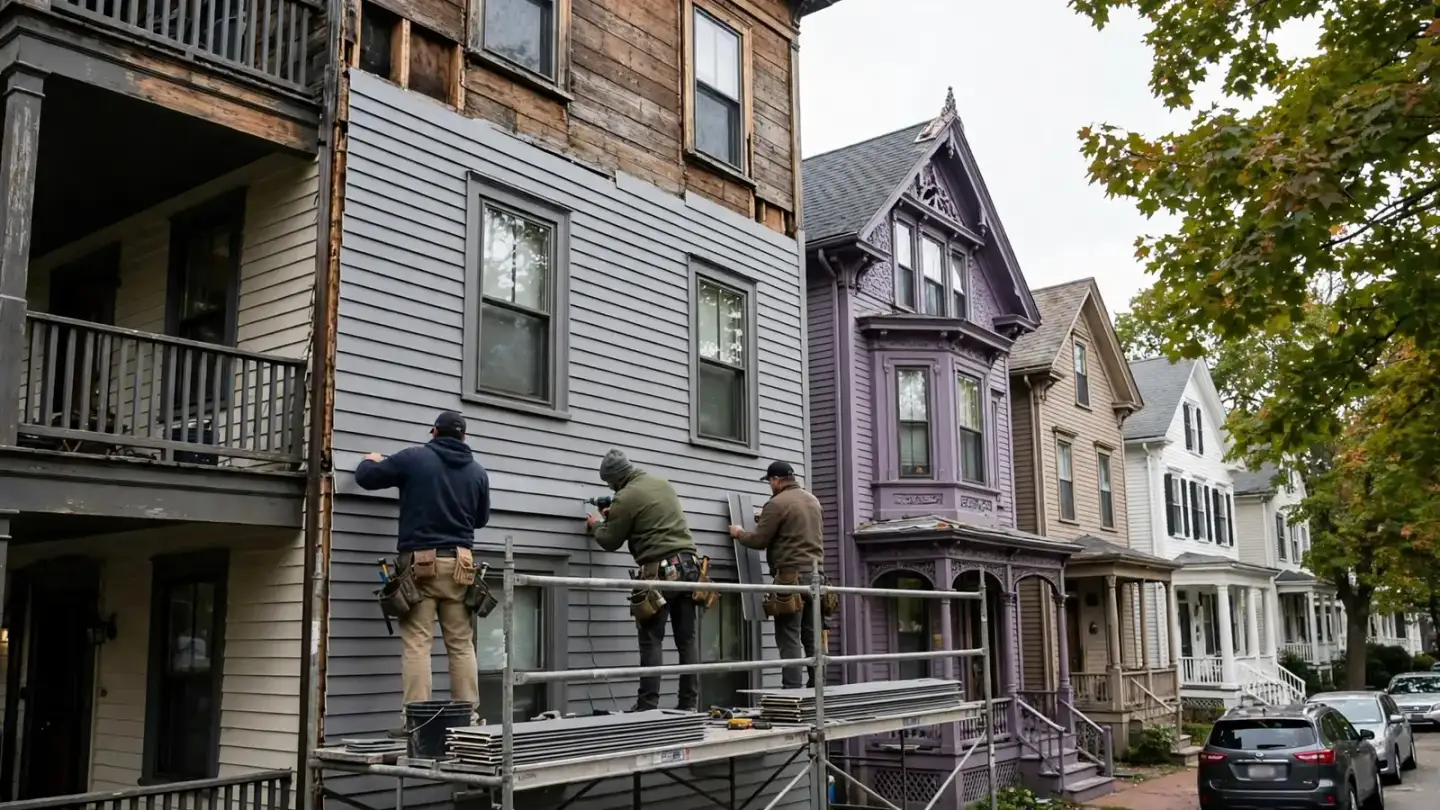
Most older houses were built of wood with clapboard siding, and many were later re-clad in asbestos-cement shingles, aluminum or vinyl. Restoration interest has grown on Eagle Hill, where some owners have removed later siding to reveal original details.
Common East Boston siding problems
Siding problems contractors see in East Boston
These problems come up most often on East Boston houses.
Storm and wind damage
Hilltop and waterfront houses take strong winds during nor'easters.
Read moreSalt-air corrosion
Fasteners, gutters and aluminum trim corrode faster near the harbor.
Read moreOriginal detail hidden under layers
Victorian trim and clapboard on Eagle Hill are often covered by later siding.
Read moreWater at windows
Older window openings, sometimes replaced without new flashing, let water behind siding.
Read more
Eagle Hill siding
Siding work on Eagle Hill's historic houses
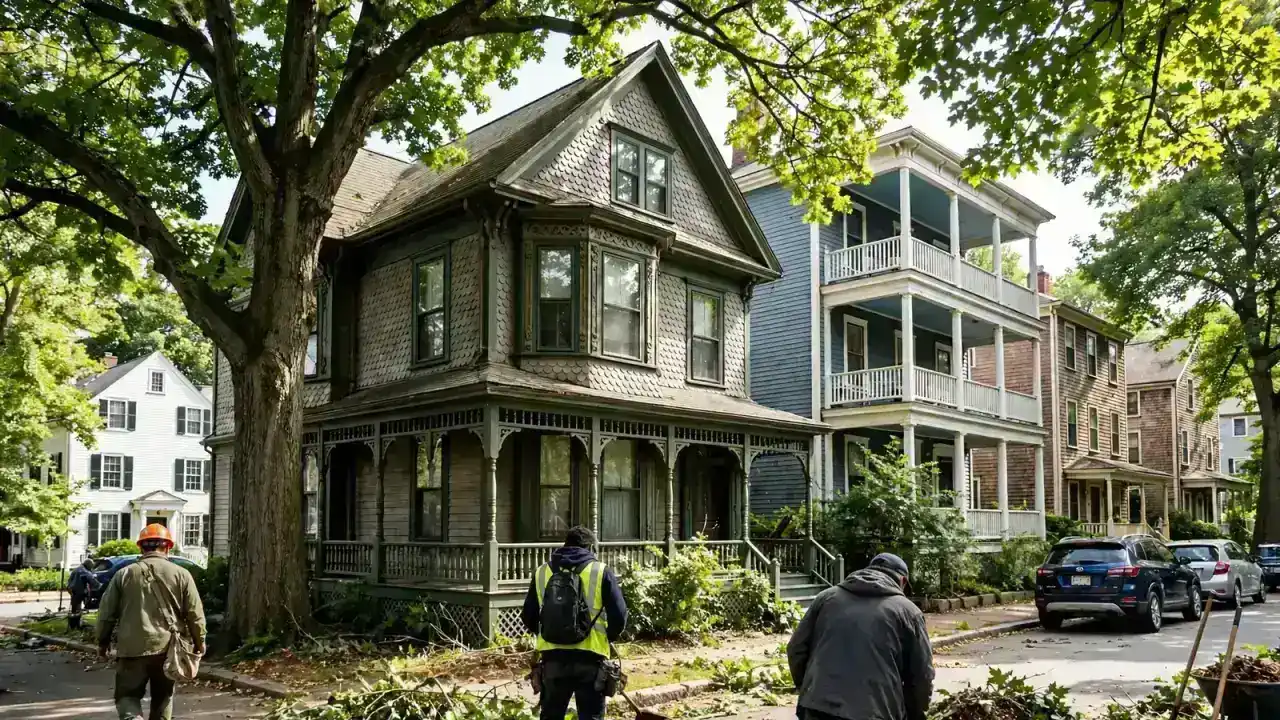
Eagle Hill's houses are among the oldest in East Boston, and many retain original features such as bracketed cornices, window hoods and clapboard with narrow exposure. National Register listing recognizes the area's history but does not by itself restrict private work the way a local Boston historic district does. Still, owners who value the houses' character often choose materials and trim that respect it.
For these houses, repairing original clapboard and trim, or replacing it with matching wood or fiber cement, keeps the character intact. Vinyl can work on rear walls. Where later siding is removed, contractors often find original trim that can be repaired, or the outlines of trim that was removed and can be rebuilt. Lead-safe practices apply throughout, since original paint almost certainly contains lead. [5]
East Boston salt figure
Wind and water in East Boston
Harbor wind, salt and flooding in East Boston
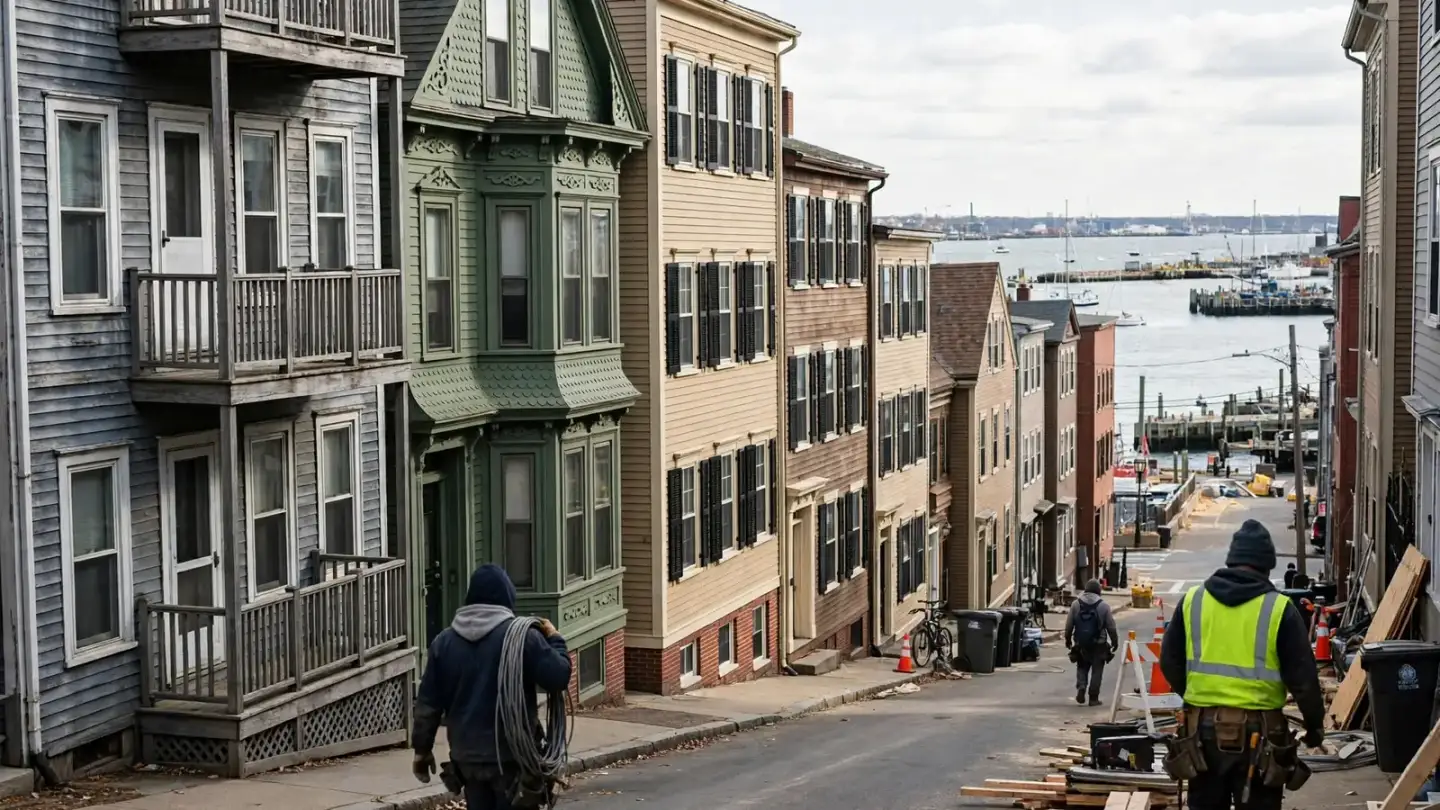
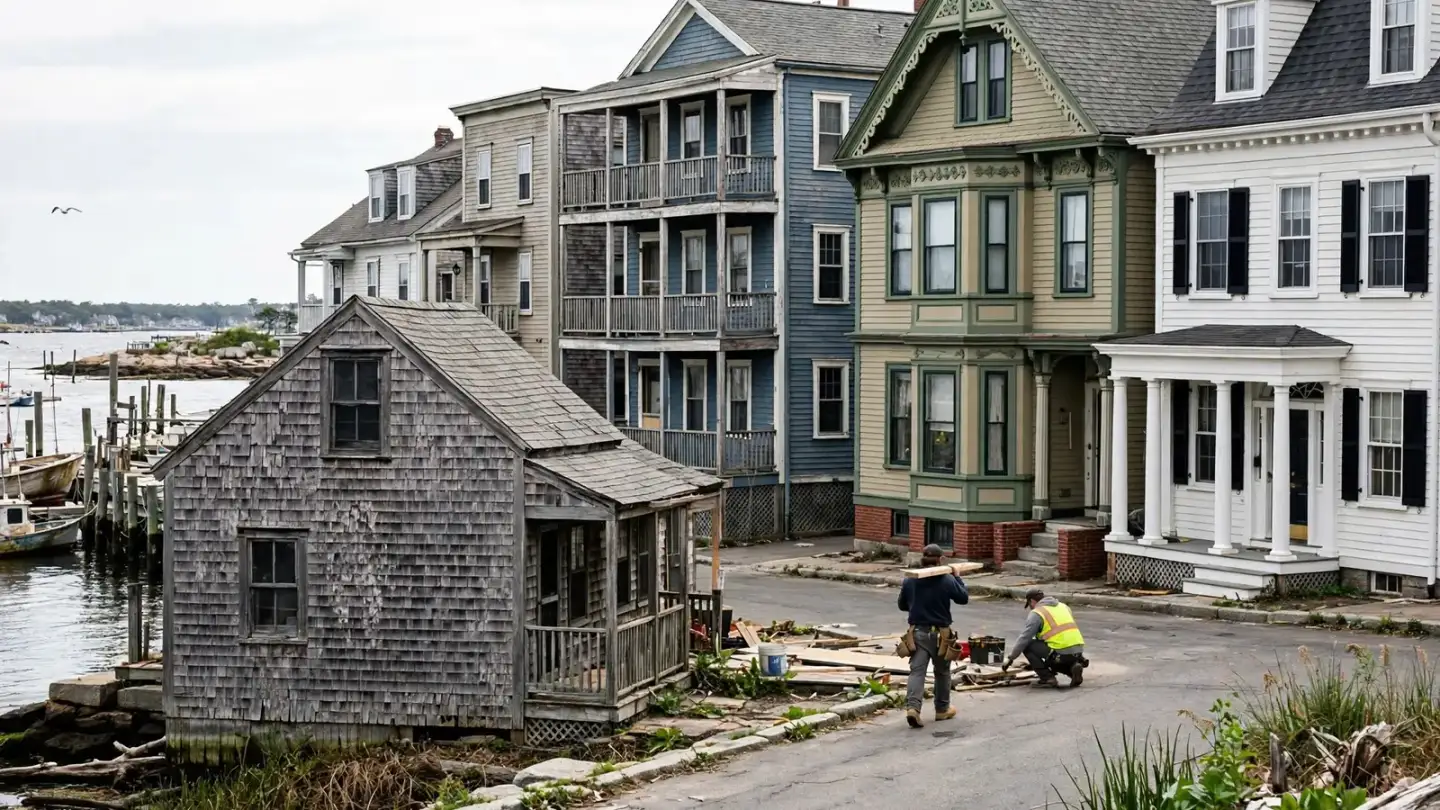
East Boston is surrounded by water on most sides: the inner harbor facing downtown, Chelsea Creek to the north and the outer harbor beyond Logan. Houses on Eagle Hill and Orient Heights sit high and catch strong winds, while houses on Jeffries Point and near the waterfront face salt spray. Coastal storms bring wind-driven rain sideways into walls.
Boston's coastal resilience plans identify East Boston as one of the neighborhoods most vulnerable to coastal flooding, with low-lying areas near the waterfront and the former marshland at risk in major storms. For siding, that means attention to the base of walls in low areas, corrosion-resistant fasteners near the water, and products with strong wind ratings on exposed elevations.
Airport noise and walls
Logan Airport, sound insulation and siding
Many East Boston homes lie under or near Logan Airport flight paths. Massport, with FAA funding, has run a residential sound insulation program for decades, installing acoustic windows and doors in eligible homes. If your home received or may receive treatment, coordinate siding work with it. New windows need to be flashed into the wall, and siding replacement is a good opportunity to make sure window and door openings are detailed correctly.
Siding itself does little for noise, but a re-side with added insulation and air sealing can modestly reduce sound coming through walls. Ask the contractor how they would integrate with existing acoustic windows.
Triple-deckers in East Boston
East Boston's triple-deckers and two-families
Around Central Square, Day Square and the streets between, triple-deckers and two-families dominate. They share Dorchester's patterns: stacked porches, narrow side yards and layered siding. Porch ledgers and roofs are common leak points. Tall walls show waves in old vinyl. Re-siding projects follow the same steps: tear-off, sheathing repair, barrier, flashing at every porch and window, and new siding.
Older layers in East Boston
Old paint and asbestos shingles in East Boston
Most older East Boston houses predate 1978, so original paint likely contains lead, and paid work disturbing it must follow EPA lead-safe practices. Asbestos-cement shingles are common under later siding and should be left intact or removed by a licensed abatement contractor.
Permits in East Boston
Permits and rules for East Boston siding work
East Boston is part of the City of Boston, so siding replacement needs a Short-Form permit from Inspectional Services, with electrical permits for any fixture changes. [4] If your property has an individual Boston Landmark designation, visible changes need Landmarks Commission review. National Register listing on Eagle Hill does not by itself trigger local review for private work, but check your property's status.
East Boston borders Winthrop and Revere, which are separate towns with their own building departments. Houses near Orient Heights or Suffolk Downs should confirm jurisdiction.
Planning an East Boston visit
Planning a siding visit in East Boston
- 1
Hills and stairs
Many Eagle Hill and Orient Heights streets are steep, which affects staging and material delivery.
- 2
Parking
Ask about street occupancy permits for dumpsters.
- 3
Sound insulation
Mention any Massport window treatment so siding can be coordinated with it.
- 4
Historic details
Point out original trim or clapboard you want to keep.
- 5
Flood exposure
Mention if your street floods in storms.
- 6
Photos
Take photos of each wall, especially those facing the water, plus close-ups of corroded trim, gaps at windows and any original details, so the contractor can plan before visiting.
- 7
Neighbors
On tight streets, let neighbors know when staging will go up and how long it will stay.
East Boston house types
East Boston house types and siding notes
| House type | Where common | Siding notes |
|---|---|---|
| Nineteenth-century wood houses | Eagle Hill, Jeffries Point | Original details, lead paint, restoration |
| Triple-decker and two-family | Central Square, Day Square | Stacked porches, layered siding |
| Single and two-family | Orient Heights | Hilltop wind, full re-sides common |
| New construction | Waterfront | Fiber cement and panels, coastal detailing |
| Waterfront older houses | Jeffries Point | Salt air, corrosion-resistant fasteners |
Choosing materials in East Boston
Siding materials that suit East Boston
Near the water, fiber cement with corrosion-resistant fasteners and PVC trim holds up well and resists wind-driven debris. Vinyl with strong wind ratings works on triple-deckers and two-families. On Eagle Hill, wood or fiber cement that respects original proportions suits the houses. Lighter colors resist fading under strong sun reflected off the water.
Jeffries Point and Maverick
Siding near Jeffries Point and Maverick Square
Jeffries Point is one of East Boston's oldest areas, a short walk from the harbor and close to the airport. Its narrow streets hold small wood houses and rowhouses with little room between them. Salt air, harbor wind and tight access shape siding work here. Maverick Square's surrounding streets mix older houses with new development. Contractors working here plan for compact staging and careful protection of neighbors' property.
Orient Heights siding
Siding on Orient Heights homes
Orient Heights rises at East Boston's northern end, with single-families and two-families on hillside streets. Houses there catch wind from the outer harbor and Belle Isle Marsh area. Many were built in the twentieth century and have been re-sided with vinyl. Full re-sides and storm repairs are the most common requests.
East Boston winters
Winter weather on East Boston walls
East Boston's exposure means winter storms arrive with full force: wind off the water, sleet and wet snow. Siding on windward walls takes the brunt. Ice forms on porches and stairs, and meltwater runs down walls. Check after each major storm for lifted panels and damaged trim.
East Boston sections up close
Siding notes for East Boston's sections
- Eagle HillNineteenth-century wood houses on a hill above Chelsea Creek, many with original trim under later siding. Restoration-minded owners choose wood or fiber cement and careful lead-safe prep.
- Jeffries PointOne of the oldest parts of East Boston, with small wood houses on narrow streets close to the harbor and airport. Salt air, compact staging and noise-treated windows are common factors.
- Maverick Square areaOlder houses beside new development near the waterfront and the Blue Line. Expect a mix of renovated and original buildings.
- Central Square and Day SquareTriple-deckers and two-families on flatter streets, with stacked porches and layered vinyl.
- Orient HeightsHillside single-families and two-families facing the outer harbor and marsh, with strong winter winds.
Original trim on Eagle Hill
Recovering original trim on Eagle Hill houses
When later siding comes off an Eagle Hill house, contractors sometimes find original cornice brackets, window hoods and corner boards still in place underneath, or their outlines on the old clapboard. Owners can choose to repair those pieces, replicate them in wood or PVC, or simplify. Replicating original trim is more work but restores the house's proportions and character, which matter on a street recognized for its history.
Repairing original wood trim usually means consolidating or replacing rotted sections, priming all faces, flashing horizontal surfaces and painting. On pre-1978 houses, all of this happens under lead-safe practices.
New construction in East Boston
Siding on newer East Boston buildings
Recent waterfront and infill projects in East Boston use fiber cement lap, panels and other modern claddings, often over rainscreen systems. These buildings are usually managed by associations or property managers. If a newer building shows leaks, cracked panels or failing sealant, the cause is often an installation detail at windows, balconies or panel joints. Repairs may involve the original manufacturer's requirements, so the association should share product information with the contractor.
Hills, stairs and access in East Boston
Staging on East Boston's steep streets
Eagle Hill and Orient Heights have some of the steepest streets in Boston. Staging on a slope needs leveling and solid footing, and material delivery can be awkward when trucks cannot park close. Crews may need to carry siding up stairs and through narrow passages. Ask the contractor how they will stage the house and where material will be stored during the job.
Coastal flood details
Wall details for flood-prone East Boston streets
On low-lying streets where water has reached homes in storms, the bottom few feet of a wall need extra thought. Contractors may recommend water-tolerant materials near grade, a drainage gap behind siding, and sheathing and insulation that dry out if wetted. Flood vents and elevation are bigger decisions beyond siding, but good wall details limit damage when water comes. Check flood maps and the city's coastal resilience plans for your street.
Gutters and downspouts in East Boston
Gutters, downspouts and windy weather
Wind off the harbor can tear gutters loose and blow rain sideways past them. Gutters fastened with corrosion-resistant hangers and downspouts strapped securely hold up better. Downspouts should discharge away from foundations, especially on low-lying streets where water already collects. A siding project is a good time to replace failing gutters so the new walls stay dry.
Timing East Boston work
Scheduling a siding project in East Boston
Spring and fall work best for exposed hillside and waterfront houses in East Boston. Winter storms bring strong winds that stop work on staging, and summer brings heat and occasional thunderstorms. Coordinate with any Massport sound insulation work, permit timing and abatement before choosing dates.
Insulation and comfort in East Boston
Comfort upgrades during an East Boston re-side
Older East Boston houses are often drafty and lightly insulated. Re-siding allows exterior insulation and air sealing, which make rooms more comfortable in windy winters and can modestly reduce outside noise. If acoustic windows have been installed, air sealing around them preserves their benefit.
Condo buildings in East Boston
Siding on East Boston condominiums
Many East Boston triple-deckers have been converted into condominiums. Exterior walls are usually common property, so the association decides on siding repairs and replacement. Owners should start with the association, which can arrange one plan for the building.
East Boston porches and stairs
Porches and exterior stairs in East Boston
Like Dorchester and South Boston, East Boston's multi-family houses have rear porches and stairs that connect to walls at many points. Missing flashing at porch ledgers and roofs causes much of the hidden rot found during re-siding. Ask the contractor to check every porch connection when the wall is opened.
Chelsea Creek side of East Boston
Houses near Chelsea Creek and the inner harbor edge
The northern and western edges of East Boston face Chelsea Creek and the inner harbor, with industrial and port uses along parts of the shoreline. Houses on the streets above the creek catch wind funneling along the water and may see more dust and grime on siding from nearby activity. Regular washing and durable finishes help siding there keep its appearance. Corrosion-resistant fasteners are worth considering anywhere within sight of the water.
Choosing an East Boston contractor
Questions to ask an East Boston siding contractor
Ask the contractor whether they have worked on houses near the water and on older wood houses with original trim. Ask how they handle lead-safe practices and asbestos shingles, what fasteners and trim they use near salt air, and how they would stage your house on its street. Ask who files the Short-Form permit and whether they will check for any landmark designation. Check their Massachusetts Home Improvement Contractor registration on the state's Contractor Hub, and get the scope, materials and schedule in writing.
After storms in East Boston
Checking East Boston walls after a storm
After strong storms, look at the walls facing the harbor and the tops of hillside houses first. Check for lifted panels, loosened corner posts and gutters pulled away by wind. In low-lying areas, check the base of walls for water marks or debris left by flooding. Photograph damage and call before the next storm arrives.
East Boston materials near the airport
Dust, exhaust and siding near Logan
Houses close to the airport and highways may collect more grime on siding than houses elsewhere. Smooth, factory-finished surfaces clean more easily than textured ones. Gentle washing once or twice a year keeps colors fresh. When choosing colors, mid-tones hide dirt better than very light or very dark shades.
Wood siding in East Boston
When wood clapboard still makes sense
On Eagle Hill and Jeffries Point, some owners choose new wood clapboard to match original houses. Wood remains repairable and authentic, but near salt air it needs good primer, quality paint and regular upkeep. Back-priming boards and using corrosion-resistant nails help wood last near the water.
East Boston siding questions
Questions about siding in East Boston
Is my Eagle Hill house restricted by historic rules?
Eagle Hill is listed on the National Register, which recognizes its history but does not by itself restrict private work. Check whether your property has any local Boston Landmark designation, which would require review.
What siding works best near the harbor in East Boston?
Fiber cement and wind-rated vinyl both work, with stainless or galvanized fasteners and PVC trim to resist salt corrosion.
Should I coordinate siding with Massport sound insulation?
Yes. If your windows were or will be replaced through the program, coordinate so window flashing and siding work together.
Do I need a permit to re-side in East Boston?
Yes. Siding replacement needs a Short-Form permit from Boston's Inspectional Services Department.
My street floods in big storms. Does that affect siding?
It can. Ask about materials and details at the base of walls that tolerate wetting and drain well.
Are East Boston triple-deckers different from Dorchester's?
They are similar, with stacked porches and layered siding, though many in East Boston face more salt air and wind.
How do I check a contractor in Massachusetts?
Ask for their Home Improvement Contractor registration and check it on the state's Contractor Hub.
Does airport noise affect what siding I should choose?
Siding has little effect on noise. Insulation and air sealing during re-siding help a little; windows and doors matter most, which is why Massport's program focuses on them.
Are hillside houses harder to re-side?
Steep lots need more careful staging and material handling, which can add time. Ask how the crew will set up on your slope.
Should I wash salt off my siding?
Yes. Rinsing harbor-facing walls gently with fresh water once or twice a year removes salt film and slows corrosion of fasteners and trim.
What should I tell the contractor about my East Boston house?
Your section of East Boston, the type of house, which walls face the water, any flooding history, any Massport window work and what damage you see.
Can original clapboard under my vinyl be saved?
Sometimes. If it is sound, it can be repaired and painted. Lead-safe practices apply to any paint disturbance.