
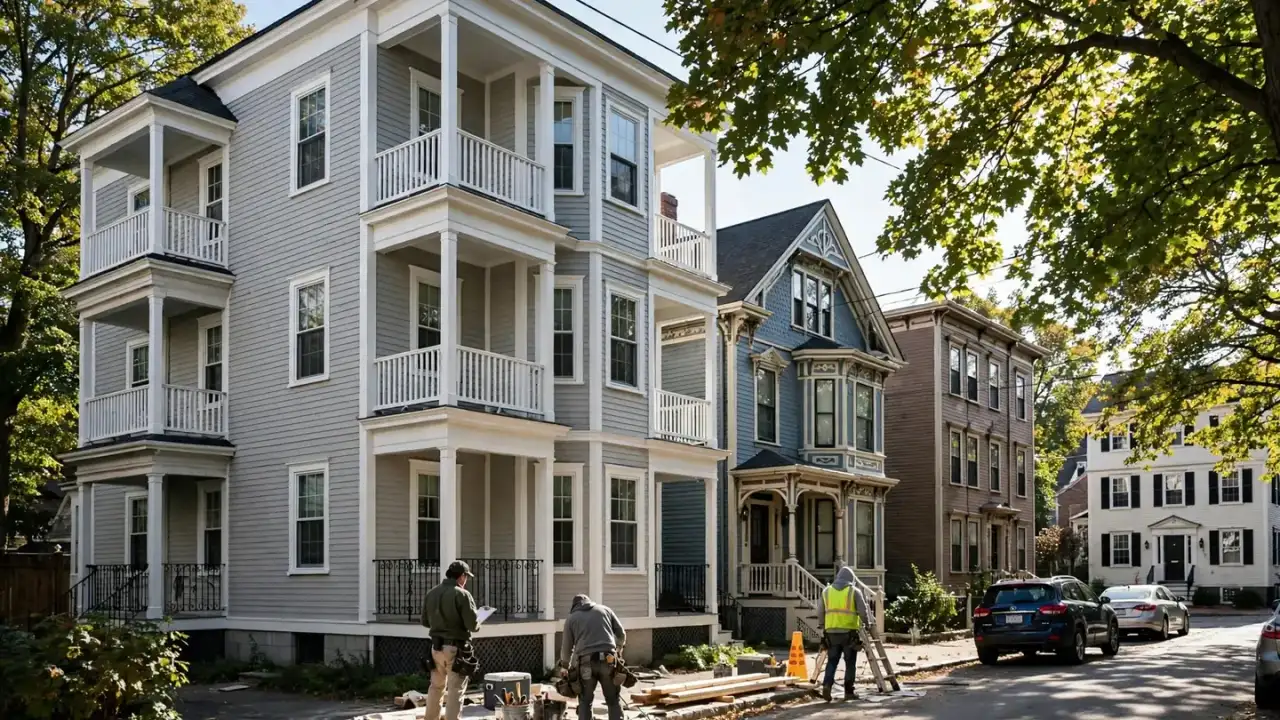
Boston siding repair and replacement
Boston siding contractorsfor triple-deckers, rowhouses and colonials
Loose clapboards after a nor'easter, rot behind old aluminum, or a whole triple-decker that needs new skin: call and your own call is put through to an independent local siding contractor who talks it over with you right then.
A call-in referral line. We do not do the work ourselves.
- Repair, re-siding and storm work
- Vinyl, fiber cement, cedar and trim
- Boston neighborhoods from Charlestown to Hyde Park
- No forms and no follow-up marketing
- Call-in onlyYour call is connected straight to an independent contractor. Nothing to fill out.
- Boston housing know-howContent written around triple-deckers, rowhouses and wood-frame colonials.
- Permit-awareWe explain the Short-Form permit and historic review before work starts.
- No upsell scriptsPlain advice on repair versus full re-siding.
Key facts: Boston siding contractors
- Boston treats re-siding a home as minor work that still needs a Short-Form building permit, and historic districts add Landmarks Commission review [1].
- In Massachusetts, contractors working on existing one-to-four unit owner-occupied homes must hold a Home Improvement Contractor registration [2].
- Federal lead-safe rules apply when paid work disturbs paint on homes built before 1978, which covers most Boston triple-deckers [3].
- An estimated 15,000 triple-deckers were built in Boston and nearby cities between 1880 and 1930 [4].
Before and after ideas
Six common Boston siding projects
Illustrative examples of the work people call about most. These are AI-generated images used to show the type of change, not photos of completed jobs.
- BeforeAfter
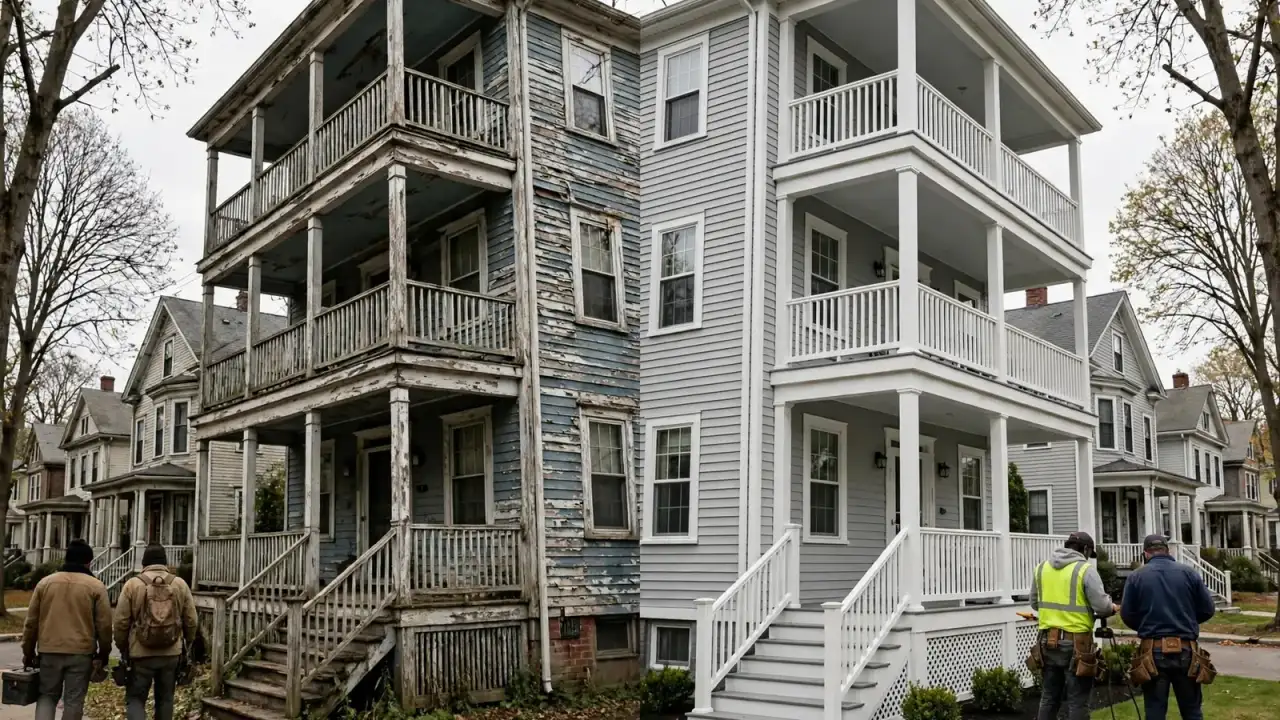
Triple-decker re-side
Peeling clapboard to low-maintenance vinyl.
- BeforeAfter
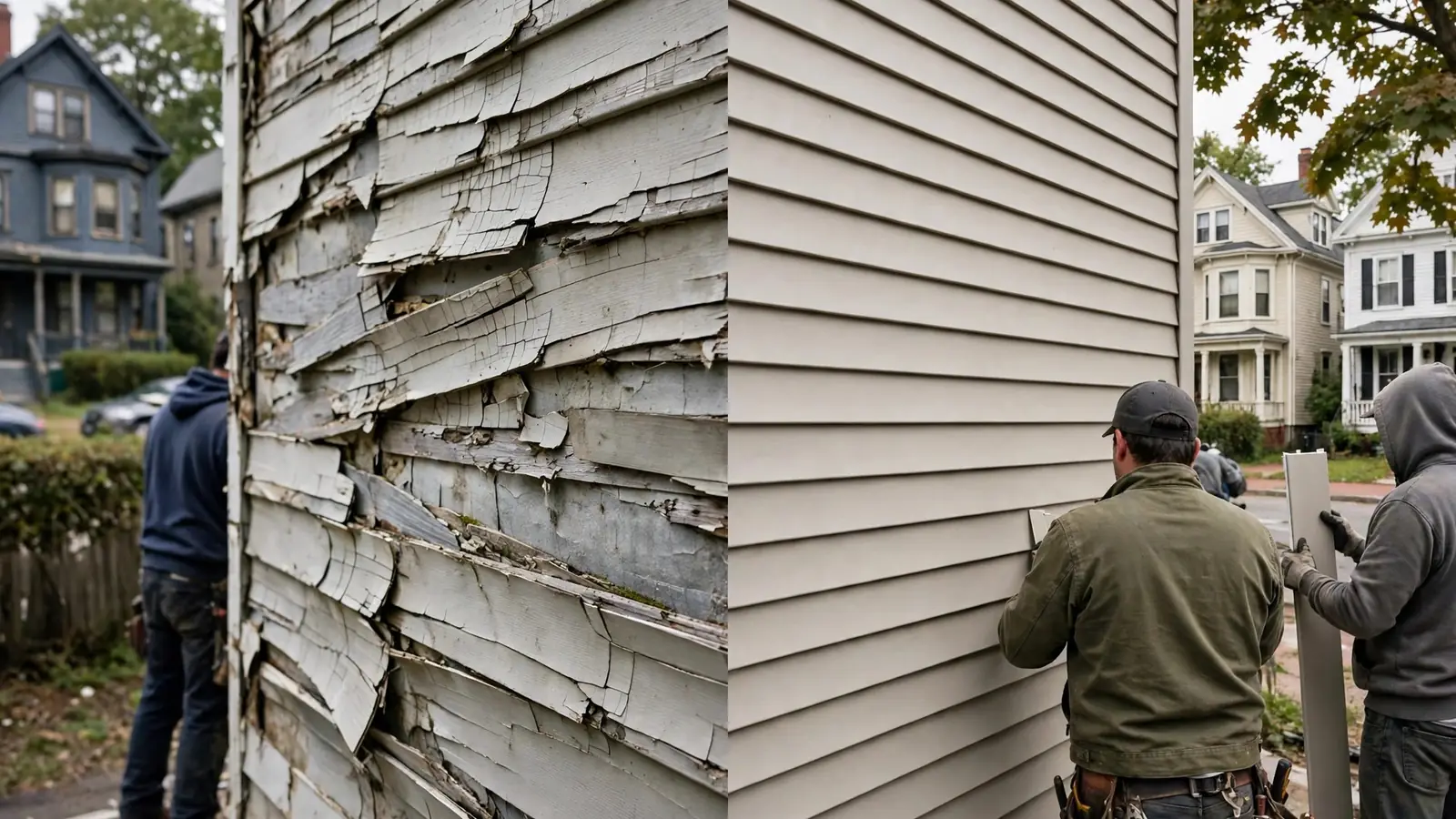
Panel repair
Storm-cracked panels swapped for matched new ones.
- BeforeAfter
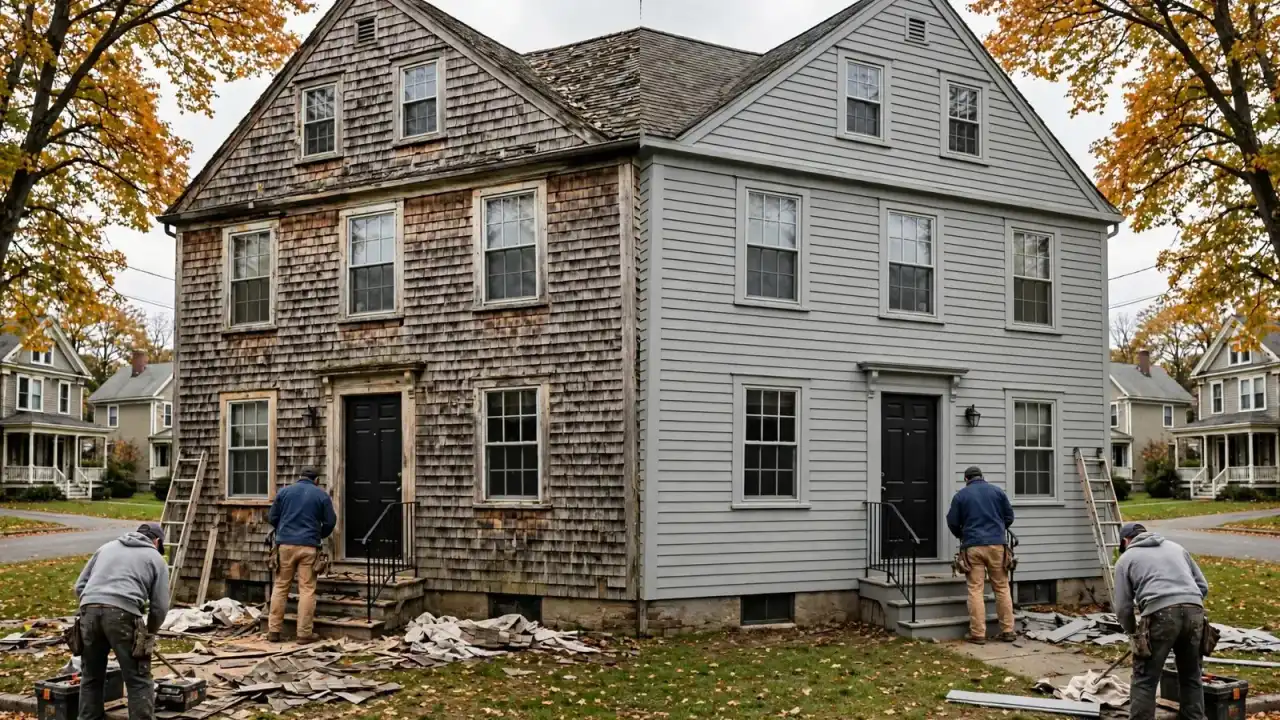
Colonial in fiber cement
Worn shingles replaced with painted fiber cement.
- BeforeAfter
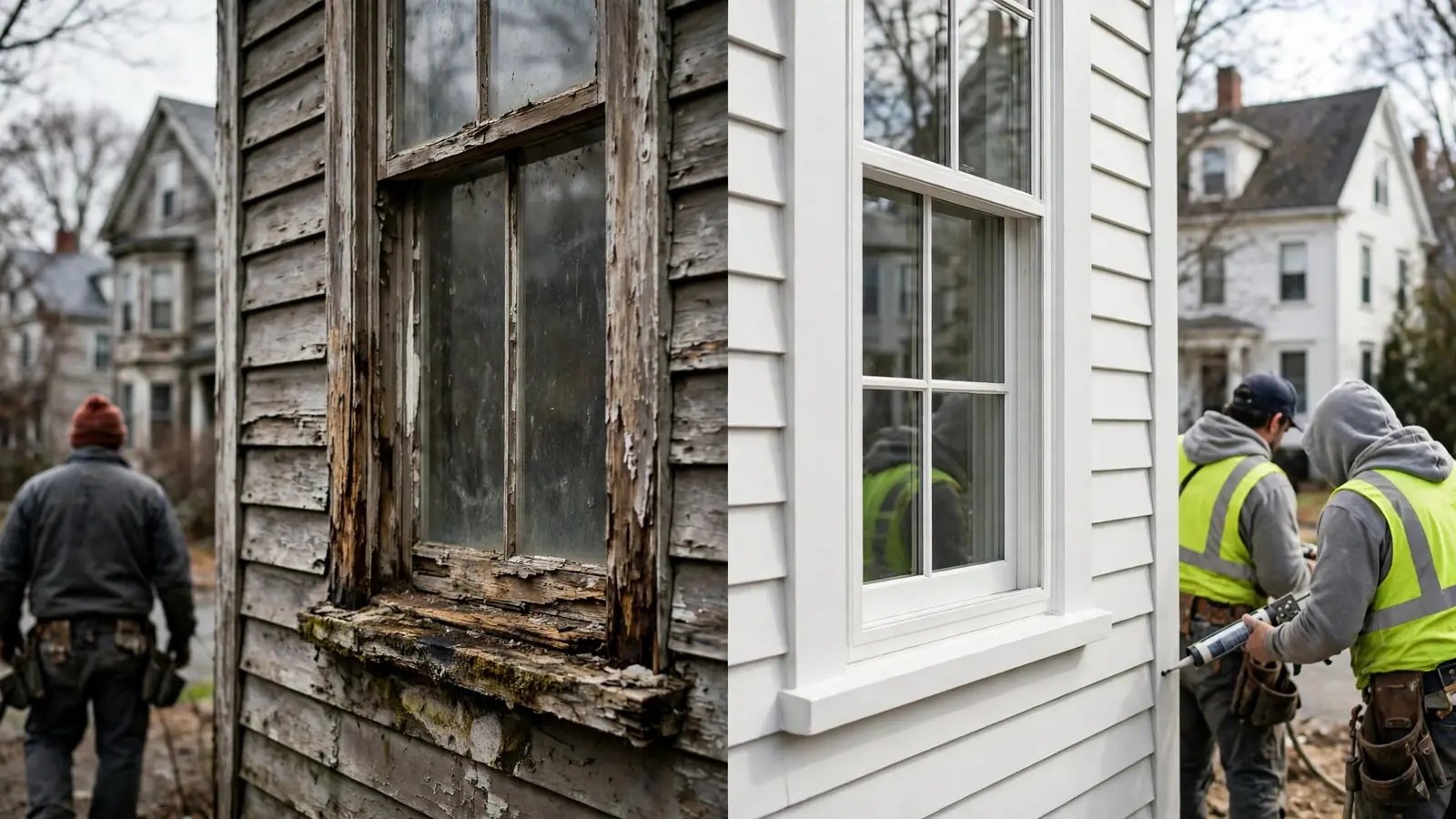
Window trim rebuild
Rotted casing replaced and flashed.
- BeforeAfter
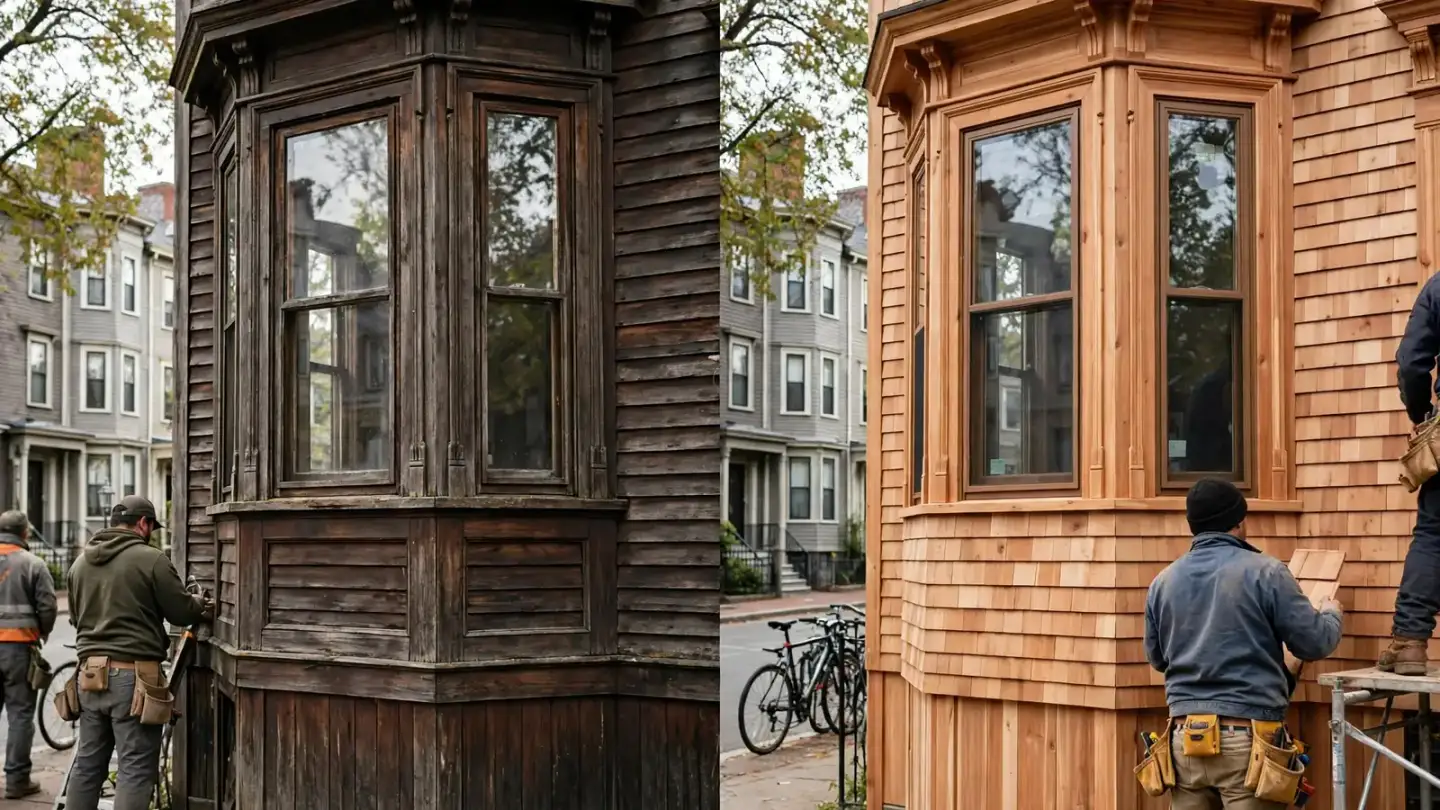
Bay window refresh
Water-stained bay re-clad.
- BeforeAfter
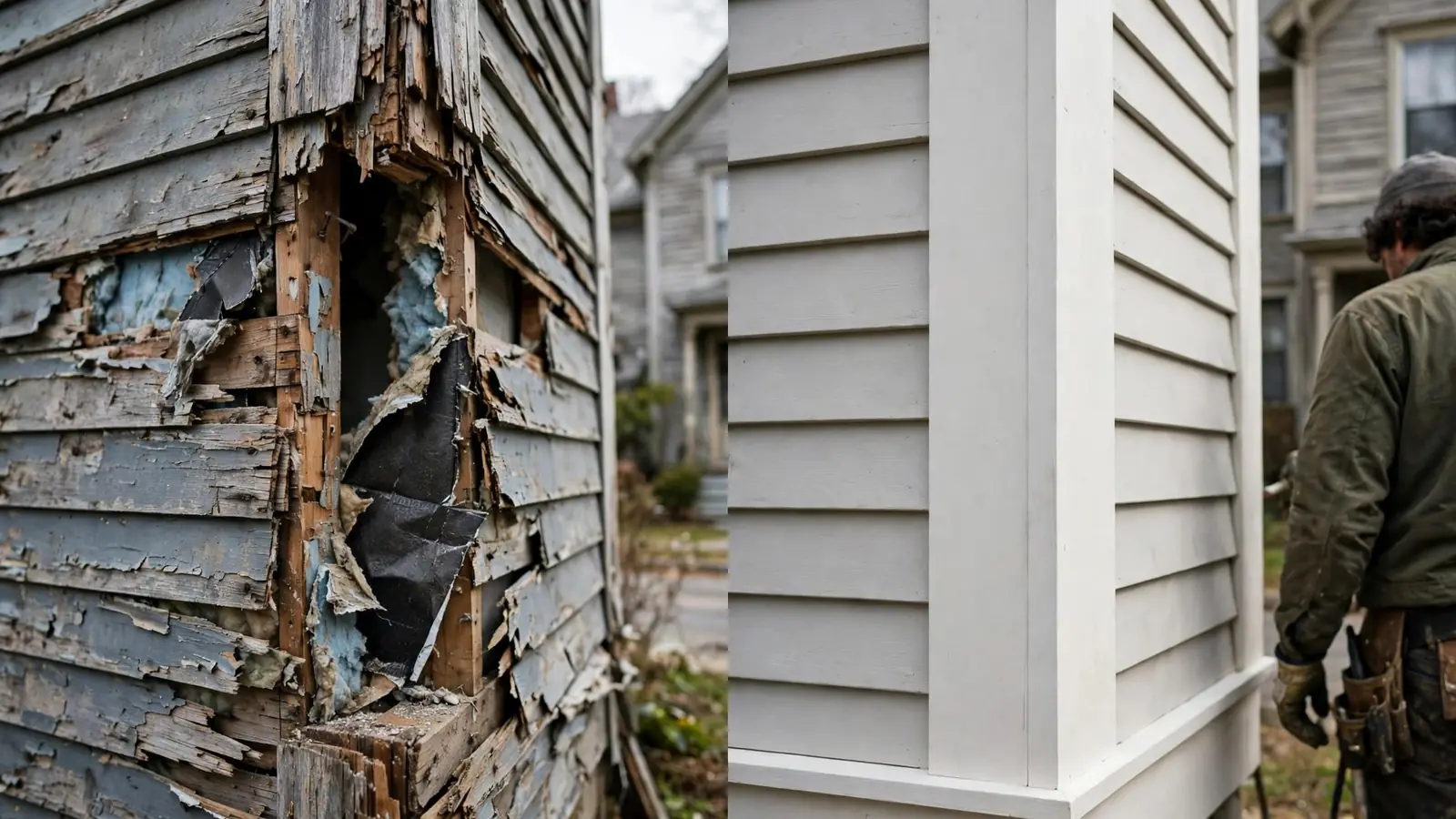
Corner and trim repair
Open corner closed with a new post.
Illustrative images. Every installation depends on the space and the equipment chosen.
From call to finished wall
What a typical siding project involves
- 1
Your call
You describe the house and the problem. The contractor tells you what they would want to see.
- 2
Site look
If you arrange a visit, they check layers, sheathing, flashing and any historic or lead-paint concerns.
- 3
Scope and paperwork
They explain the scope and handle the Short-Form permit, plus Landmarks review where it applies.
- 4
Tear-off and prep
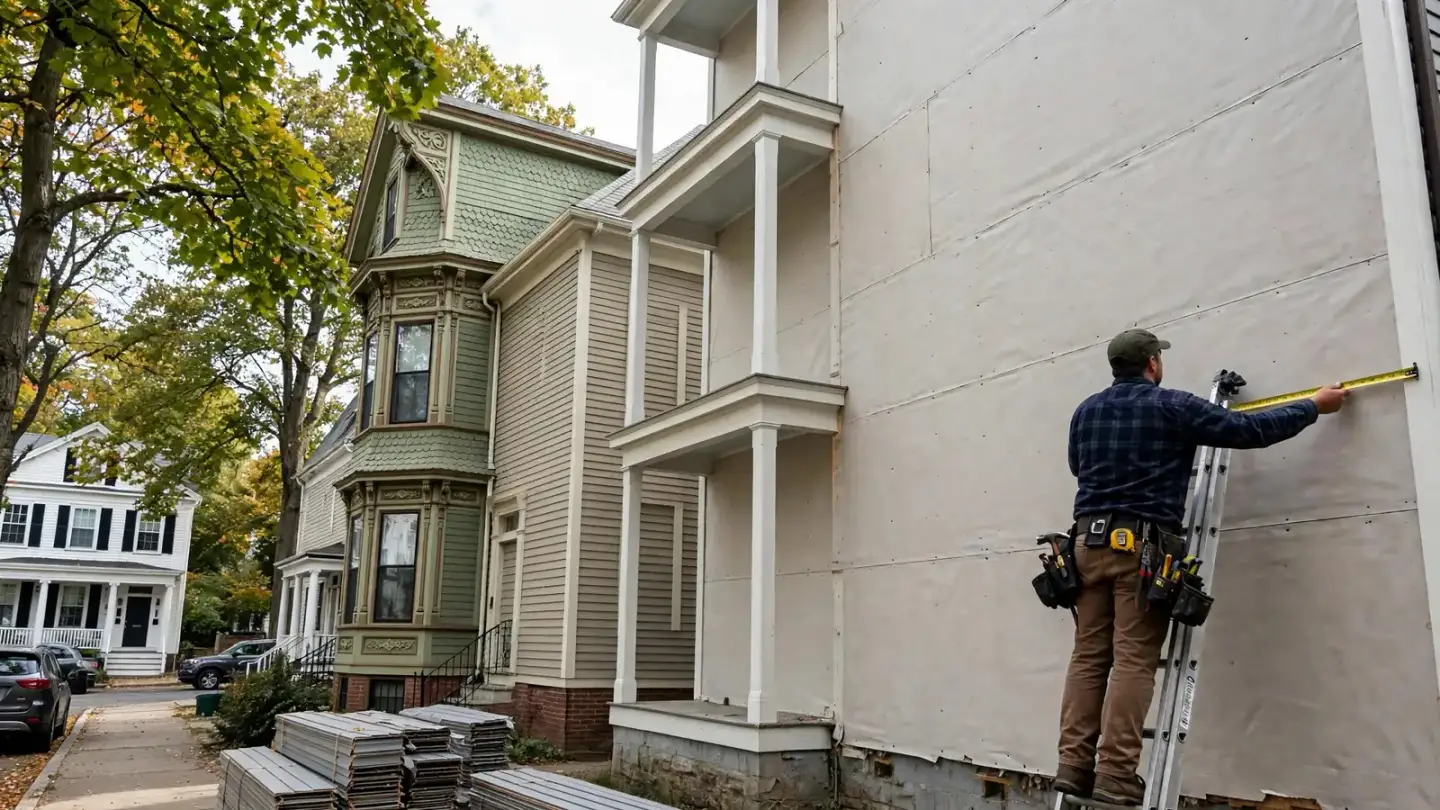
Old layers come off with debris containment; damaged sheathing is replaced and housewrap goes on.
- 5
Flashing and install
Windows, doors and roof edges are flashed, then the new siding and trim go up.
- 6
Cleanup and walk-around
Nails and debris are cleared, and you walk the house together before sign-off.
Neighborhoods
Boston neighborhoods we connect callers in
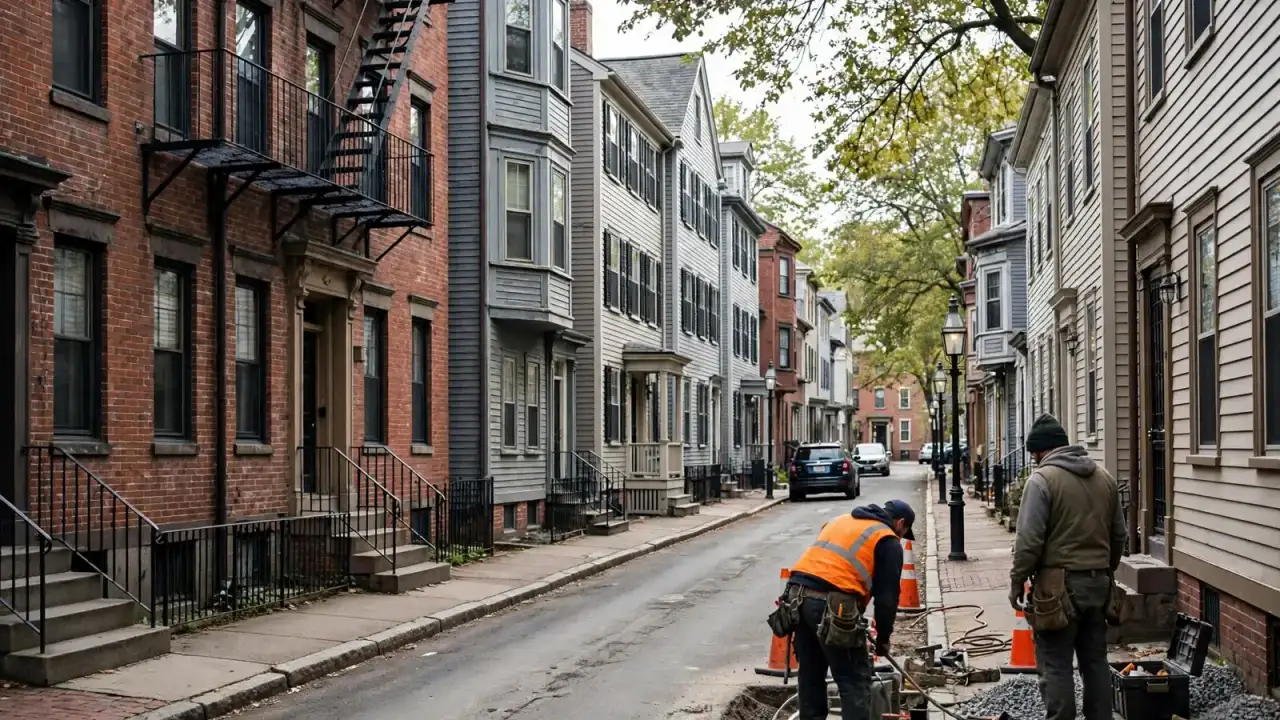
Coverage is set by the contractor network and includes ZIP codes across the city and nearby communities. Each neighborhood page explains the housing and permit details that matter there.
 Service area
Charlestown
Siding repair for Charlestown's Federal and Greek Revival rowhouses and wood homes near Bunker Hill: historic review, tight streets, clapboard care.
Learn more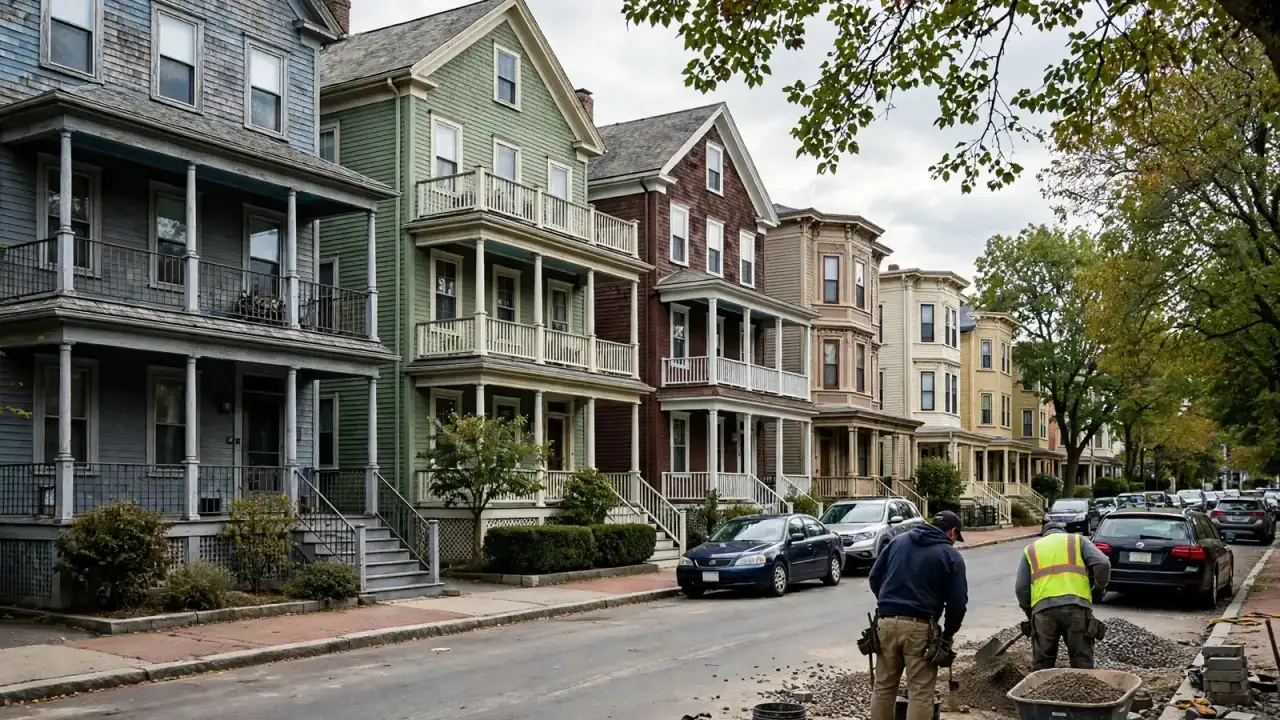 Service area
Dorchester
Siding repair and re-siding for Dorchester triple-deckers, Victorians and two-families, from Savin Hill to Ashmont. Local housing, permit and storm notes.
Learn more Service area
East Boston
Siding repair and replacement for East Boston houses on Eagle Hill, Jeffries Point and Orient Heights: harbor wind, salt air and flood risk notes.
Learn more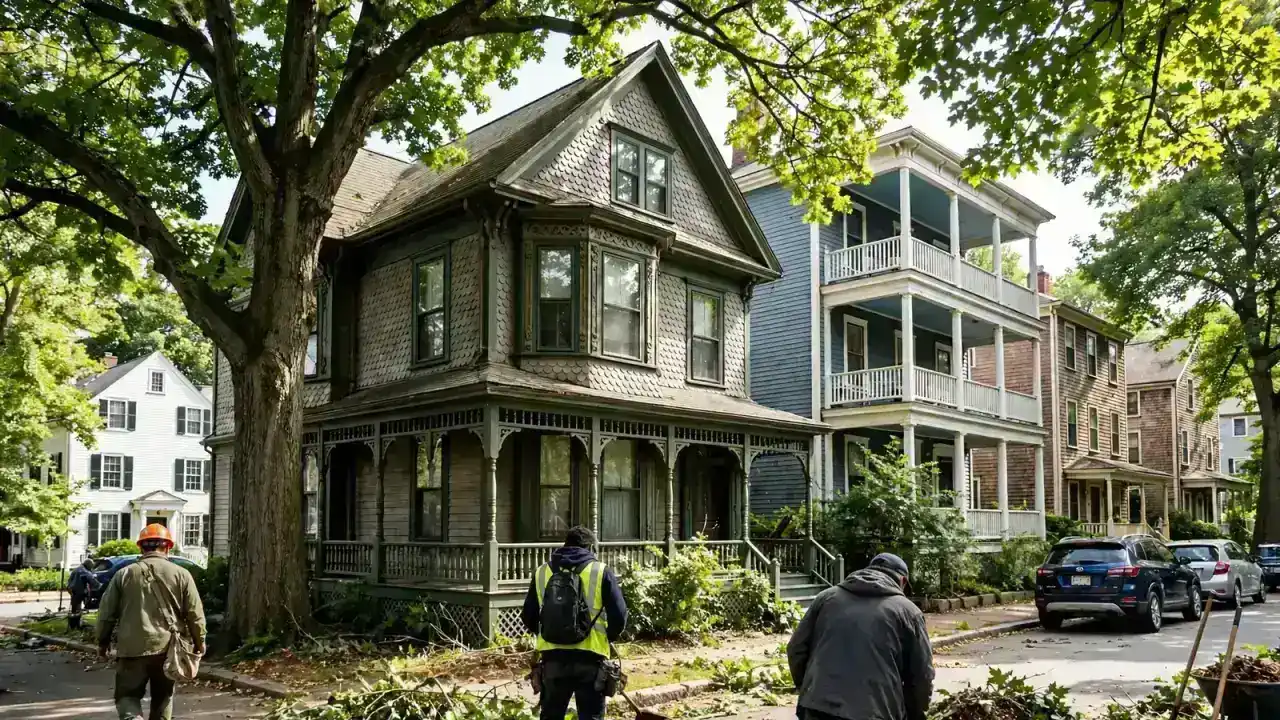 Service area
Jamaica Plain
Siding repair and replacement for Jamaica Plain Victorians, triple-deckers and two-families under heavy tree cover. Shade, moisture and trim notes.
Learn more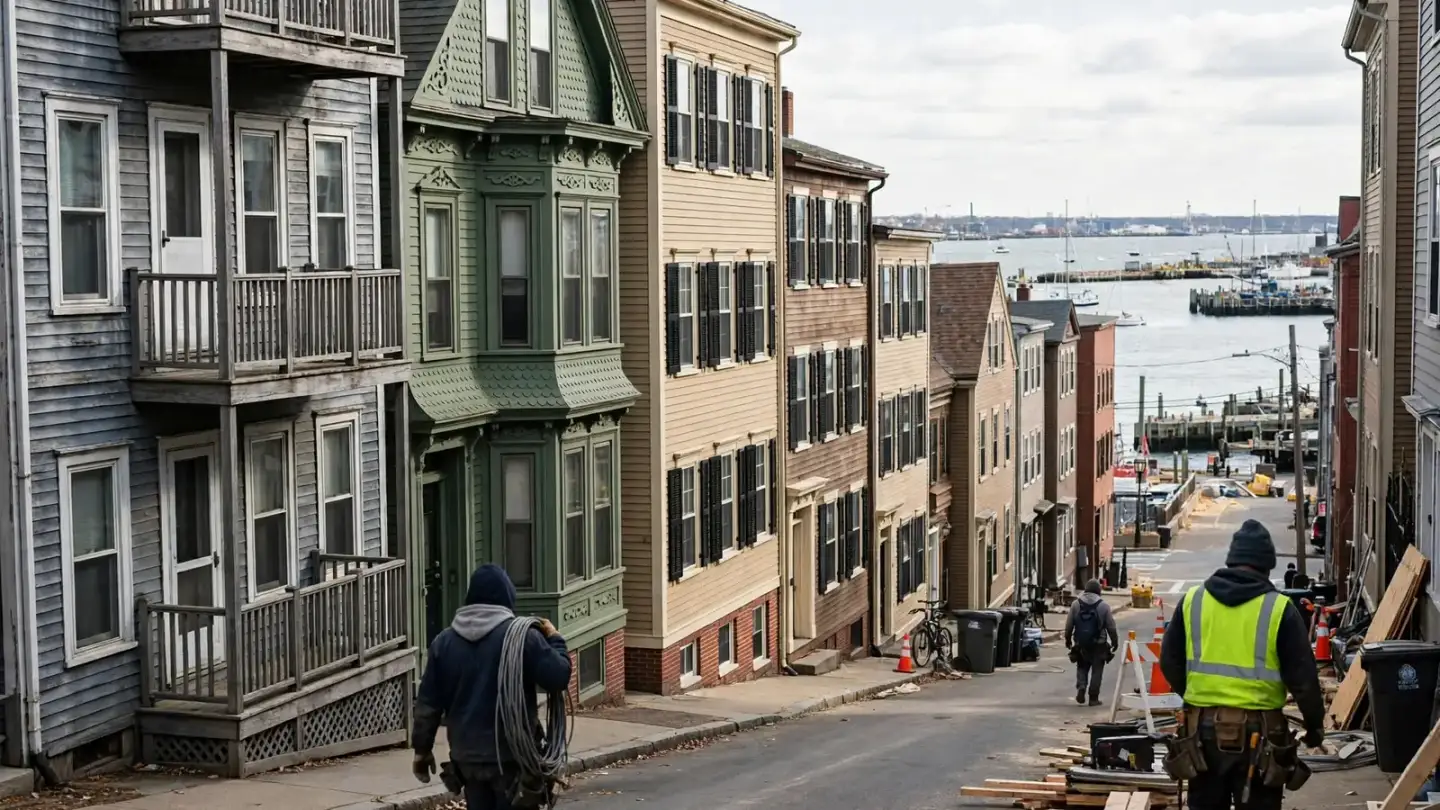 Service area
South Boston
Siding repair and re-siding for South Boston rowhouses, triple-deckers and two-families, from City Point to Dorchester Heights. Wind and salt notes.
Learn more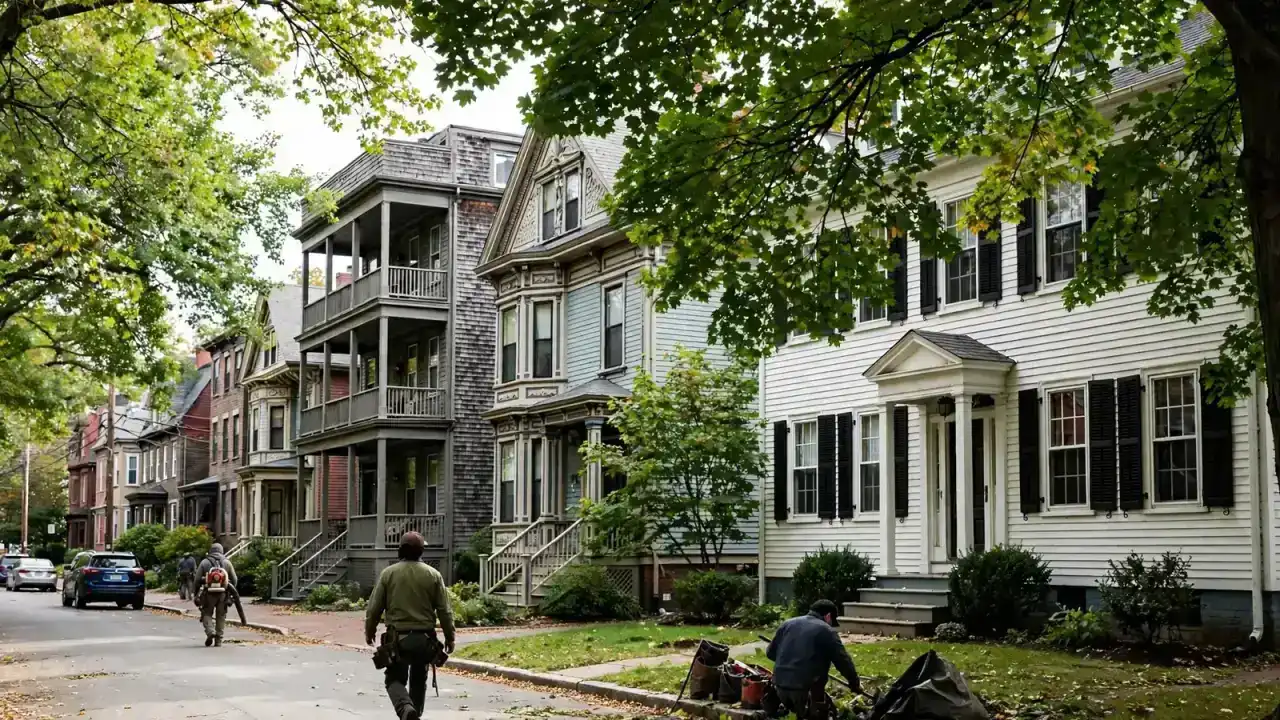 Service area
West Roxbury
Siding repair and full re-siding for West Roxbury colonials, capes and two-families, from Bellevue Hill to the VFW Parkway. Housing, permit and tree notes.
Learn more
Repair or re-side?
Deciding between a repair and full replacement
| What you see | Usually points to | Why |
|---|---|---|
| A few cracked or blown-off vinyl panels | Repair | Matching panels can be unlocked and replaced if the sheathing is dry. |
| One soft or rotted area under a window | Repair plus flashing fix | The leak source must be fixed or the rot returns. |
| Rot in several walls or stained sheathing | Full re-side | Hidden water damage spreads across walls. |
| Two or three layers already on the wall | Strip and re-side | More layers trap moisture and hide damage. |
| Panels that are brittle, chalky or faded unevenly | Re-side | Old vinyl cracks in cold weather and will not match new panels. |
| Planning added wall insulation or new windows | Re-side | It is the cleanest moment to add insulation and flashing. |
Boston specifics
What makes siding work in Boston different
Boston's housing stock is old, tightly packed and exposed to coastal weather. The city's neighborhoods are full of wood-frame triple-deckers from the streetcar era, Victorian single-families in Jamaica Plain and Dorchester, brick-and-clapboard rowhouses in Charlestown and South Boston, and mid-century colonials and capes in West Roxbury and Hyde Park. Each type brings its own siding problems.
Winter is the main stress test. Freeze-thaw cycles open small gaps at joints, snow piles against bottom courses, and ice dams push meltwater down behind the top of a wall. Nor'easters bring wind-driven rain sideways into any unflashed seam. Older vinyl turns brittle in the cold and is more likely to crack if it is struck.
Paperwork matters here too. Boston's Inspectional Services Department issues a Short-Form permit for re-siding, and the Boston Landmarks Commission reviews visible exterior changes in its historic districts. Separate cities such as Cambridge, Somerville and Quincy have their own building departments, so the permit office depends on the address, not just the ZIP code.
Massachusetts also requires Home Improvement Contractor registration for most work on owner-occupied homes of one to four units. [2] You can check a registration on the state's Contractor Hub before work starts. For a closer look at each type of job, browse the full list of siding services, or start with the quick answers to common siding questions.
Siding guides
Read before you call
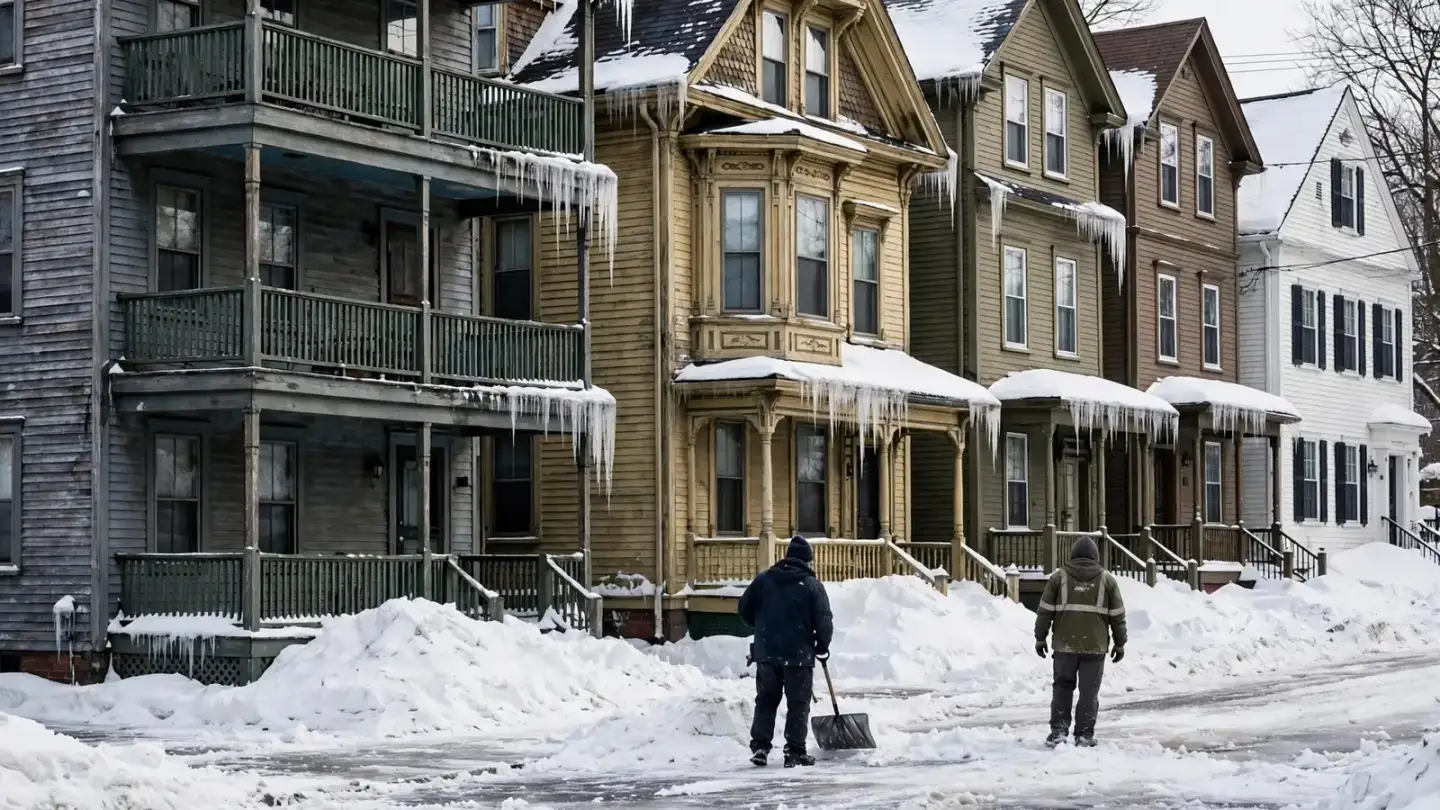 Guide
Choosing siding for cold winters
How Boston's freeze-thaw winters, snow and ice dams affect siding, which materials handle cold best, and how insulation and flashing make the difference.
Read the guide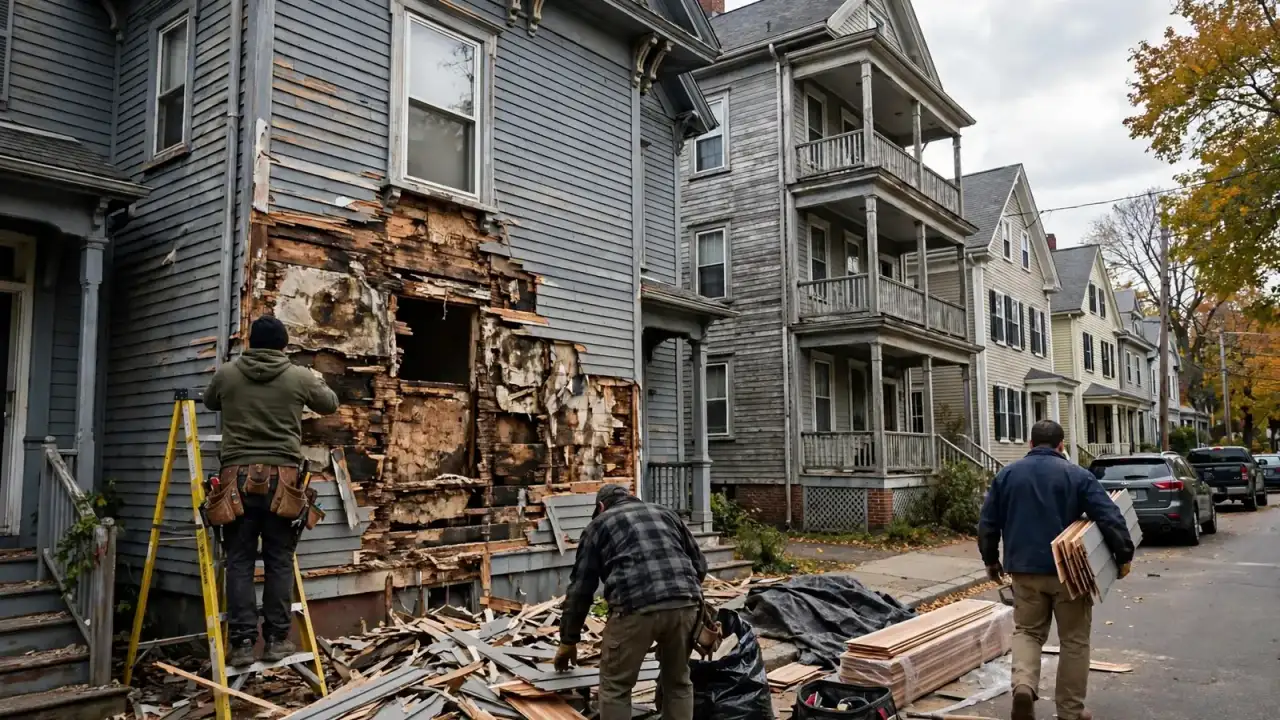 Guide
Moisture behind siding
How water gets behind siding on Boston houses, the signs inside and out, why old walls trap moisture, and how contractors find and fix the source.
Read the guide Guide
Siding after hail or wind damage
What to do when wind or hail damages siding on a Boston house: safety, photos, temporary cover, checking behind panels and repair versus replacement.
Read the guide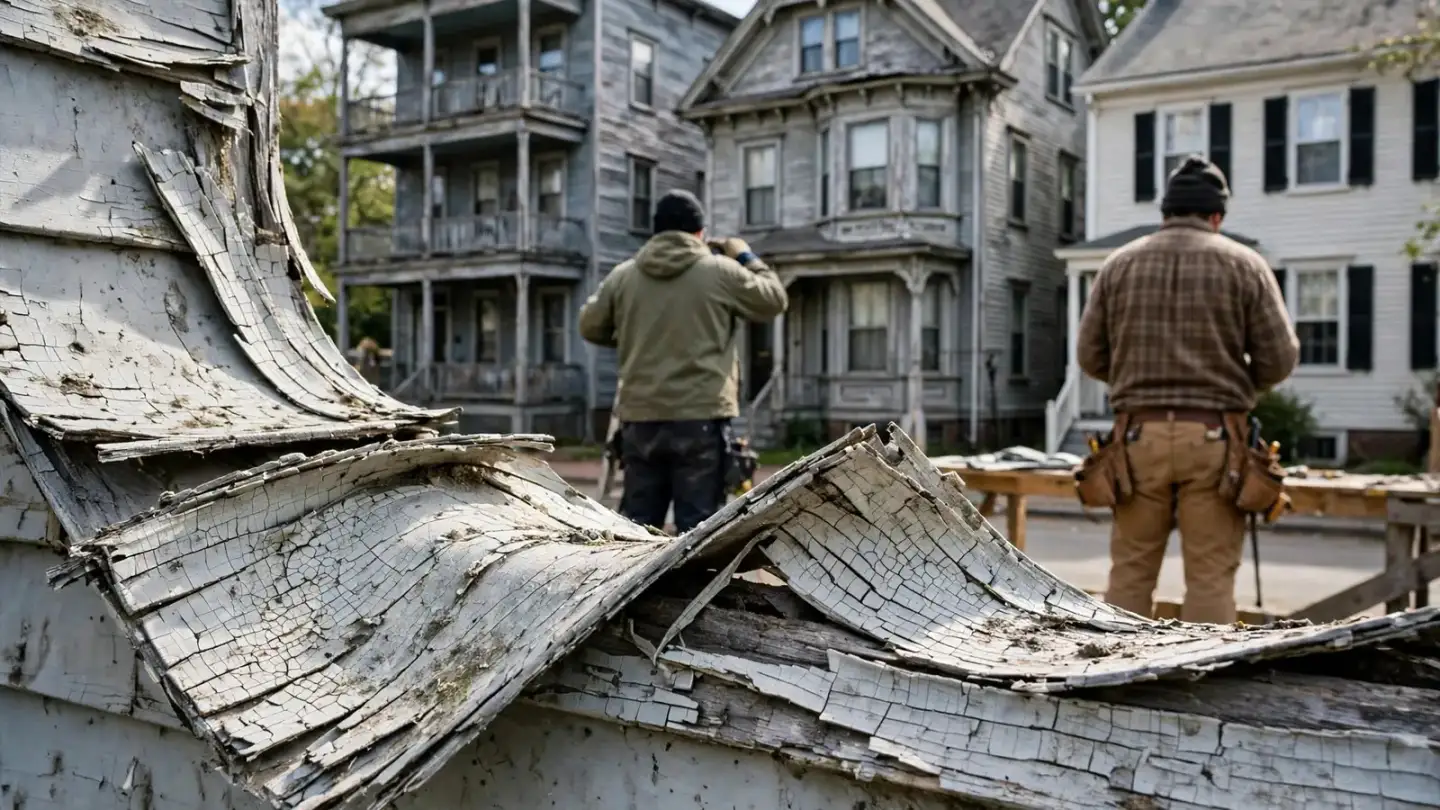 Guide
Signs your siding needs replacing
How to tell when siding on a Boston house is past repair: rot, brittle vinyl, failing paint, stacked layers and hidden water, and when to call.
Read the guide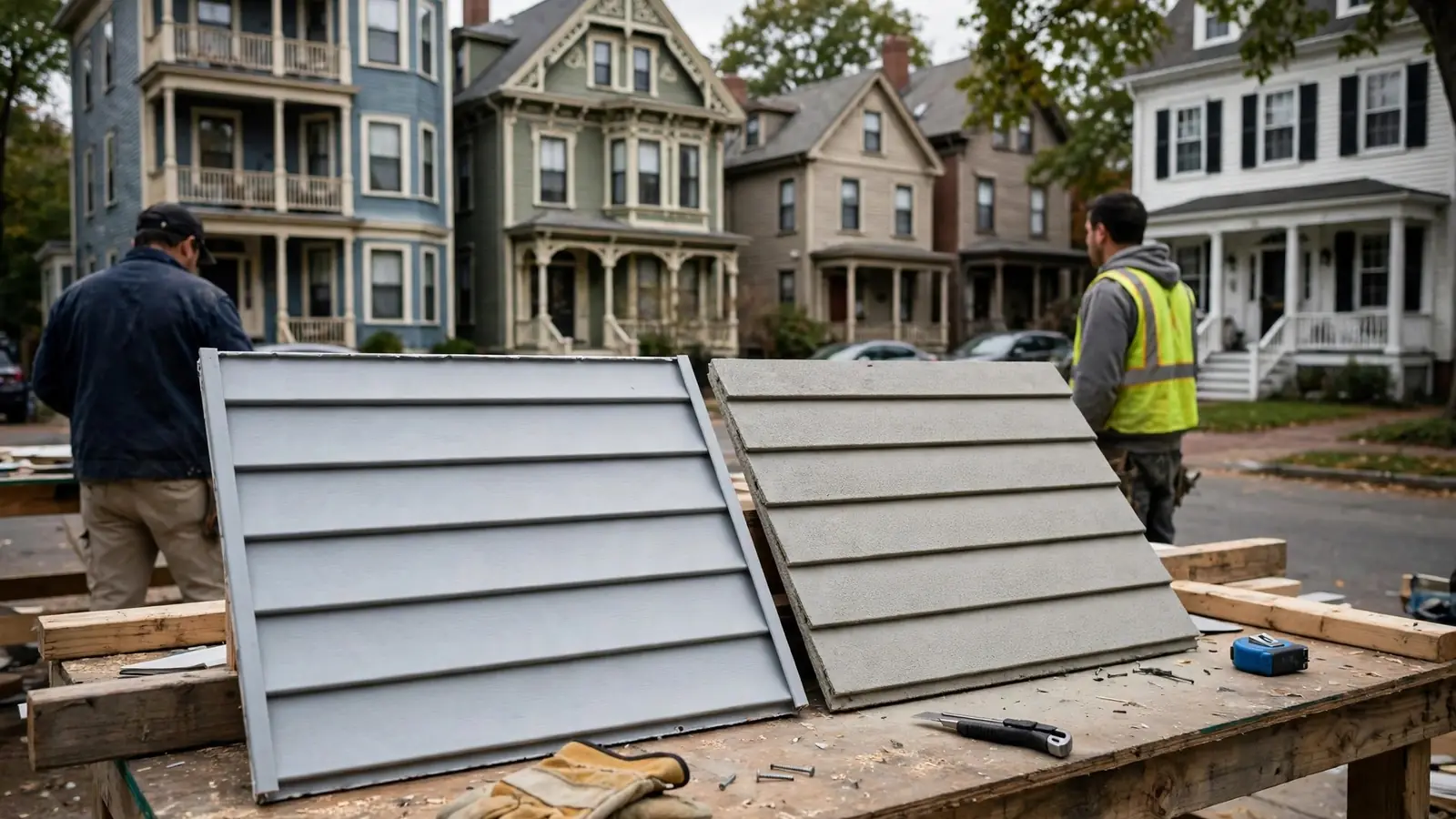 Guide
Vinyl vs fiber cement
Comparing vinyl and fiber cement siding for Boston houses: cold-weather behavior, upkeep, impact, fire, looks, historic districts and installation demands.
Read the guide
Spot the problem
What is your siding telling you?
Pick the symptom closest to what you see on the house. Each guide explains the likely cause and what a contractor will check first.
Boards loose or missing after a storm
Wind lifts vinyl at the lock and snaps old clapboard nails. Here is how to judge the damage.
Read moreSoft, swollen or stained wood
Water is getting behind the cladding, often at windows, sills or failed flashing.
Read moreCracks, warping and faded panels
Age, sun and freeze-thaw cycles add up. See when patching stops making sense.
Read moreChoosing a new material
Vinyl and fiber cement behave very differently in a Boston winter.
Read moreCold rooms and drafty walls
New siding is a chance to add continuous insulation and a better air barrier.
Read more
What we connect you for
Siding services across Boston
Repairs, full replacements and material-specific installs. Every call goes to an independent contractor, who explains the options on that call.
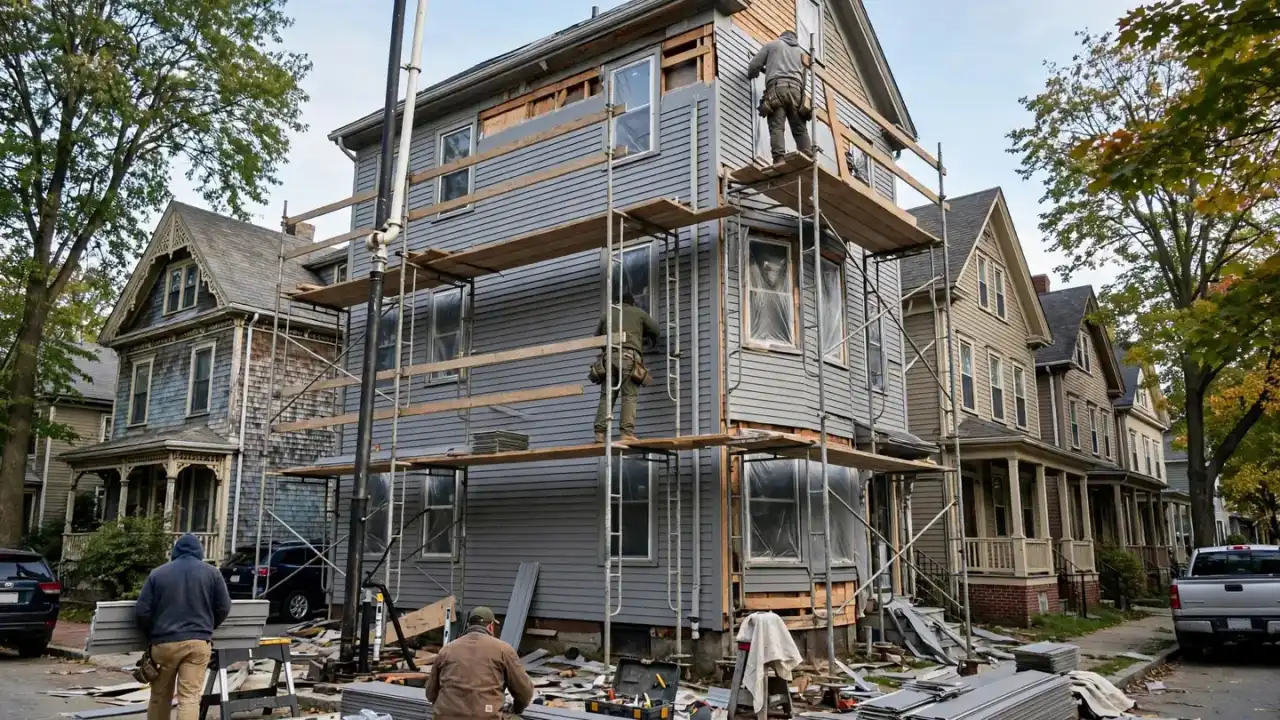
Siding Installation
Full re-siding for Boston triple-deckers, Victorians and colonials: tear-off, sheathing, housewrap, flashing and new siding. Call a contractor.
Explore service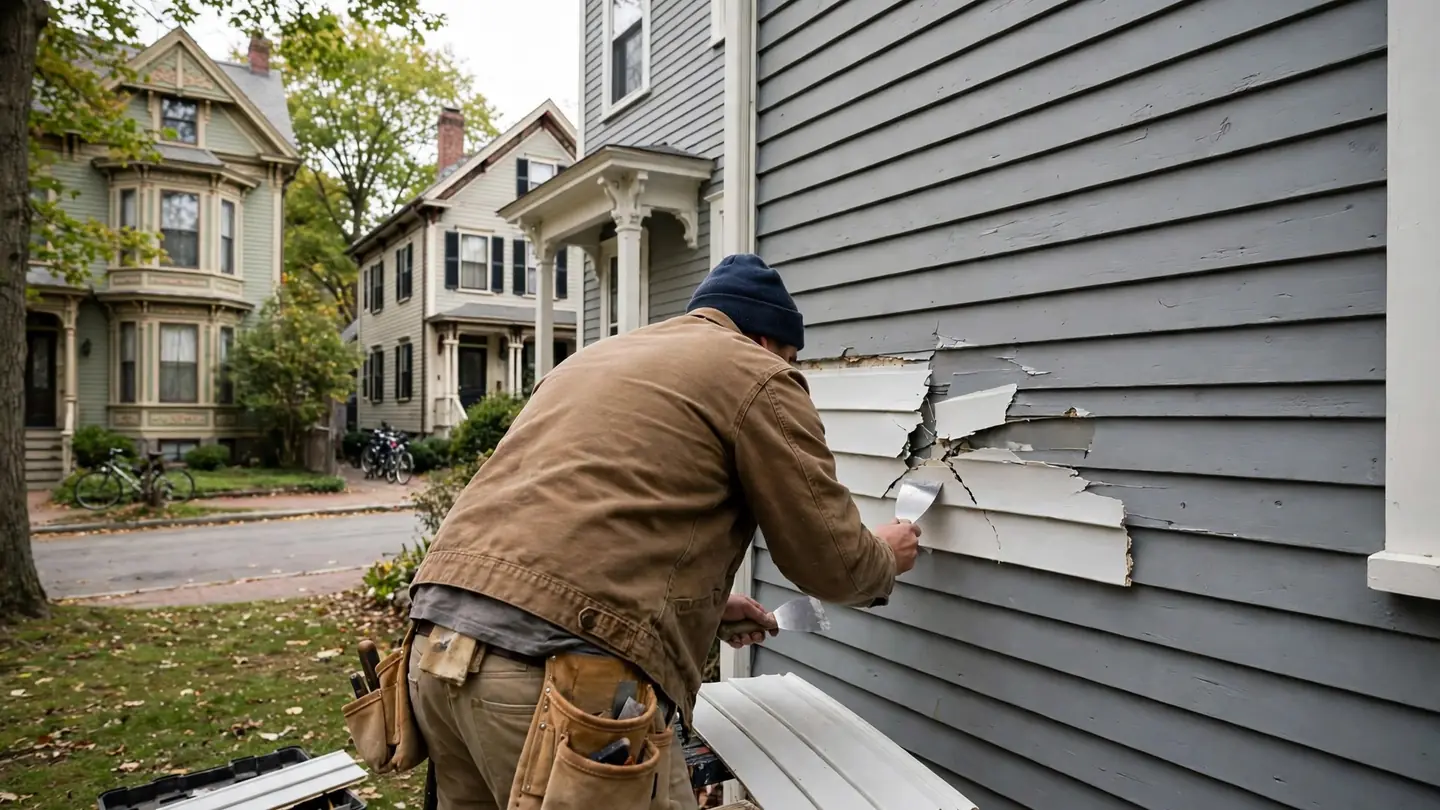
Siding Repair
Cracked vinyl, rotted clapboard, open corners and loose trim on Boston homes. Learn how siding repair works, then call an independent local contractor.
Explore service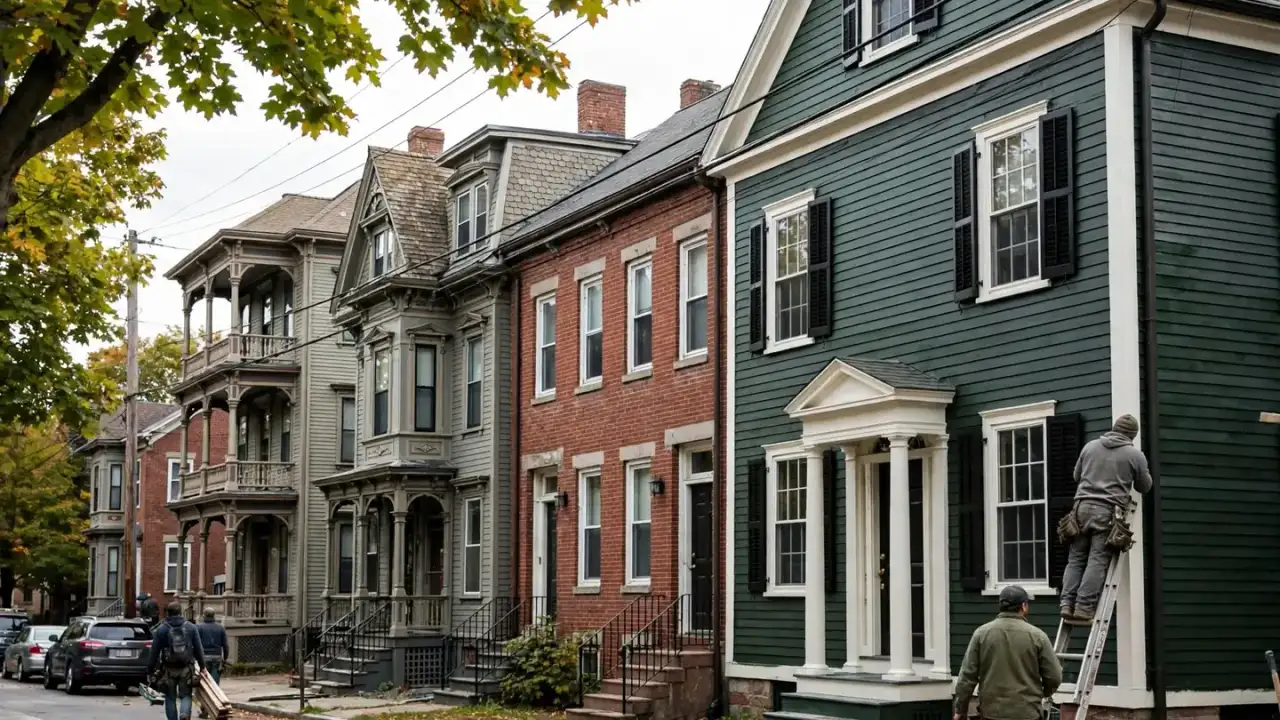
Fiber Cement Siding
Fiber cement siding for Boston colonials, Victorians and triple-deckers: planks, shingles, trim, safe cutting, painting and repairs. Call a pro.
Explore service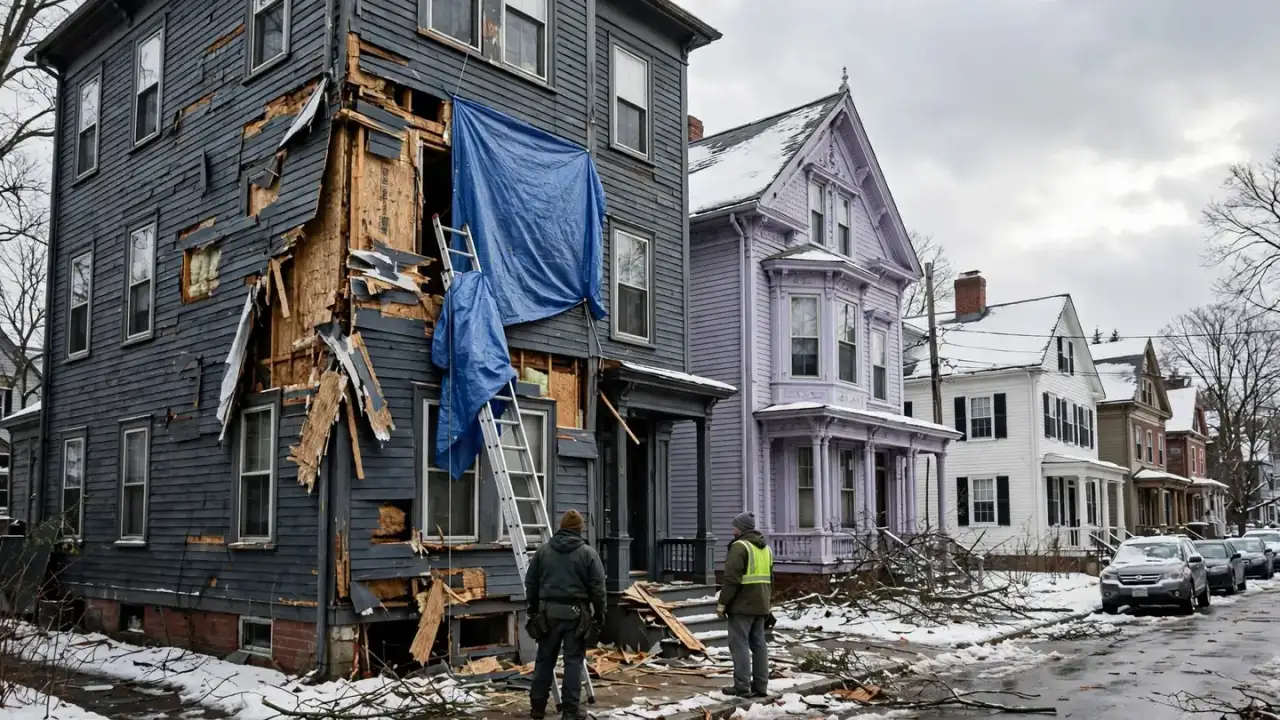
Storm Damage Siding Repair
Nor'easter, wind and hail damage to siding on Boston homes: securing the wall, documenting damage and proper repairs. Call a local contractor.
Explore service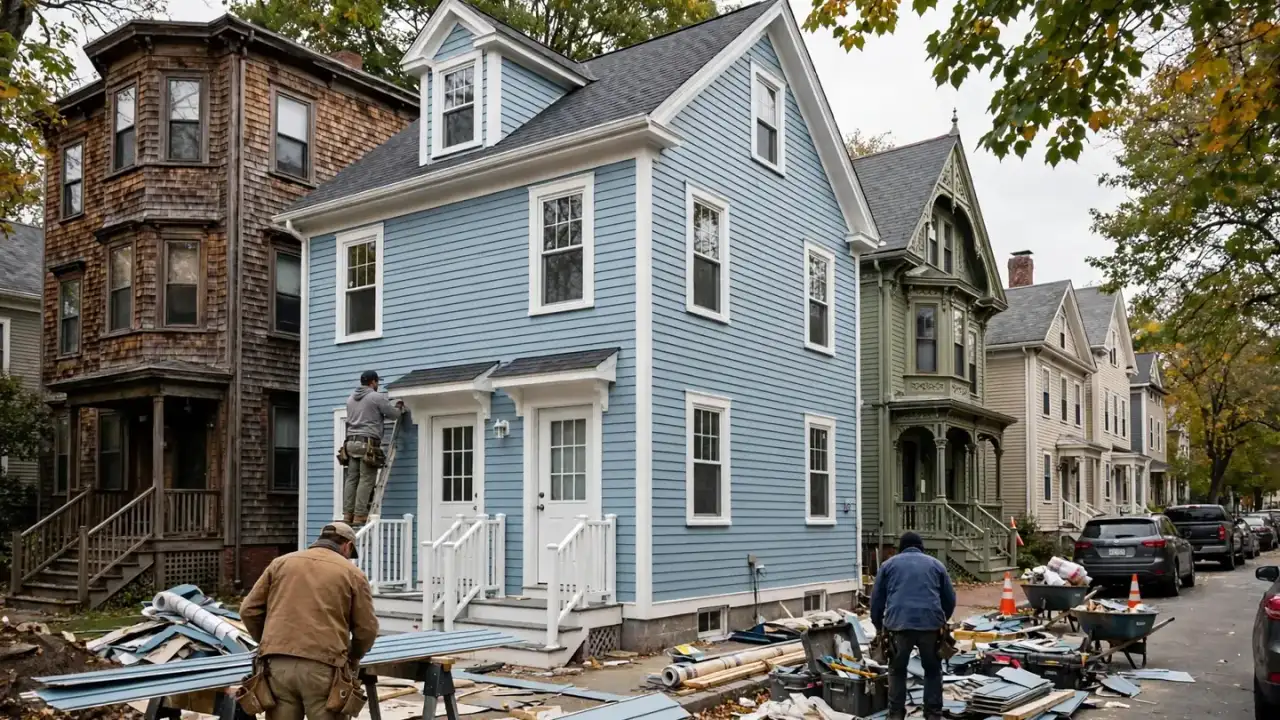
Vinyl Siding
Vinyl siding for Boston triple-deckers and two-families: profiles, thickness, correct nailing, cold-weather care and repairs. Talk to a local contractor.
Explore service
Before anyone pulls siding off an older Boston house
Most houses in Boston's neighborhoods were built long before 1978, so the original clapboard under the vinyl or aluminum almost always carries old paint. Removing the outer layer can release lead dust onto porches, yards and into open windows.
Ask the contractor on your call whether their firm is EPA lead-safe certified, how they will contain debris, and whether the job needs a Boston permit or Landmarks review. [3] Keep children and pets away from the work area until the final cleanup is done.
- Lead-safe practices for pre-1978 homes
- Short-Form permit from Boston ISD for re-siding [1]
- Landmarks Commission approval inside historic districts [5]
- Electrical permit if fixtures or wiring move
How contractors size up a job
What a siding contractor checks first
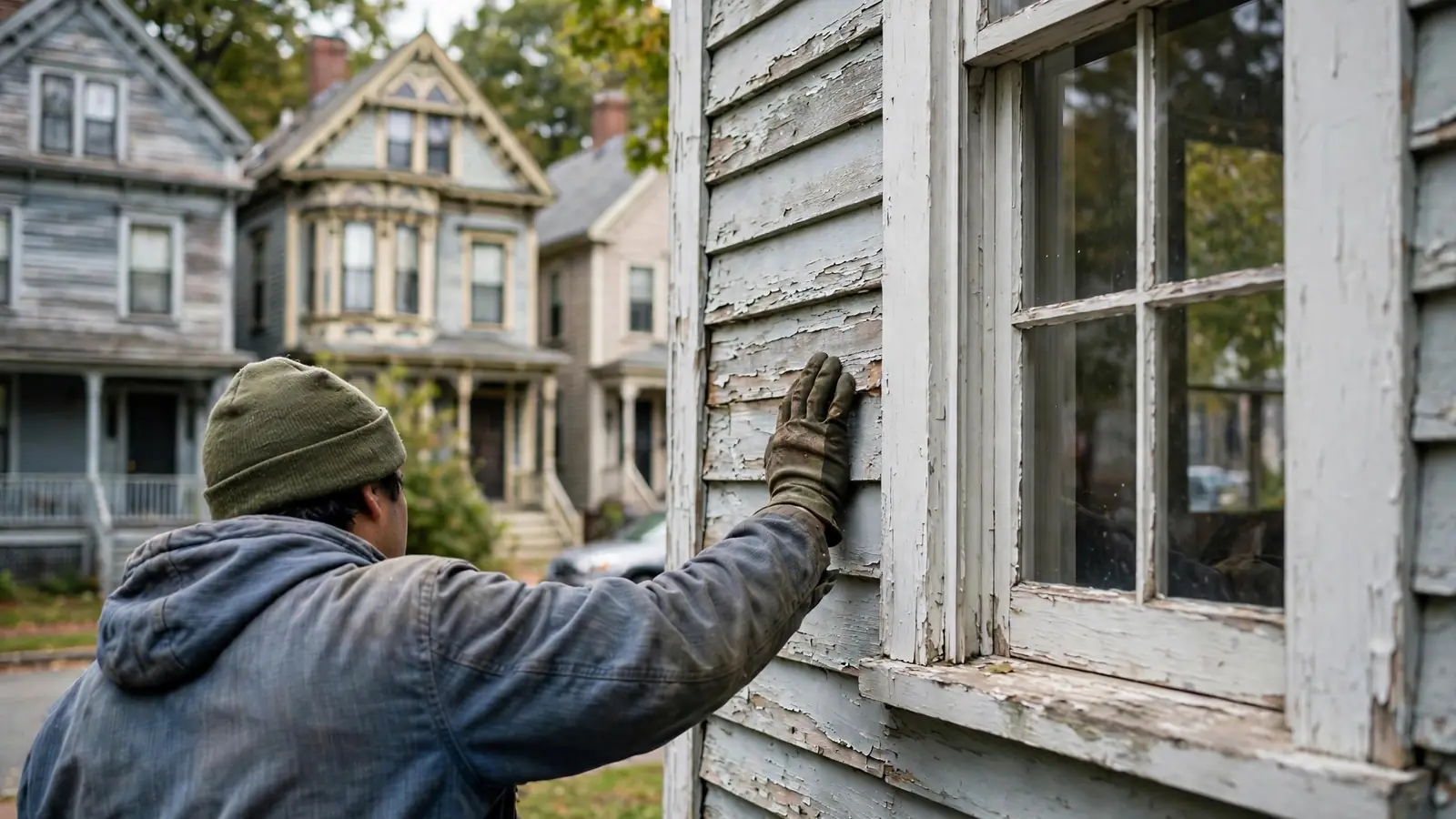
A good assessment starts low and works up. The contractor looks at the bottom course where splashback and snow sit, then the corners, window heads and the joints where a porch roof or deck ledger meets the wall. Those are the places water usually finds a way in.
They will press on suspect boards, look for rust streaks from nails, check whether vinyl panels still slide freely in their slots, and see how many layers are already on the wall. On many triple-deckers there are two: original wood clapboard with asbestos or aluminum shingles over it, then vinyl over that.
The answer decides the scope. A few cracked panels with dry sheathing behind them are a repair. Soft sheathing, missing housewrap or three stacked layers usually mean stripping the wall and starting clean.
- Bottom courses, corners and window heads
- Hidden layers and old fasteners
- Sheathing and housewrap condition
- Flashing at roofs, decks and porches
Your call, step by step
How a call through this line works
You dial the number on this page. The call is routed to an independent siding contractor who serves your part of Boston, and you talk to them directly on that same call. Describe what you see, the age of the house and anything you already know about permits or historic status.
The contractor can tell you on the call whether it sounds like a patch, a section replacement or a full re-side, and what they would need to see in person. Anything you decide after that, such as a visit, is agreed between you and them during the call.
We do not take your details, send texts or emails, or pass your number to anyone to call you back later.
- No forms or account
- You speak with the contractor on your own call
- Visits are arranged between you and the contractor
Illustrative transformation
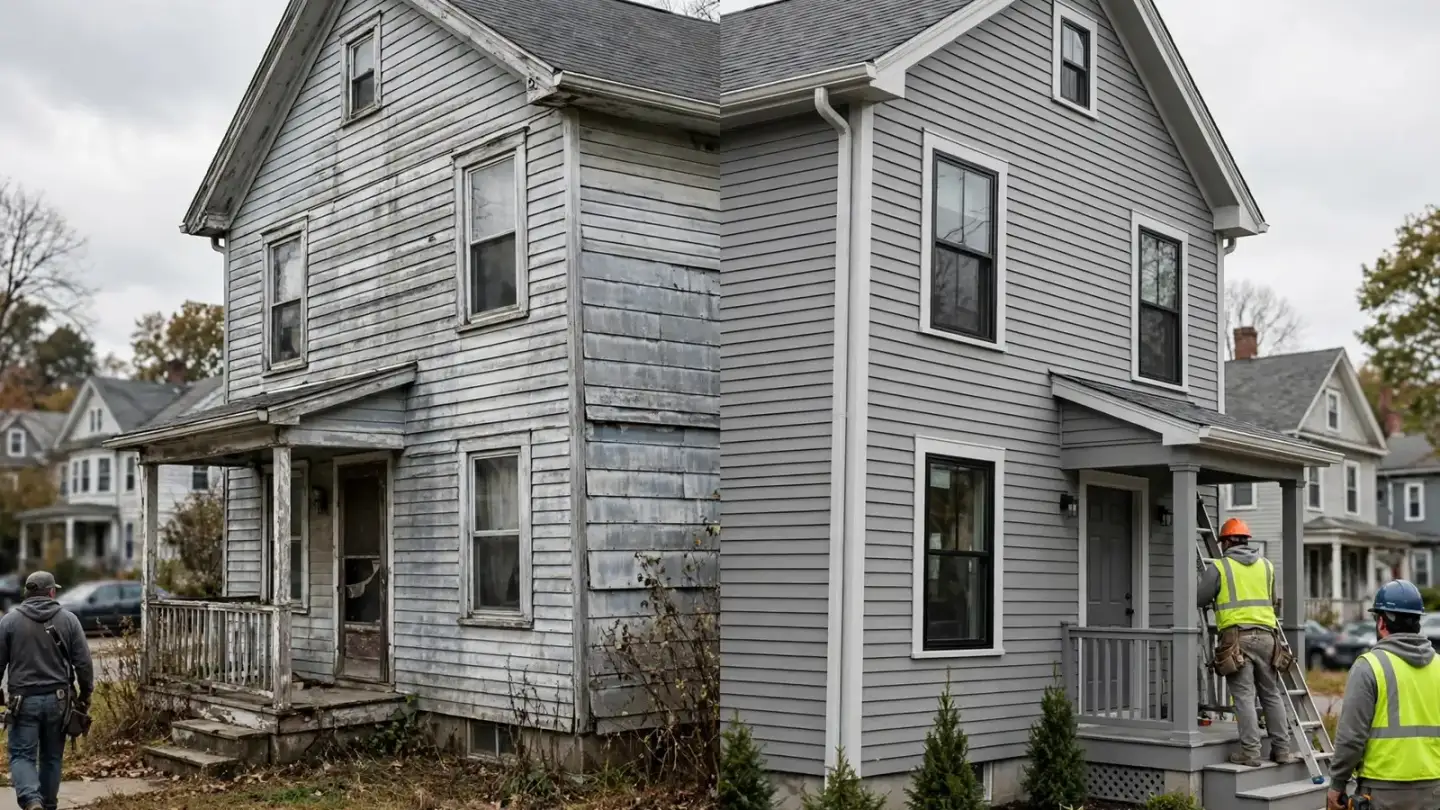
From tired aluminum to fresh lap siding
An example of what a full re-side can look like on a classic Boston two-family. Illustrative image only, not a record of a specific job.
 BeforeAfter
Common questions
Questions Boston homeowners ask about siding
Still have a question?
Send us the details and we'll point you the right way.
Call NowNumber coming soonDo I need a permit to replace siding in Boston?
Yes. Boston's Inspectional Services Department asks for a Short-Form permit when siding is replaced, and an electrical permit if wiring or fixtures move. In a historic district, the Landmarks Commission must approve visible changes first.
Can new siding go over the old siding?
Sometimes, but it is rarely the best choice on an older Boston house. Extra layers hide rot, make windows look sunk into the wall and complicate flashing. Most contractors prefer to strip to sheathing so they can see what is underneath.
Is vinyl or fiber cement better for Boston winters?
Both work when installed correctly. Vinyl is lighter and needs no paint but can crack when cold. Fiber cement is heavier, holds paint well and resists impact and fire. The right pick depends on the house and how long you plan to stay.
Who actually does the work when I call?
An independent local siding contractor. Your call is connected to them and you speak with them directly. This site is a referral line and does not perform the work.
What should I check before hiring a siding contractor in Massachusetts?
Ask for their Home Improvement Contractor registration number and look it up on the state's Contractor Hub. For a pre-1978 house, ask whether the firm is EPA lead-safe certified. Get the scope and timeline in writing.
How long does a siding job take?
A small repair can take part of a day. Re-siding a full triple-decker usually takes longer because of staging, tear-off, flashing and trim work on three stories. The contractor will give you a timeline once they have seen the house.
Will a siding contractor deal with lead paint?
A firm paid to disturb paint on a home built before 1978 must follow EPA lead-safe work practices. That means containment, plastic sheeting, careful removal and a cleaning check at the end.
Can I change the siding on a house in a historic district?
Possibly, but the Boston Landmarks Commission reviews visible exterior changes in its districts and may require a matching material. Ask the contractor to check the address before you choose a product.
Ready when you are
Talk to a Boston siding contractor now
One call, no forms. Describe the wall, the material and the age of the house, and an independent local contractor will talk it through with you.
Sources and citations
Keep reading