Key facts: Siding Repair
- Vinyl lap siding is designed to hang loosely on its nails so it can expand and contract; panels nailed tight are a common cause of buckling [1].
- Boston asks for a Short-Form building permit for siding replacement work, and historic districts need Landmarks Commission approval first [2].
- Paid work that disturbs painted surfaces on homes built before 1978 must follow EPA lead-safe practices [3].
- Water that gets behind cladding is meant to be stopped by a water-resistive barrier and directed out by flashing at openings [4].
How siding repair works
What a siding repair actually involves
Siding is the outer rain screen of a house. It sheds most of the water that hits a wall, but it is not meant to be watertight on its own. Behind it sits a water-resistive barrier, such as housewrap or older building paper, and around every window, door and roof edge there should be flashing that turns water back out. [4] A repair is only successful when all three layers are working again.
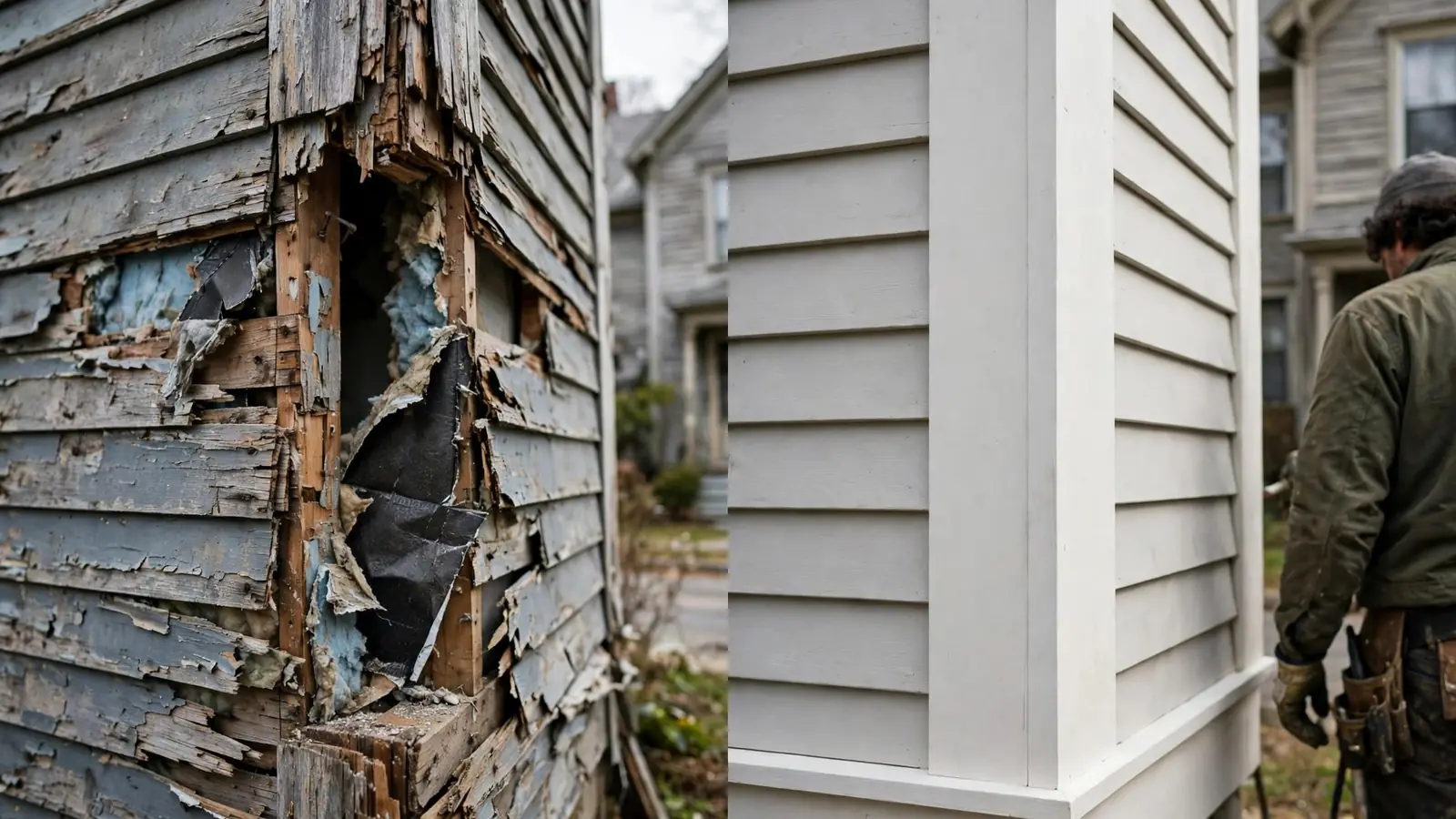
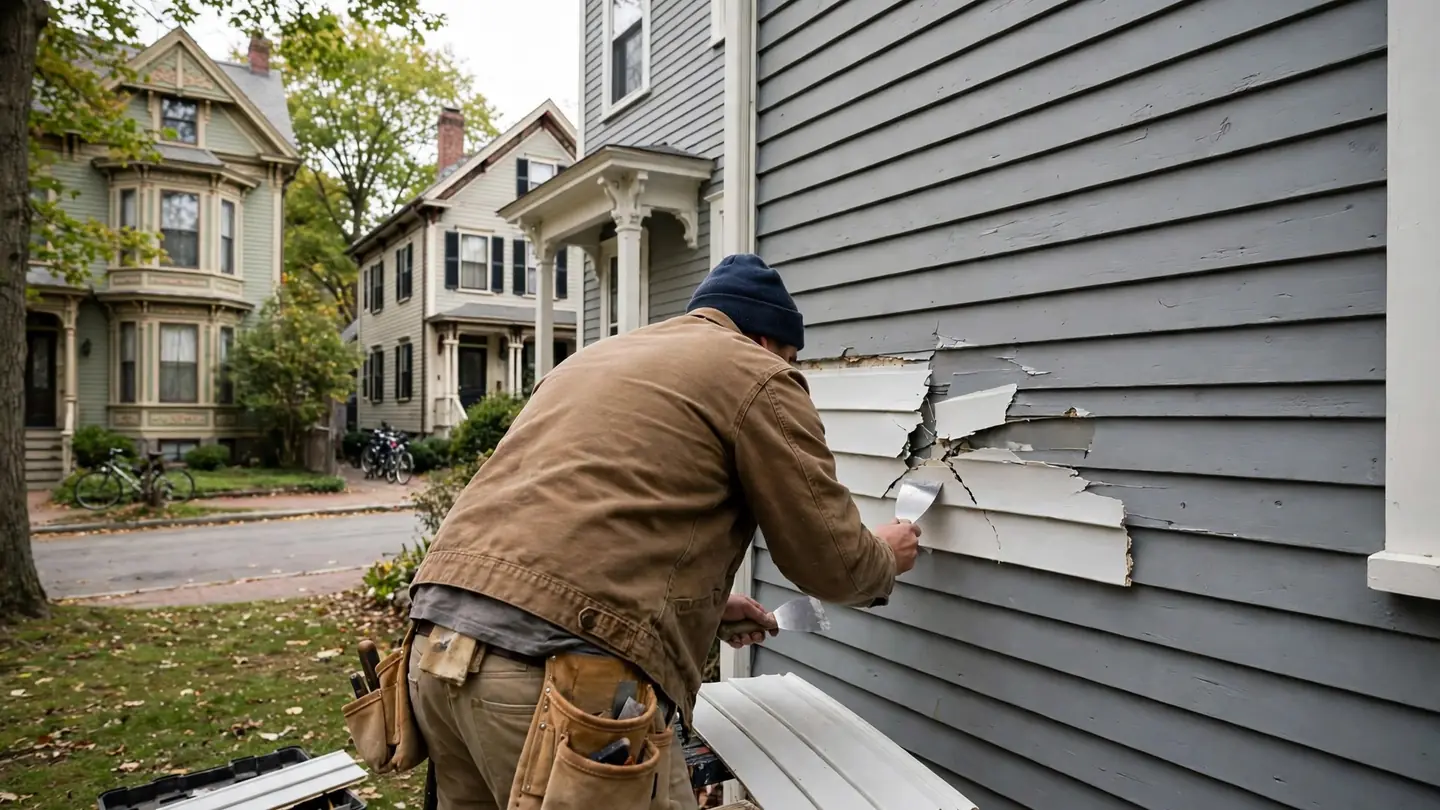
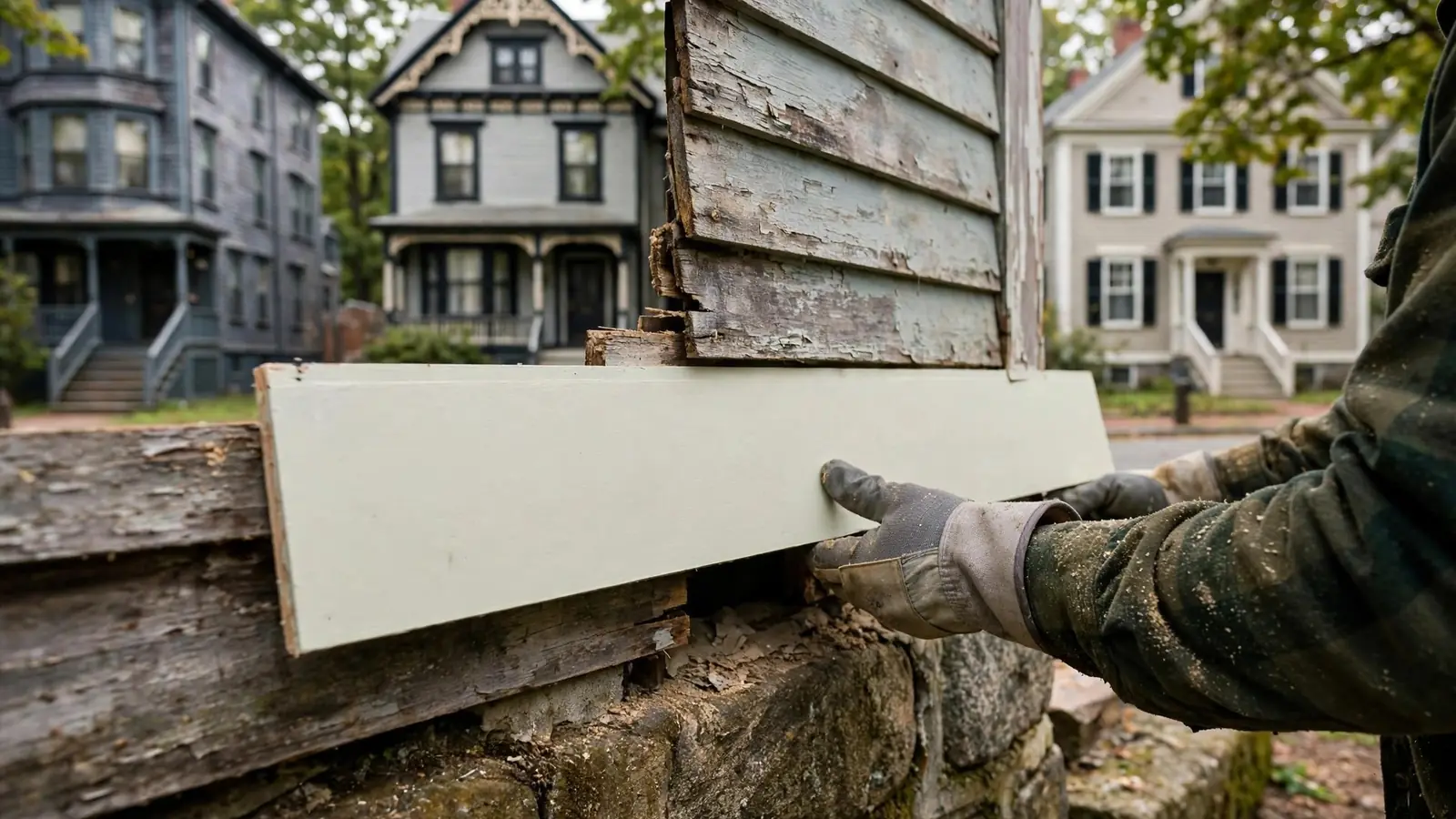
That is why a good contractor rarely treats a repair as a cosmetic swap. When a vinyl panel cracks, they unlock it from the panel above with a zip tool, check the housewrap and sheathing behind, then lock a matching panel back in. When a wood clapboard is rotted, they cut it out between studs, look at the sheathing, replace the damaged board with a primed piece, and seal the end joints. If the rot came from a missing drip cap over a window, the window head gets fixed too, or the new board will rot the same way.
On Boston houses, repairs also have to deal with history. A triple-decker in Dorchester might have original clapboard under asbestos shingles under vinyl. A West Roxbury colonial might have aluminum siding from the 1960s over wood. Each layer changes how a repair is done and how well new material will blend in.
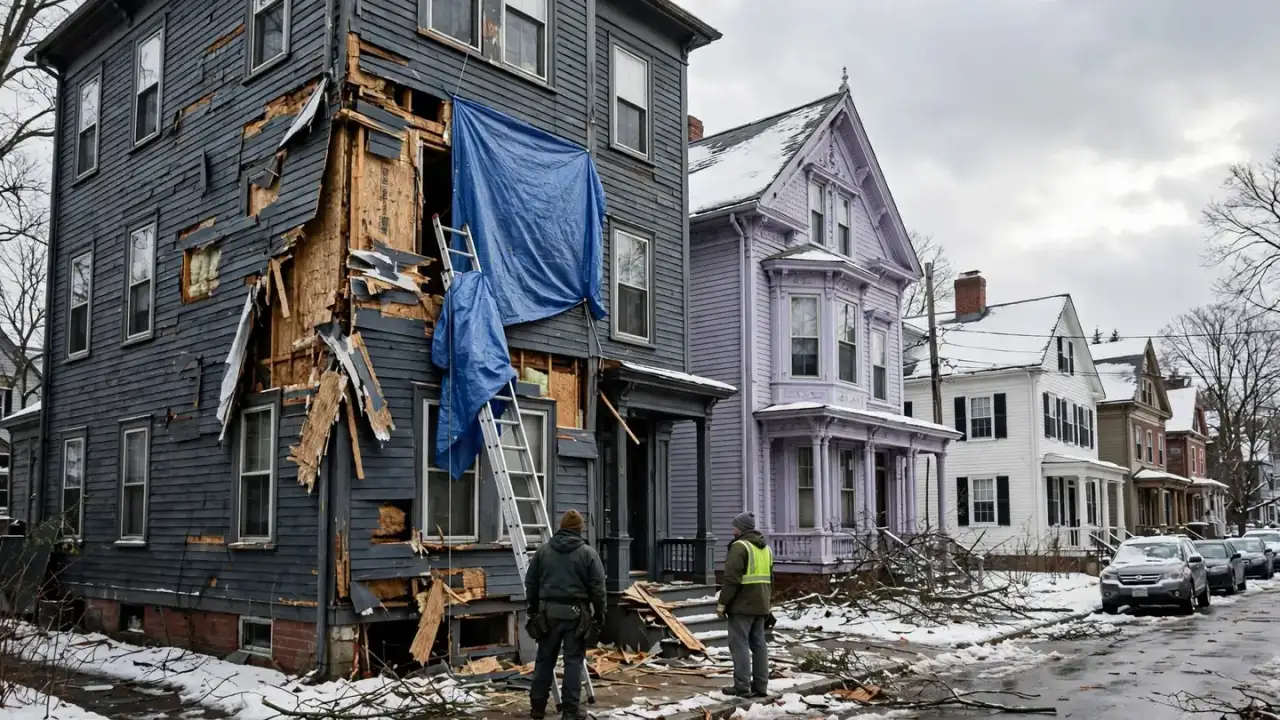
The scope of a repair ranges widely. It can be a single panel that a kid's baseball cracked, a run of boards along the bottom course where snow sat all winter, the trim around one window, or the corner boards on one side of the house. Once damage spreads across several walls, or the sheathing is soft in more than a few spots, repair stops being the sensible option and a re-side becomes the better fix.
Warning signs
Signs your siding needs repair now
These are the problems that tend to get worse quickly if they are ignored through a Boston winter.
Cracked or holed vinyl
Cracks let water straight onto the housewrap, and cold weather makes them spread. Hail, ladders and lawn equipment are the usual causes.
Read moreSoft or spongy boards
Press near window sills and the bottom course. If wood gives under your thumb, water has been getting in for a while.
Read morePanels bulging or rippling
Vinyl nailed too tight cannot move with temperature changes and buckles. It needs to be re-hung, not just pushed back.
Gaps at corners and trim
Open joints at corner posts and J-channel let wind-driven rain in during nor'easters.
Paint peeling in one patch
Localized peeling on wood siding often means moisture is pushing out from behind, not just old paint.
Stains or mildew below a window
Dark streaks that come back after cleaning usually trace back to a flashing problem above.
Repair close-up
Why siding fails
Why siding breaks down on Boston houses
Water is the main enemy, and Boston has plenty of it in forms that are hard on walls. Rain blows sideways in coastal storms. Snow piles against the lowest courses and melts slowly against the wood. Ice dams at the eaves push meltwater back under the roof edge and down behind the top of the siding. Each freeze-thaw cycle opens small gaps a little wider.
Temperature swings are the second problem, especially for vinyl. Vinyl siding expands and contracts noticeably between a hot July afternoon and a January night. The installation instructions from the Vinyl Siding Institute call for nails to be left slightly loose and centered in the slots so the panel can slide. When an installer drives nails tight, the panel has nowhere to go, and it buckles in summer or cracks in winter.
Age matters too. Older vinyl formulations become brittle and chalky after years of sun. Painted wood holds up for decades but needs paint to protect it, and on many three-family houses the upper stories go unpainted for years because they are hard to reach. Aluminum siding dents and loses its finish but rarely rots, so problems hide underneath it.
Finally, details fail before field areas do. Caulk at trim joints dries out, J-channel around windows fills with debris, and kick-out flashing where a porch roof meets a wall is often missing on older houses. Those small spots are where most repair calls really start.
Step-by-step
How a contractor carries out a siding repair
- 1
Find the source
They trace water stains, soft spots and failed joints back to where water is getting in, which is often above the visible damage.
- 2
Protect the area
On pre-1978 houses with painted wood, they set up plastic sheeting and containment before cutting or prying any painted surface.
- 3
Open the wall
Damaged panels are unlocked or boards are cut out between studs so the sheathing and barrier behind can be checked.
- 4
Repair what is behind
Soft sheathing is cut back to solid wood and replaced, and torn housewrap is patched and lapped shingle-style.
- 5
Fix the flashing
Missing drip caps, kick-out flashing or sill pans are added so water is directed out again.
- 6
Install and match
New panels or primed boards go in, nailed correctly, with sealed end joints and matched profile and color as closely as possible.
- 7
Clean up and check
Debris is collected, nails are swept, and the repaired area is checked for straight lines and tight joints.
Siding types and typical repairs
Common siding materials and how each is repaired
| Material | Typical damage | How it is usually repaired |
|---|---|---|
| Vinyl lap or Dutch lap | Cracks, holes, wind-unlocked panels, buckling | Unlock with a zip tool, replace the panel, re-hang loose panels correctly |
| Wood clapboard | Rot at bottom courses, sills and butt joints; paint failure | Cut out and splice primed boards, fix flashing, prime and paint |
| Cedar shingles | Split or cupped shingles, rot near roofs and decks | Pull damaged shingles and weave in new ones, check underlayment |
| Fiber cement plank | Cracked boards, failed paint at cut edges, open butt joints | Replace boards, seal or flash joints, paint cut ends |
| Aluminum | Dents, faded finish, loose panels | Replace sections where matching panels exist, otherwise re-side the wall |
| Asbestos-cement shingles | Cracked or broken shingles | Leave in place or have them handled by a licensed asbestos contractor; do not break or sand them |
What you can do yourself
Safe checks before a contractor arrives
These checks are safe from the ground or a short step ladder. Leave anything above the first story to a pro with staging.
- Walk the house after a storm and photograph any loose, cracked or missing pieces from the ground.
- Press gently on wood boards near the bottom of walls and under windows to feel for softness.
- Look for gaps at corner posts, around windows and where the siding meets the foundation.
- Check that gutters and downspouts are clear and that water is not spilling down the wall.
- Note any rooms with damp smells, stained ceilings near outside walls or peeling interior paint on exterior walls.
- Keep mulch and soil at least several inches below the bottom course so siding can dry out.
- Do not sand, scrape or power-wash painted siding on an older house, because it may contain lead.
- Do not disturb old gray cement-type shingles, which can contain asbestos.
When to stop
Where a homeowner should stop
Repairs above the first floor need staging or ladders set up properly, and on a triple-decker that means working thirty feet or more off the ground. Falls from ladders are a leading cause of serious injury in home repair, and it is not worth the risk for one panel.
It is also wise to stop when you find soft sheathing, black mold on the back of a panel, or any layer you cannot identify. Those are signs the problem is bigger than the visible piece, and a contractor should open the wall and see how far it goes. Any time painted surfaces need cutting or scraping on a pre-1978 house, a lead-safe certified firm is the right call. [3]
Siding repair in Boston: local specifics
Boston details that shape a siding repair
Boston's housing gives siding repair some local quirks. Many three-family homes have porches stacked on the front and back, and the joints where porch roofs and decks meet the wall are some of the most common leak points in the city. Repairs there often involve both siding and flashing at a ledger board.
Matching is a real challenge. Vinyl colors fade at different rates, and older profiles are often discontinued. A contractor may suggest taking good panels from a hidden wall, such as behind a porch, to patch a visible one, then using new panels in the hidden spot. On wood clapboard, exposure widths vary between old houses, so boards may need to be milled or ripped to match.
Permits apply even to some repairs. The City of Boston lists siding replacement under its Short-Form permit, and in historic districts such as the South End, Bay Village or Mission Hill Triangle, visible changes go to the Landmarks Commission. [2] If you live in Cambridge, Somerville or Quincy, those cities run their own permit offices. Ask your contractor which applies before work starts.
In Massachusetts, contractors working on most owner-occupied one-to-four family homes must hold a Home Improvement Contractor registration. [5] You can look up a registration number on the state's Contractor Hub.
Repair or replace siding
When a repair is still worth it
| Condition | Repair makes sense | Re-siding makes more sense |
|---|---|---|
| Area affected | One wall or a few spots | Several walls or the whole house |
| Sheathing | Dry and solid | Soft, stained or delaminated in many places |
| Matching | Matching panels or boards available | Profile discontinued or faded unevenly |
| Layers | One layer over sheathing | Two or more stacked layers |
| Age of cladding | Material still flexible and sound | Brittle vinyl, failing paint everywhere, split shingles |
| Plans | No major exterior work planned | New windows, insulation or trim planned |
Related problems
Problems that often show up alongside siding damage
Siding problems rarely travel alone. Rotted window sills and trim often accompany siding rot, because the same water source affects both. Ice dams that damage the top of a wall usually point to an attic insulation and ventilation issue as well as a roof edge detail. Gutters that overflow keep soaking the same section of siding, and fixing the gutter can be as important as fixing the wall.
Inside, look for peeling paint on exterior walls, stained plaster near windows or a musty smell in a closet on an outside wall. Those are signs that water has gone further than the siding. Mention them on your call so the contractor knows to check from both sides.
Windows, doors and trim
Repairing siding around windows and doors
More repair calls trace back to windows than to any other part of a wall. Every opening interrupts the siding, the housewrap and the sheathing, so it depends on flashing to keep water out. On many older Boston houses, windows were replaced at some point without new head flashing or sill pans, and the original trim was simply wrapped in aluminum coil stock. Water gets behind that wrap, sits against the old wood and rots it out of sight.
A contractor repairing siding near a window will usually pull the trim or the J-channel first. They want to see whether a drip cap sits over the head trim, whether the housewrap laps over the flashing above rather than tucking under it, and whether there is a pan or flashing under the sill that sends water out instead of into the wall. If any of those are missing, they will add them before the new siding goes back.
Doors work the same way, with one extra concern: the threshold. Back doors on three-family porches often sit only a few inches above a deck surface, so splashback and snow reach the siding and the bottom of the door frame. A repair may involve raising the bottom course, adding a metal flashing strip behind it, or changing how the deck boards meet the house.
Trim deserves attention on its own. Corner boards, frieze boards under the eaves and the band boards that separate floors on many Victorians are all exposed end grain. Paint fails there first, and once water gets in, rot spreads along the board. Replacing rotted trim with primed wood, cellular PVC or fiber cement trim is a common part of siding repair, and the choice depends on how the rest of the house is finished and on any historic review.
Porches and decks
Porch and deck connections on three-family homes
Boston's triple-deckers and two-families usually have stacked porches, front and back, and every porch floor connects to the house at a ledger. When the ledger was installed against the siding without flashing, water runs down the wall, gets trapped behind the ledger and soaks the sheathing and the rim joist behind it. Over years this can weaken the connection that holds the porch to the house.
When a contractor finds siding damage just below a porch floor or a porch roof, they will often recommend opening the siding to check the ledger and its flashing. Fixing it properly may require temporary support for the porch while a flashing detail is installed, which may be a separate trade or permit. Boston's porch rules for multi-family buildings are strict, so ask whether any porch work is in scope before agreeing to it.
Porch roofs create a second hazard: kick-out flashing. Where a porch roof ends against a wall that continues past it, water running off the roof edge pours straight down the siding unless a small diverter sends it into the gutter. Missing kick-outs are one of the most reliable causes of a narrow stripe of rot running down a wall below a porch roof.
After the repair
Keeping a repaired wall in good shape
Once a repair is done, a little maintenance protects it. Keep gutters clear, especially above porch roofs, so water does not overflow onto the patched area. Trim back shrubs so the wall can dry after rain. Check caulked joints each spring, because sealant shrinks over a winter, and re-seal any that have opened. On painted wood, touch up bare spots before the next winter rather than waiting for a full repaint.
After major storms, walk the house and look for panels that have unlocked or lifted. A loose panel that is clipped back promptly rarely causes trouble, while one that flaps through a few more storms often cracks or tears away. Keep a note of the color and profile of your siding, and any spare panels the installer left, so future repairs blend in.
Repairing older materials
Repairing aluminum and asbestos-era siding layers
Aluminum siding, common on Boston houses re-clad after the war, rarely rots but dents and loses its finish. Replacement panels are hard to find, so repairs often mean borrowing panels from a hidden wall or re-siding the damaged wall. Asbestos-cement shingles are a different matter: they are stable when left alone, but cutting, breaking or sanding them can release fibers, so contractors leave them undisturbed or bring in a licensed abatement contractor.
Siding repair questions
Questions about siding repair in Boston
Can you replace one piece of vinyl siding?
Yes. Vinyl panels lock into each other, so a contractor can unlock the panel above with a zip tool, remove the damaged one, and lock in a new one. The challenge is matching the color and profile on older siding.
How do I know if the damage goes behind the siding?
Look for soft wood, staining below the damaged area, interior damp spots or mold. A contractor will usually remove a panel or board to check the sheathing directly before deciding on the scope.
Do I need a permit for a small siding repair in Boston?
Boston lists siding replacement under its Short-Form permit. For very small repairs, ask the contractor or Inspectional Services. In a historic district, visible changes need Landmarks Commission approval.
Why does my vinyl siding look wavy?
Usually it was nailed too tightly, so it cannot expand in summer heat. The fix is to re-hang the panels with nails left slightly loose in the slots, not to add more nails. [1]
Can rotted clapboards be repaired without replacing the whole wall?
Yes, if the rot is limited. A contractor cuts out the bad boards between studs, checks the sheathing, and splices in primed replacements, then fixes the flashing that let water in.
Is old siding on my house dangerous to remove?
It can be. Pre-1978 paint may contain lead, and gray cement shingles may contain asbestos. Lead-safe work practices are required for paid work, and asbestos should be handled by licensed specialists.
What should I tell the contractor when I call?
Describe the material, the location of the damage, the age of the house, how many stories, and whether there is any interior water damage. Photos from the ground help if you arrange a visit.
Will a repair match my existing siding?
Often closely, but not always perfectly. Faded vinyl and discontinued profiles are hard to match exactly. Contractors sometimes move panels from hidden walls to visible ones to blend the repair.