
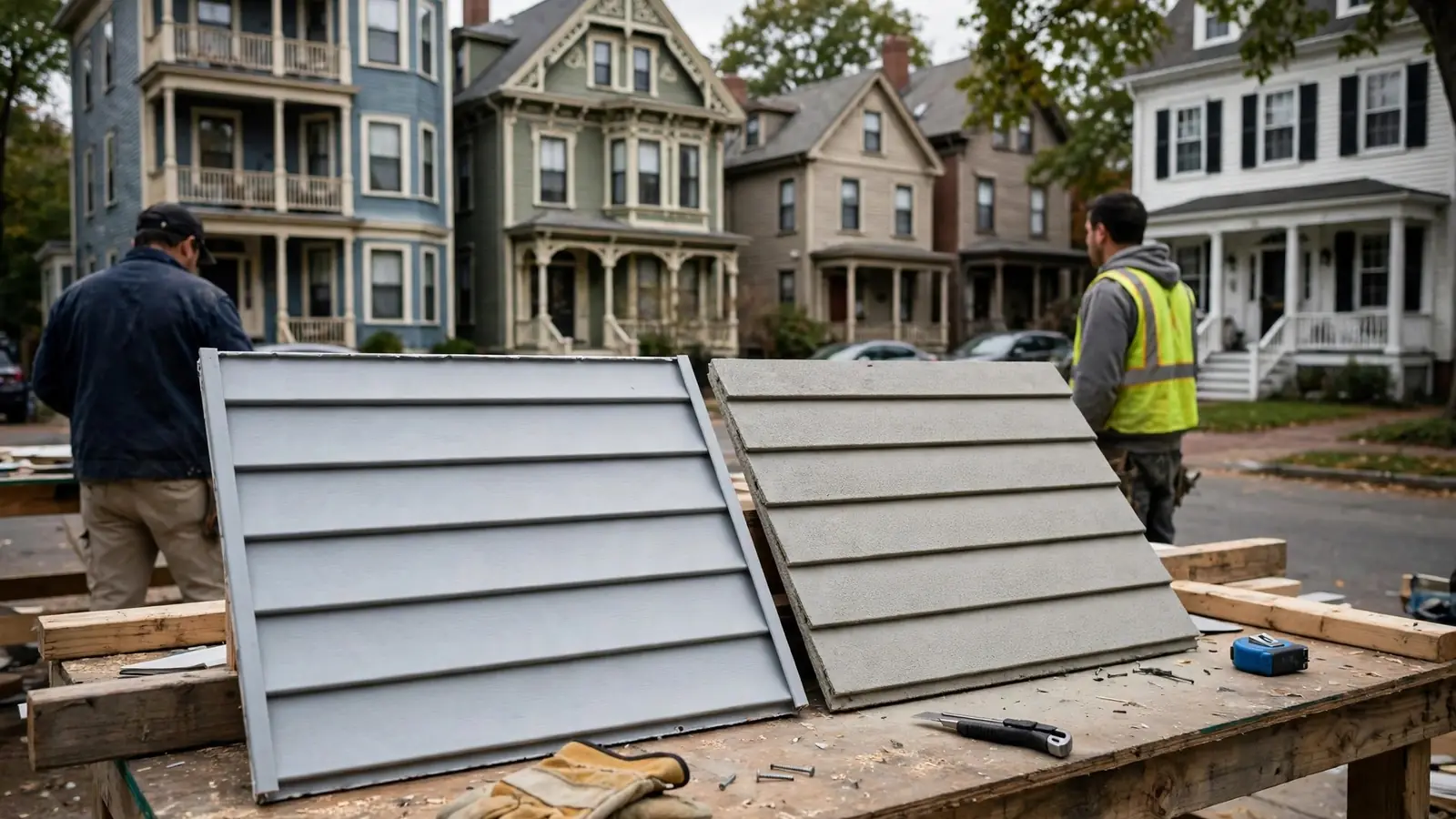
Key facts: Vinyl vs fiber cement
- Fiber cement is made from cement, sand and cellulose fibers and is noncombustible [1].
- Vinyl siding is hung loosely so it can expand and contract; fiber cement is fastened snugly and moves very little [2].
- Cutting fiber cement can release crystalline silica dust, which OSHA regulates on construction sites [3].
The short answer on vinyl and fiber cement
Vinyl or fiber cement: the short answer
Choose vinyl if you want the least upkeep and a lighter, faster install, especially on a tall triple-decker. Choose fiber cement if you want a painted-wood look, better resistance to impact and fire, and you are willing to repaint every so often. In historic districts, check with the Landmarks Commission first, since neither may be accepted on visible walls. [4]
Side-by-side comparison
Vinyl and fiber cement compared
| Factor | Vinyl | Fiber cement |
|---|---|---|
| Weight | Light | Heavy |
| Paint | Never | Factory finish or field paint, repainted over time |
| Cold weather | More brittle in deep cold | Not affected by cold |
| Impact and hail | Can crack or dent | Strongly resistant |
| Fire | Melts and burns | Noncombustible |
| Moisture | Not affected; relies on barrier | Absorbs some water; needs clearances and sealed edges |
| Look | Visible laps and seams | Crisp painted-wood look |
| Install | Faster, lighter work | Slower; dust control and two-person handling |
Compare figure
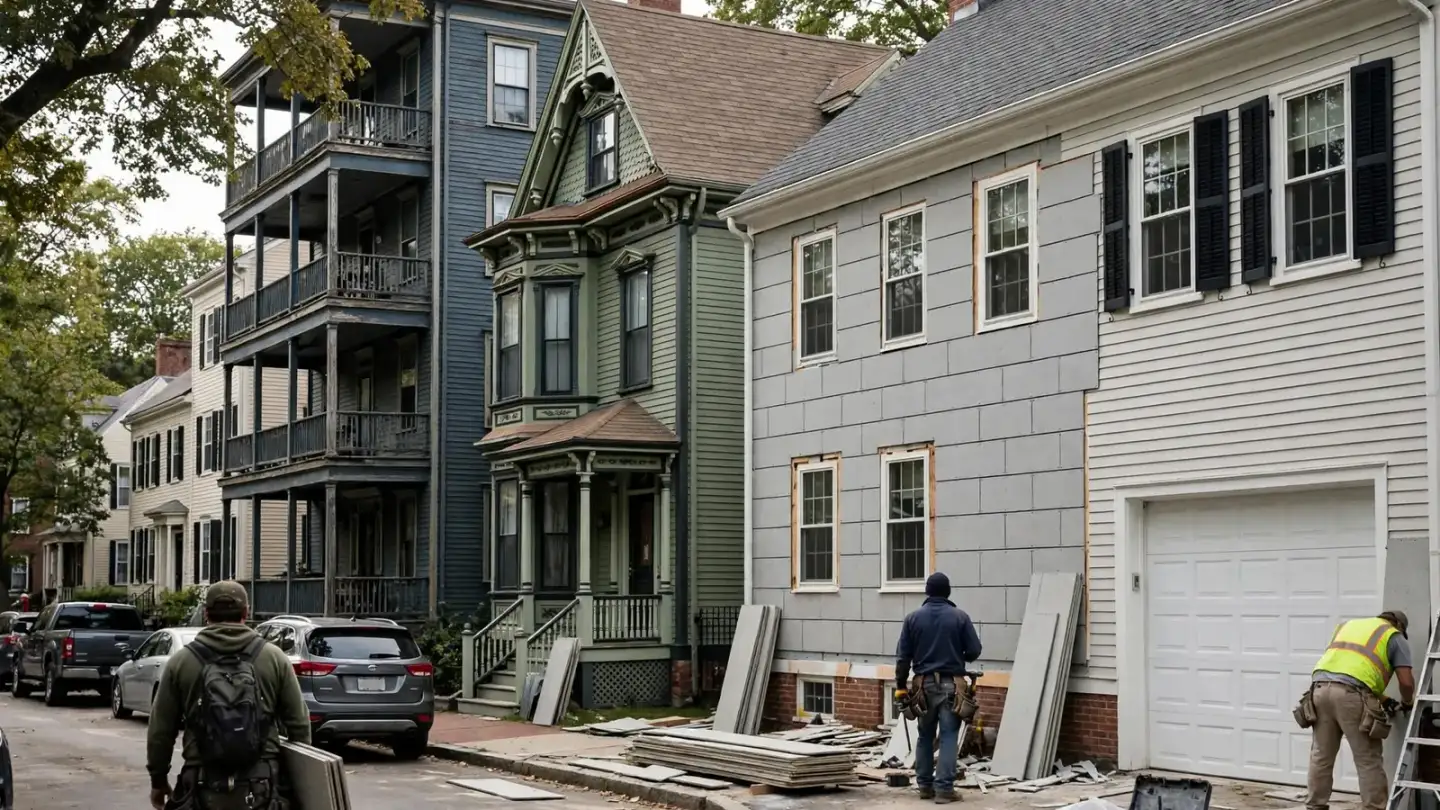
How vinyl handles Boston weather
Vinyl in a Boston winter and summer
Vinyl's big advantage is that water does not hurt it and it never needs paint. Its weakness is temperature. It moves with heat and cold, so it must be hung loosely, and it gets brittle in deep cold, where a ladder bump or hail can crack it. Thicker panels and careful installation reduce those risks.
How fiber cement handles Boston weather
Fiber cement through freeze and thaw
Fiber cement barely moves with temperature and is not bothered by cold. Its weak points are water and edges. Boards that sit against soil, decks or roofs absorb water and can break down with repeated freezing. Following the manufacturer's clearances, flashing joints and sealing cut edges prevent that.
Looks and neighborhood fit
How each material looks on Boston streets
On blocks of triple-deckers in Dorchester or Roslindale, vinyl is so common that it fits the streetscape easily. Choosing a profile close to the original clapboard reveal and keeping generous trim around windows helps a vinyl house look less flat. On streets of Victorians in Jamaica Plain, or colonials in West Roxbury, fiber cement's painted surface and crisp edges often look closer to the original wood.
Trim makes as much difference as the siding. Vinyl systems use corner posts and J-channel, which read differently from flat painted trim boards. Fiber cement is often paired with flat PVC or fiber cement trim boards that resemble traditional wood details. If curb appeal matters, look at houses in your neighborhood that use each material and note what you like.
In Boston's historic and architectural conservation districts, appearance is not just taste. The Landmarks Commission reviews visible exterior changes, and in many districts it expects wood or materials that closely match the original. Fiber cement may be accepted in some cases; vinyl less often. Check before choosing.
Close neighbors and fire
Fire safety on tightly packed lots
Many Boston houses stand only a few feet from their neighbors. In a fire, vinyl siding melts and burns, while fiber cement does not burn. Building codes include requirements for exterior walls close to property lines, and some owners choose fiber cement on narrow side yards for added protection. A contractor familiar with Boston can explain whether spacing affects your options.
Repairs down the road
Repairing each material later
Vinyl repairs are quick when matching panels exist: unlock, replace, relock. Matching faded colors is the challenge. Fiber cement repairs involve removing fasteners, replacing a plank and repainting it, which takes longer but blends well when the house is painted. Keep spare material and product information after any re-side.
Questions to answer first
Questions to ask yourself before choosing
- How long do you plan to own the house?
- Are you willing to repaint every so often, or do you want no painting at all?
- Is the house in a historic district?
- Does the house sit close to neighbors, where fire resistance matters more?
- Is the house tall and exposed to wind, where panel stiffness matters?
- Do you want the street-side look of painted wood?
How contractors help you choose
How a contractor helps you choose
- 1
Look at the house
They consider height, exposure, neighbors, trim and style.
- 2
Check rules
They confirm whether historic review applies.
- 3
Show samples
They show both materials in the colors and profiles you are considering.
- 4
Explain the install
They describe how each would be installed and maintained on your house.
Upkeep over the years
Maintenance with each material
Vinyl needs washing and occasional panel repairs. Fiber cement needs washing, touch-ups and eventual repainting, though far less often than wood. Both need clean gutters and good flashing to keep the wall behind them dry.
What to tell the contractor about materials
What to mention when you call about materials
- Which material you are leaning toward and why.
- The age and style of the house.
- Whether you know of any historic district rules.
- How much upkeep you are willing to take on.
Installation matters more
Why the installer matters more than the material
Most siding failures trace back to installation details rather than the product. Vinyl nailed tight, fiber cement without joint flashing or clearances, missing kick-outs and unflashed windows cause problems regardless of material. Ask any contractor which manufacturer instructions they follow and how they flash openings.
Material questions
Questions about vinyl and fiber cement
Which lasts longer, vinyl or fiber cement?
Both can last decades when installed correctly. Fiber cement resists impact and fire better. Vinyl avoids painting. Installation quality matters more than the material for long-term results.
Is fiber cement worth it on a triple-decker?
It can be, especially if you want a painted look and better impact resistance. The job is heavier and slower than vinyl, and the boards need repainting over time.
Can vinyl look like wood?
Many vinyl profiles imitate wood grain and traditional laps. Up close, the seams and lap edges show it is vinyl. Fiber cement comes closer to the look of painted wood.
Which is better near the ocean?
Both work near salt air. Use corrosion-resistant fasteners and trim either way. Fiber cement resists wind-blown debris better; vinyl does not need painting in salty air.
Can I mix vinyl and fiber cement on one house?
Yes. Some owners use fiber cement on the street-facing side and vinyl on less visible walls. Transitions need careful trim and flashing.
Which material is easier to repair?
Vinyl panels unlock and relock quickly if a match is available. Fiber cement planks take longer to swap and need repainting, but repairs blend well on painted houses.
Does either material need special fasteners near the coast?
Both should use corrosion-resistant fasteners and trim near salt air, as in South Boston, East Boston and coastal Dorchester.