Key facts: Jamaica Plain
- Three large green spaces, the pond, the arboretum and Franklin Park, edge Jamaica Plain as part of Boston's Emerald Necklace [1].
- Damp building materials can support mold growth within 24 to 48 hours, which is why shaded walls need to dry well [2].
- Siding replacement in Jamaica Plain needs a Short-Form permit from Boston's Inspectional Services Department [3].
- Boston's Landmarks Commission reviews visible exterior changes in designated districts and landmarks [4].
Jamaica Plain coverage
Jamaica Plain areas covered
The contractor network accepts calls from Jamaica Plain's ZIP code. Coverage can change, so call to confirm.
- 02130: all of Jamaica Plain, including Pondside, Sumner Hill, Hyde Square, Stony Brook, Green Street, Forest Hills and the Moss Hill and Woodbourne areas.
Jamaica Plain housing
What Jamaica Plain's houses are like
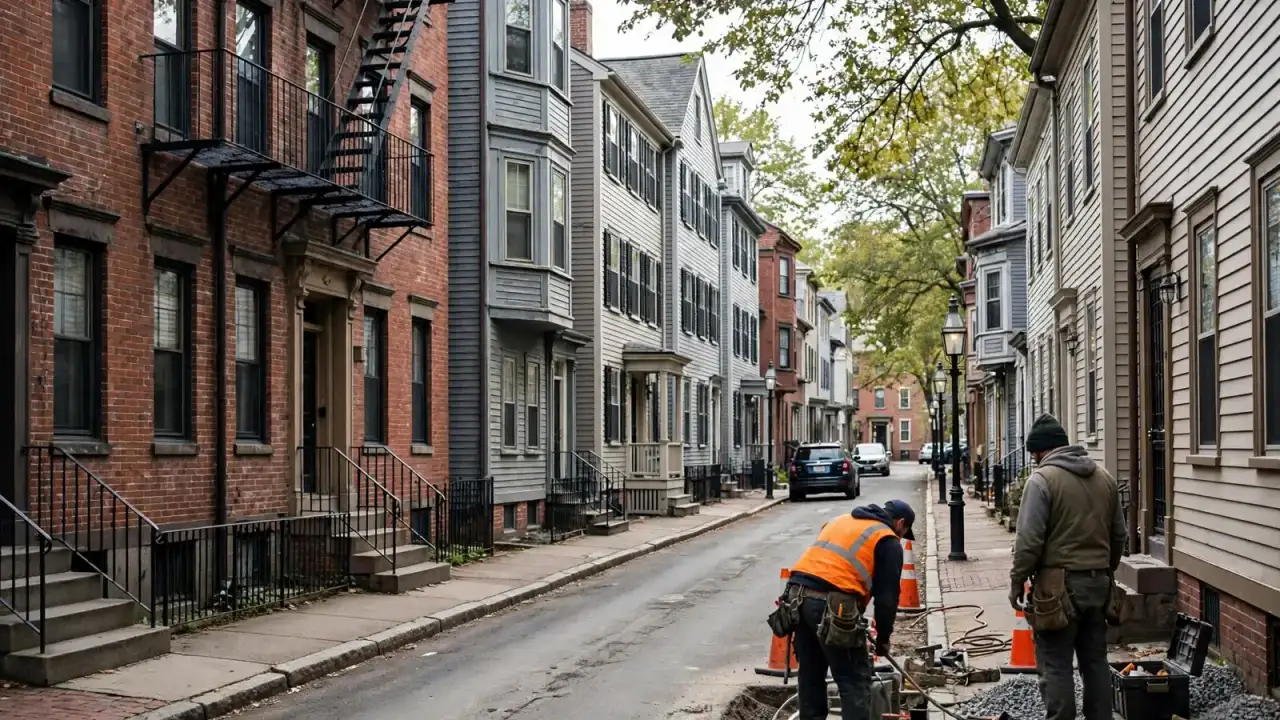
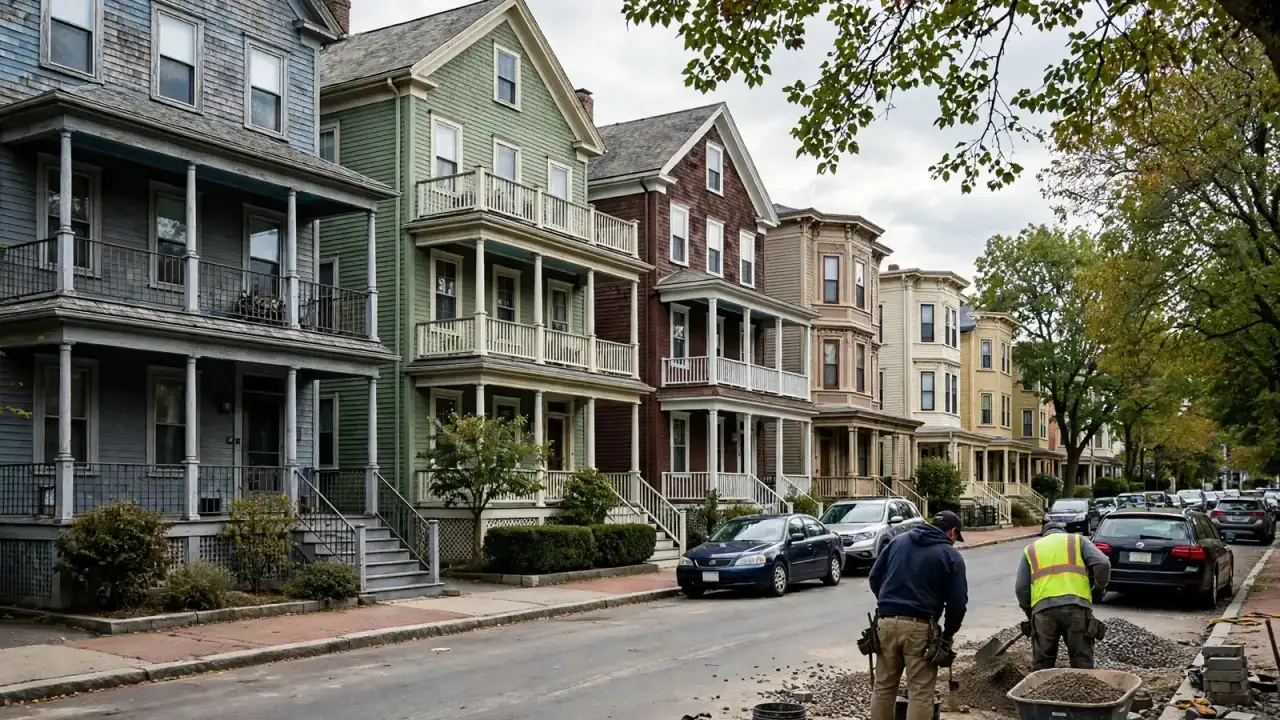
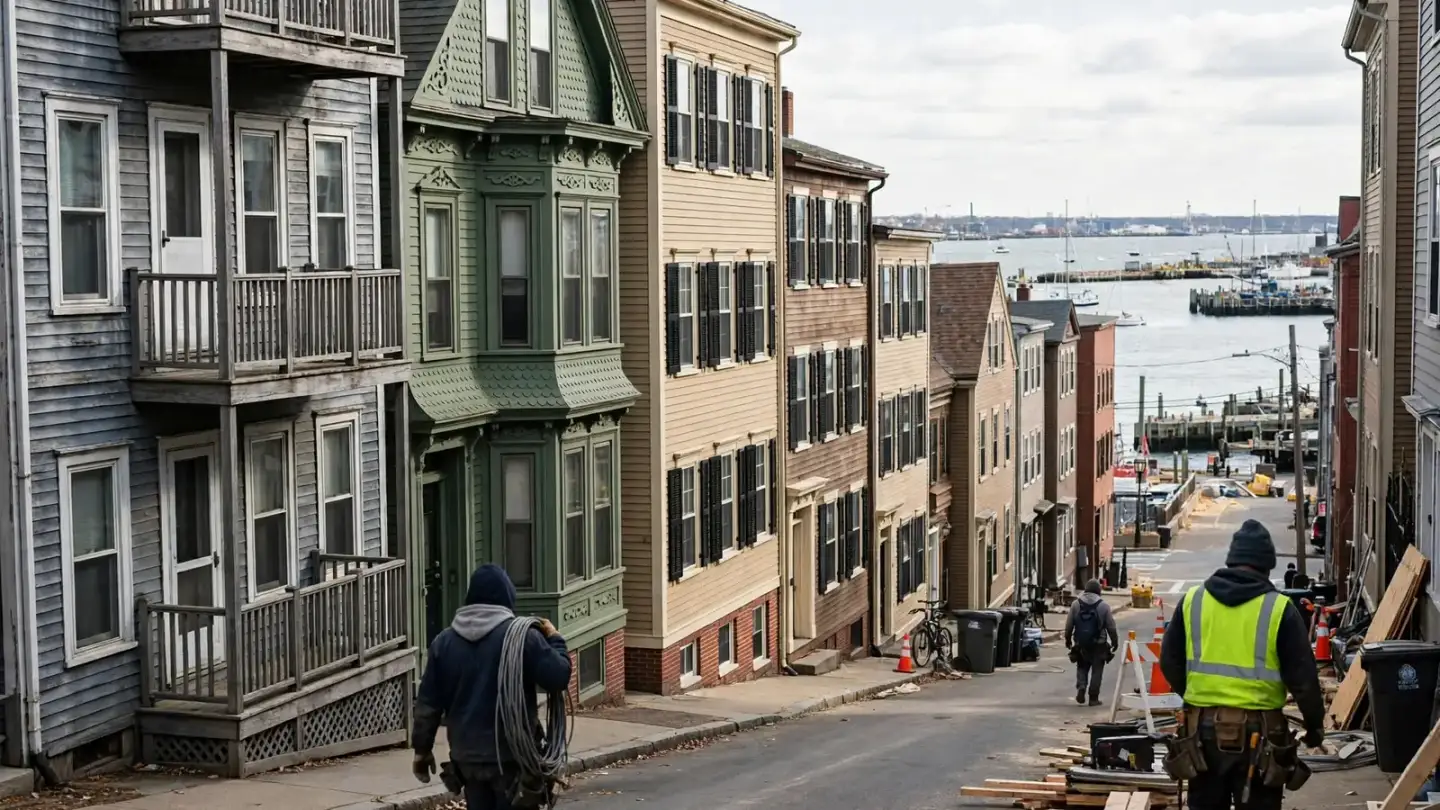
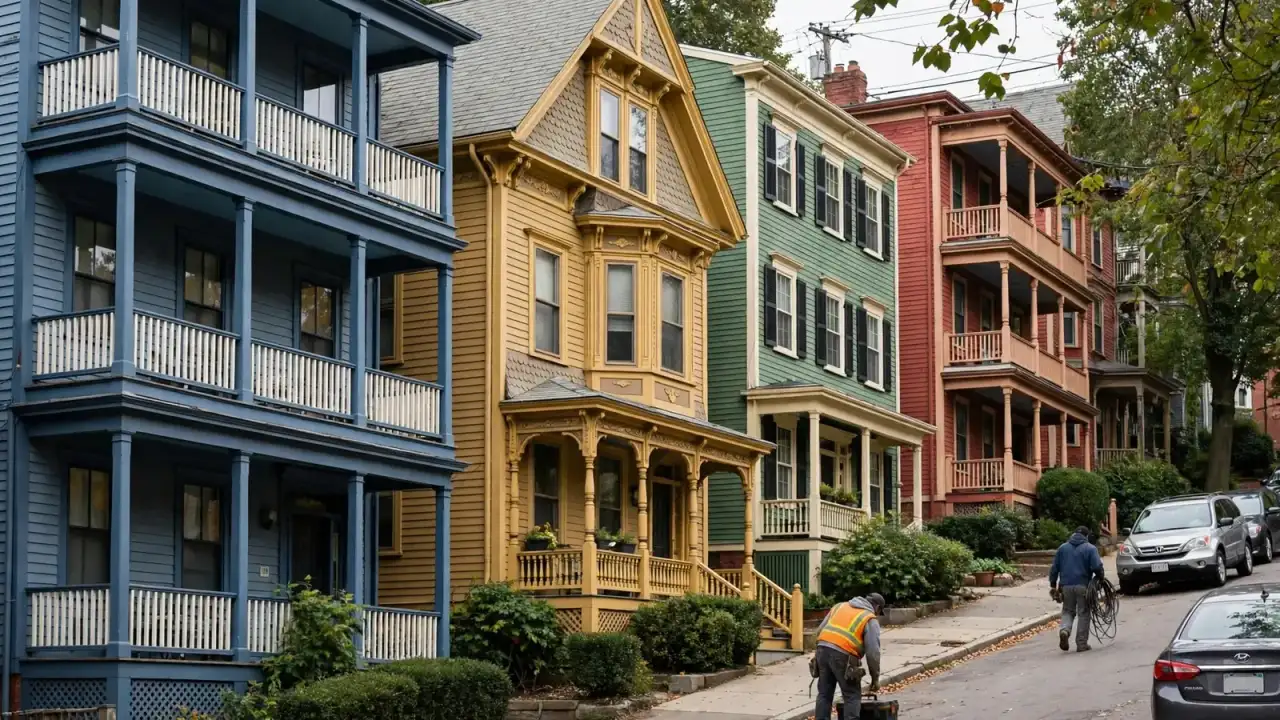
Jamaica Plain began as a country retreat for wealthy Bostonians and then grew into a streetcar suburb. Both eras left their mark. Around Jamaica Pond and on Sumner Hill and Moss Hill stand large Victorian, Queen Anne and Colonial Revival houses with complex rooflines, towers, deep porches and patterned shingles. Along the streetcar corridors and near the Southwest Corridor, triple-deckers and two-families line the streets.
Most houses are wood-frame and were built between the 1850s and 1920s. Original cladding was clapboard on lower stories and wood shingles on upper stories and gables, with elaborate trim. Many houses have been re-clad over the years, but Jamaica Plain has a strong tradition of restoration, and many owners have stripped later siding to bring back original details.
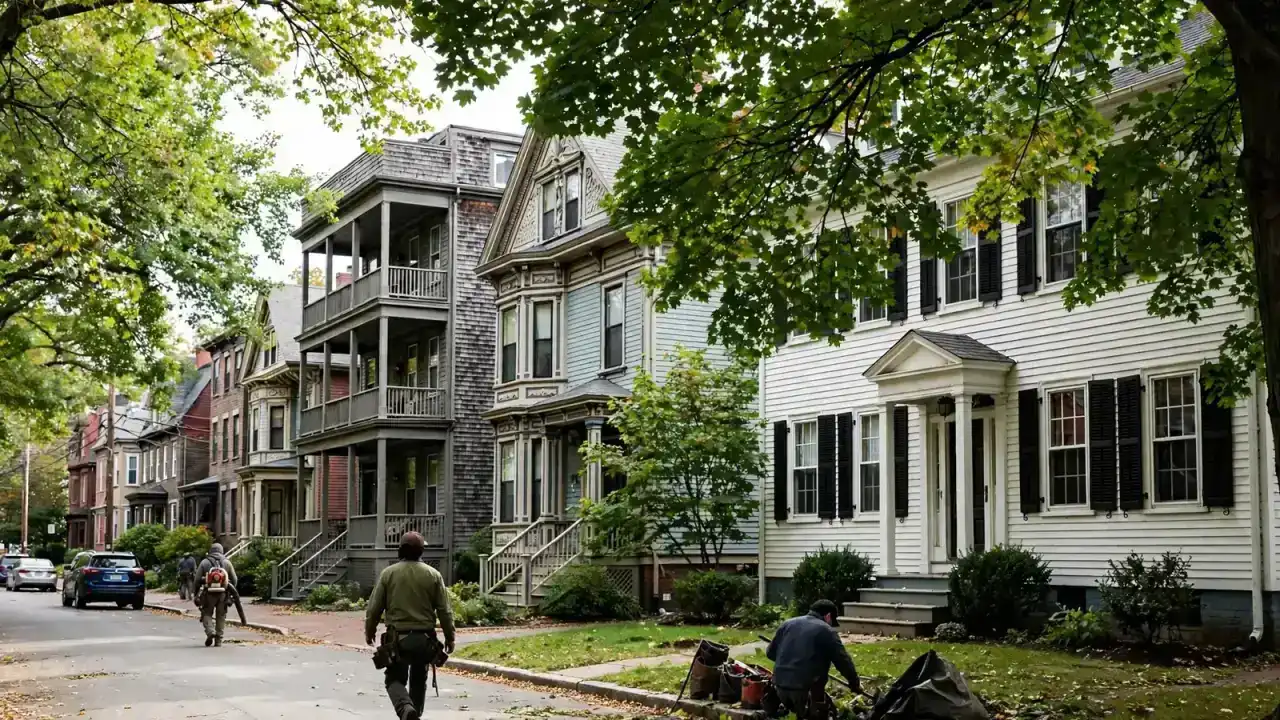
The neighborhood is also unusually green. The pond, the Arboretum and the big park to the east all touch it, and its streets are lined with mature trees. That canopy is part of the neighborhood's appeal, but it keeps many walls shaded and damp, which affects how siding and paint age.
Common Jamaica Plain siding problems
Siding problems contractors find in Jamaica Plain
These issues show up often on Jamaica Plain houses.
Mildew and slow drying
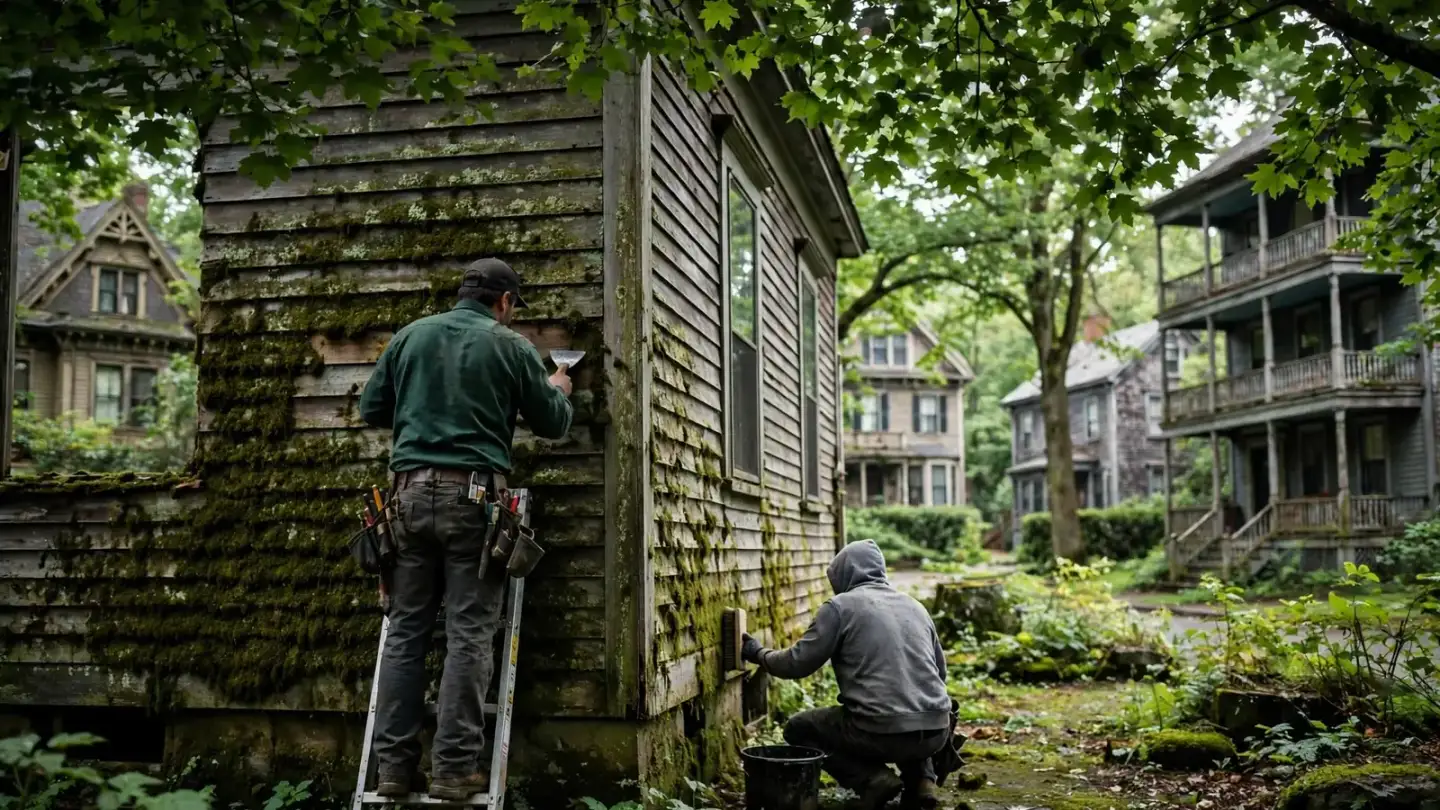
Shaded north and side walls stay damp, growing mildew on siding and pushing paint off wood.
Read moreFailing decorative shingles
Patterned wood shingles on gables and towers split, cup and fall out as they age.
Read moreRotted trim and brackets
Victorian trim has many joints and end grain where paint fails and rot starts.
Read moreLimb and tree damage
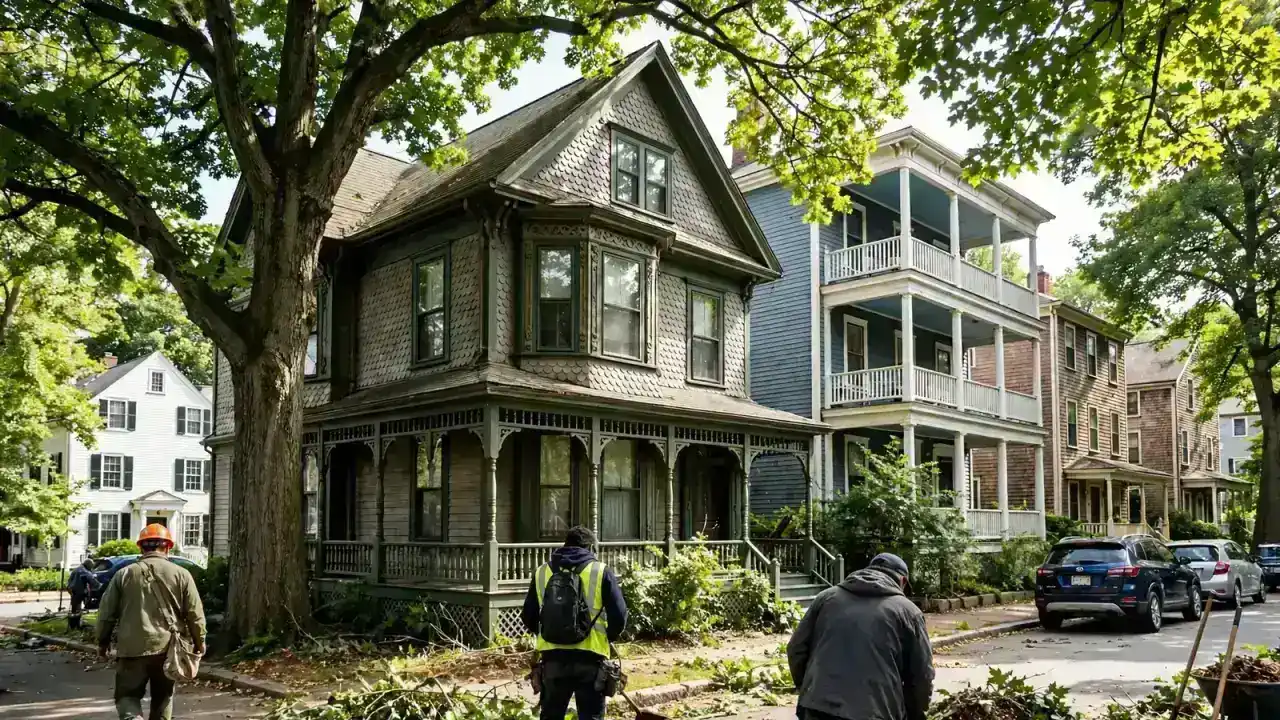
Branches from mature street and yard trees damage siding, gutters and trim in storms.
Read more
Shade and moisture in Jamaica Plain
How tree cover affects siding in Jamaica Plain
Siding sheds rain, but it also needs to dry. Under heavy canopy, walls get little direct sun and stay damp after rain, dew and snowmelt. On painted wood, that moisture works into joints and end grain, and paint begins to peel. On vinyl, mildew and algae grow in green streaks. On any material, debris from trees fills gutters faster, leading to overflow onto walls.
Contractors working in Jamaica Plain pay close attention to drainage behind siding. A rainscreen gap, created with furring strips or a drainage mat, helps walls dry by leaving an air space behind the cladding. Proper flashing at every opening and good gutters matter even more than usual. Some owners choose fiber cement or factory-finished products for shaded walls because they hold their finish longer than wood in damp conditions.
Simple steps help too: trimming branches back from the house, keeping shrubs off walls, cleaning gutters at least twice a year and washing mildew off siding gently before it stains.
Jamaica Plain shade figure
Victorian details in Jamaica Plain
Restoring and repairing Victorian siding in Jamaica Plain
Jamaica Plain's Victorians are the neighborhood's signature, and many owners want to keep their character. Patterned shingles in fish-scale, diamond or staggered shapes can be repaired by weaving in new shingles cut to match, or replaced entirely on a gable. Cedar remains the traditional choice. Fiber cement and PVC shingles offer lower-upkeep alternatives that can mimic the patterns.
Trim is where Victorian houses demand the most care. Brackets, frieze boards, window hoods and porch columns all have joints where water enters. Restoring them often means replacing rotted pieces with new wood or PVC milled to match, priming all sides, flashing horizontal surfaces and painting carefully. A contractor experienced with older houses will explain what can be repaired and what needs replacing.
Some owners re-side the flat walls of a Victorian with fiber cement or vinyl and restore the decorative elements in wood or PVC. That balances upkeep and character. Others go back to all wood. The right answer depends on the house, the upkeep you are willing to take on and your plans.
Triple-deckers in Jamaica Plain
Jamaica Plain's triple-deckers and two-families
Jamaica Plain's triple-deckers cluster near Hyde Square, Egleston, Stony Brook and along the Centre and South Street corridors. Like those in Dorchester, they have stacked porches, front bays and layered siding. Many have been converted to condominiums, which adds a step: condo associations usually decide on exterior work and must approve materials, colors and schedules.
If you own a condo unit, talk to your association before calling about siding. Associations often want proposals that cover the whole building, since partial re-siding can look mismatched. A contractor can talk the association through the process on a call.
Permits and historic review in Jamaica Plain
Permits and historic review for Jamaica Plain siding
Jamaica Plain is part of the City of Boston, so siding replacement needs a Short-Form permit from Inspectional Services. [3] Some Jamaica Plain properties are individual Boston Landmarks or sit within areas that have been studied for designation. If your house has any designation, visible exterior changes go to the Boston Landmarks Commission. [4] Check your address before choosing materials.
Jamaica Plain borders Brookline, which is a separate town with its own building department and preservation rules. Houses near the Brookline line should confirm which jurisdiction applies.
Jamaica Plain energy assessments
Using an energy assessment before re-siding
Before re-siding a large Jamaica Plain house, some owners arrange a home energy assessment through a Massachusetts program such as Mass Save. The assessment can identify air leaks, insulation gaps and moisture risks, which helps the siding contractor plan whether to add exterior insulation and how to detail the walls. It also helps set priorities if roof, window and siding work cannot all happen at once.
Jamaica Plain and Roslindale borders
Where Jamaica Plain ends
Jamaica Plain shares borders with Roxbury, Mission Hill, Roslindale, West Roxbury and Brookline. All but Brookline are part of Boston and follow the same permit process. If your address is near Brookline, confirm the jurisdiction, because Brookline has its own building department and preservation commission.
Planning a Jamaica Plain visit
Planning a siding visit in Jamaica Plain
- 1
Trees and access
Note any branches over the roof or walls; staging may need trimming first.
- 2
Condo approval
If your building is a condominium, get association approval before work.
- 3
Decorative details
Point out shingles and trim you want to keep or restore.
- 4
Parking
Some streets have resident parking; ask about permits for dumpsters.
- 5
Gardens
Protect plantings near walls before staging goes up.
- 6
Mildew spots
Point out walls that stay damp or grow mildew, so drainage details, rainscreen gaps and gutter changes can be planned for them before materials are ordered.
Jamaica Plain house types
Jamaica Plain house types and siding notes
| House type | Where common | Siding notes |
|---|---|---|
| Large Victorian and Queen Anne | Pondside, Sumner Hill, Moss Hill | Shingles, towers, trim restoration |
| Colonial Revival single-family | Moss Hill, Woodbourne | Simpler walls; fiber cement popular |
| Triple-decker | Hyde Square, Egleston, Stony Brook | Stacked porches, condo associations |
| Two-family | Throughout | Re-siding with vinyl or fiber cement common |
| Workers' cottages | Near Green Street and Forest Hills | Small walls, often layered |
Choosing materials in Jamaica Plain
Siding choices that suit Jamaica Plain
Owners in Jamaica Plain often prioritize character. Fiber cement and wood are the most common choices on Victorians and Colonials, while vinyl appears often on triple-deckers and two-families. Shade is a factor: factory-finished fiber cement resists mildew staining better than painted wood, and vinyl can be washed easily. Lighter colors show mildew less. Ask the contractor what has held up on similar houses nearby.
Storms and trees in Jamaica Plain
Storm and limb damage in Jamaica Plain
The same trees that shade Jamaica Plain's houses can damage them in storms. Heavy, wet snow and strong winds bring down limbs that crack siding, crush gutters and break trim. After storms, check for impact damage on walls facing trees and for gutters pulled away from fascia. Regular tree trimming by an arborist reduces risk.
Jamaica Plain sections up close
Siding notes for Jamaica Plain's sections
- PondsideLarge Victorian and shingle-style houses near Jamaica Pond with deep porches, towers and patterned shingles. Restoration and careful trim work are common requests.
- Sumner HillA hilltop enclave of Victorian and Colonial Revival houses with mature trees. Shade, mildew and decorative details shape most siding work here.
- Hyde Square and EglestonTriple-deckers and two-families, many converted to condos. Association approvals and stacked-porch leaks come up often.
- Stony Brook and Forest HillsTwo-families and triple-deckers near the Southwest Corridor, with tight lots and layered siding.
- Moss Hill and WoodbourneEarly twentieth-century single-families, from Colonials to bungalows, on larger lots with heavy tree cover.
- Green Street and BrooksideWorkers' cottages and two-families with modest walls, often carrying several layers of past siding.
Repaint or re-side a Jamaica Plain Victorian
Repainting versus re-siding a Jamaica Plain Victorian
Many Jamaica Plain owners face the same question: repaint and repair the original wood, or re-side with a different material. If the clapboard and shingles are mostly sound, scraping, repairing and repainting keeps the house original and can be the right choice, especially for houses with significant historic character. On pre-1978 houses, paint preparation must follow lead-safe practices, which makes careful work essential.
If the wood is failing across many walls, or paint will not stay on because moisture keeps pushing through, re-siding becomes more sensible. Fiber cement replicates painted clapboard closely, and cedar shingles can recreate gables. Some owners keep wood on the front facade for character and use fiber cement on shaded side and rear walls that suffer most from moisture.
Porches in Jamaica Plain
Porches and entries on Jamaica Plain houses
Jamaica Plain's houses have some of the city's most elaborate porches: wraparounds on Victorians, stacked decks on triple-deckers and covered entries with columns and railings. Every porch roof that meets a wall needs step flashing and a kick-out, and every porch floor attached to the house needs ledger flashing. Rot at those joints is common, and repairs often involve both siding and porch carpentry. Ask the contractor to check porch connections whenever siding near them is opened.
Insulation and comfort in Jamaica Plain
Comfort upgrades during Jamaica Plain siding work
Large Victorian houses often have uninsulated walls and drafty windows. When siding comes off, adding exterior insulation and air sealing can make rooms noticeably more comfortable. On houses where original trim and proportions matter, the added thickness must be designed carefully so window casings and corner boards still look right. A contractor can explain the trade-offs between interior and exterior insulation for your house.
Gutters and debris in Jamaica Plain
Leaves, gutters and siding in Jamaica Plain
Every fall, Jamaica Plain's trees drop leaves and seeds into gutters, and every spring they add more. Clogged gutters overflow onto walls, soaking the same section of siding again and again. On Victorians with built-in or box gutters hidden in the cornice, a clog can send water directly into the wall framing. Many siding repairs here start with a failed gutter above.
Gutter guards help but do not eliminate cleaning under heavy canopy. Downspouts should discharge well away from foundations, especially on houses with stone foundations common in older parts of the neighborhood. When siding is replaced, contractors often recommend replacing or relining gutters at the same time so the new cladding is protected from the start.
Colors and finishes in Jamaica Plain
Choosing colors and finishes for Jamaica Plain houses
Jamaica Plain has a tradition of bold, multi-color paint schemes on its Victorians, with different colors on clapboard, shingles, trim and sash. Owners re-siding often want to keep that look. Fiber cement can be painted in any color scheme, and factory finishes come in a wide range. Vinyl colors are fixed, though modern palettes include deeper tones. PVC trim can be painted to match.
In shaded locations, lighter colors show mildew less, and darker colors can hide dirt but may fade more on sunny walls. Ask the contractor for samples and look at them on your own walls in both sun and shade before choosing.
Working near the parks
Siding work near Jamaica Pond and the Arboretum
Houses that back onto the pond, the Arboretum or Franklin Park often have the most mature trees and the most shade. They also sit on streets with heavy foot traffic and park visitors. Contractors working there plan staging and debris handling carefully, keep sidewalks clear and protect nearby plantings. Lead-safe containment is especially important where children and dogs pass by.
Older sheathing in Jamaica Plain
What contractors find under old Jamaica Plain siding
Behind the clapboard on many Jamaica Plain houses is board sheathing: wide planks nailed diagonally or horizontally across the studs, often with gaps between them and sometimes no paper at all. That sheathing can be sound after more than a century, but it is often damaged near windows, porch roofs and the base of walls. Contractors replace bad sections with plywood or new boards, fasten loose planks and install a modern water-resistive barrier over everything before new siding goes on.
Jamaica Plain winter notes
Winter on shaded Jamaica Plain walls
In winter, shaded walls under Jamaica Plain's canopy hold snow and ice longer than sunny ones. Icicles form along porch roofs and box gutters, and meltwater refreezes at the base of walls. Contractors here pay attention to clearances at the bottom of siding, ice and water membrane at roof-to-wall joints, and gutters sized for heavy leaf and snow loads on these older Jamaica Plain houses.
Jamaica Plain stone foundations
Where siding meets old stone foundations
Many older Jamaica Plain houses sit on fieldstone or granite block foundations. The transition between the foundation and the first course of siding needs a sill flashing or a drip edge that throws water clear of the stone. Where soil or patios have risen against the house over the years, the bottom course of siding may be too close to grade. Lowering soil or adding a metal transition protects the new siding.
Jamaica Plain siding questions
Questions about siding in Jamaica Plain
Why does my Jamaica Plain house have so much mildew on the siding?
Heavy tree cover keeps walls shaded and damp. Mildew grows on surfaces that stay wet. Trimming branches, cleaning gutters and gentle washing help, and rainscreen details help walls dry when re-siding.
Can decorative shingles be repaired instead of replaced?
Often yes. Damaged shingles can be pulled and new ones woven in, cut to match the pattern. If many are failing, re-shingling the gable may make more sense.
Do I need condo association approval for siding?
If your unit is in a condominium, exterior changes are usually controlled by the association. Get approval before arranging work.
Is my Jamaica Plain house in a historic district?
Most of Jamaica Plain is not in a local historic district, but some properties have Landmark status. Check your address with the Boston Landmarks Commission before choosing materials.
Do I need a permit to re-side in Jamaica Plain?
Yes. A Short-Form permit from Boston's Inspectional Services Department is required for siding replacement.
What siding holds up best under heavy trees?
Factory-finished fiber cement and quality vinyl handle shade well. Painted wood needs more frequent upkeep in damp conditions. Drainage details matter as much as the material.
Can I keep wood on the front and use another material on the sides?
Yes. Many owners keep original wood on the street facade and use fiber cement or vinyl on shaded side and rear walls. Transitions need careful trim and flashing.
Will a contractor work around my garden?
Ask about it on the call. Most crews protect plantings with tarps and plan staging to avoid beds, but some disturbance near walls is hard to avoid.
What do contractors find under old siding in Jamaica Plain?
Often board sheathing from the original construction, sometimes without building paper, plus damaged areas near windows and porches. Bad sections are replaced and a new barrier goes over the whole wall.
Are box gutters a problem for siding in Jamaica Plain?
Built-in box gutters on older houses can leak into the cornice and wall when they clog or their lining fails. Have them checked and relined when siding work is planned.
Can vinyl work on a Jamaica Plain Victorian?
It can on flat walls, especially on rear and side walls, though many owners prefer fiber cement or wood to keep the house's character. Decorative details are usually kept in wood or PVC.
Should I trim trees before re-siding?
Usually yes. Trimming branches away from walls and roofs gives crews room for staging and helps the new siding dry.