
Key facts: Choosing siding for cold winters
- Massachusetts lies in a cold climate zone under the energy code, which shapes wall insulation requirements [1].
- Continuous insulation outside the sheathing reduces heat loss through framing and keeps sheathing warmer [2].
- Vinyl becomes more brittle in cold weather and needs careful handling during winter installation [3].
Cold-climate siding: the short answer
Siding for cold winters: the short answer
Fiber cement and quality vinyl both perform well in Boston's cold when installed correctly. The bigger difference comes from what goes behind them: a well-lapped barrier, flashed openings, clearances from snow and, ideally, a layer of exterior insulation. Choose the material for looks and upkeep; choose the installer for the details. The siding services overview explains how each material is installed.
Winter performance
How siding materials handle winter
| Material | In deep cold | Snow and ice | Note |
|---|---|---|---|
| Vinyl | More brittle; can crack on impact | Unaffected by water | Thicker panels resist cracking |
| Fiber cement | Unaffected | Edges absorb water if buried | Keep clearances |
| Wood | Unaffected | Rots if kept wet | Paint upkeep critical |
| Insulated vinyl | Stiffer | Unaffected by water | Adds modest insulation |
Winter figure
Winter checks
Winter checks you can do from the ground
- Look for snow piled against the bottom of walls for long periods.
- Watch for icicles and ice dams at the eaves.
- Feel for drafts on exterior walls inside.
- Look for frost or damp spots on interior walls.
Freeze and thaw
What freeze-thaw cycles do to walls
Water that gets into joints freezes, expands and opens them wider. Over many cycles small gaps become entry points. Keeping water out with flashing and clearances is the best defense.
Ice dams and siding
Ice dams and the top of the wall
Ice dams form when heat escaping into the attic melts snow that refreezes at the eaves. Meltwater backs up and can run behind siding. Better attic insulation and ventilation reduce ice dams; proper roof edge and siding details limit the damage.
Insulation under siding
Adding insulation when re-siding
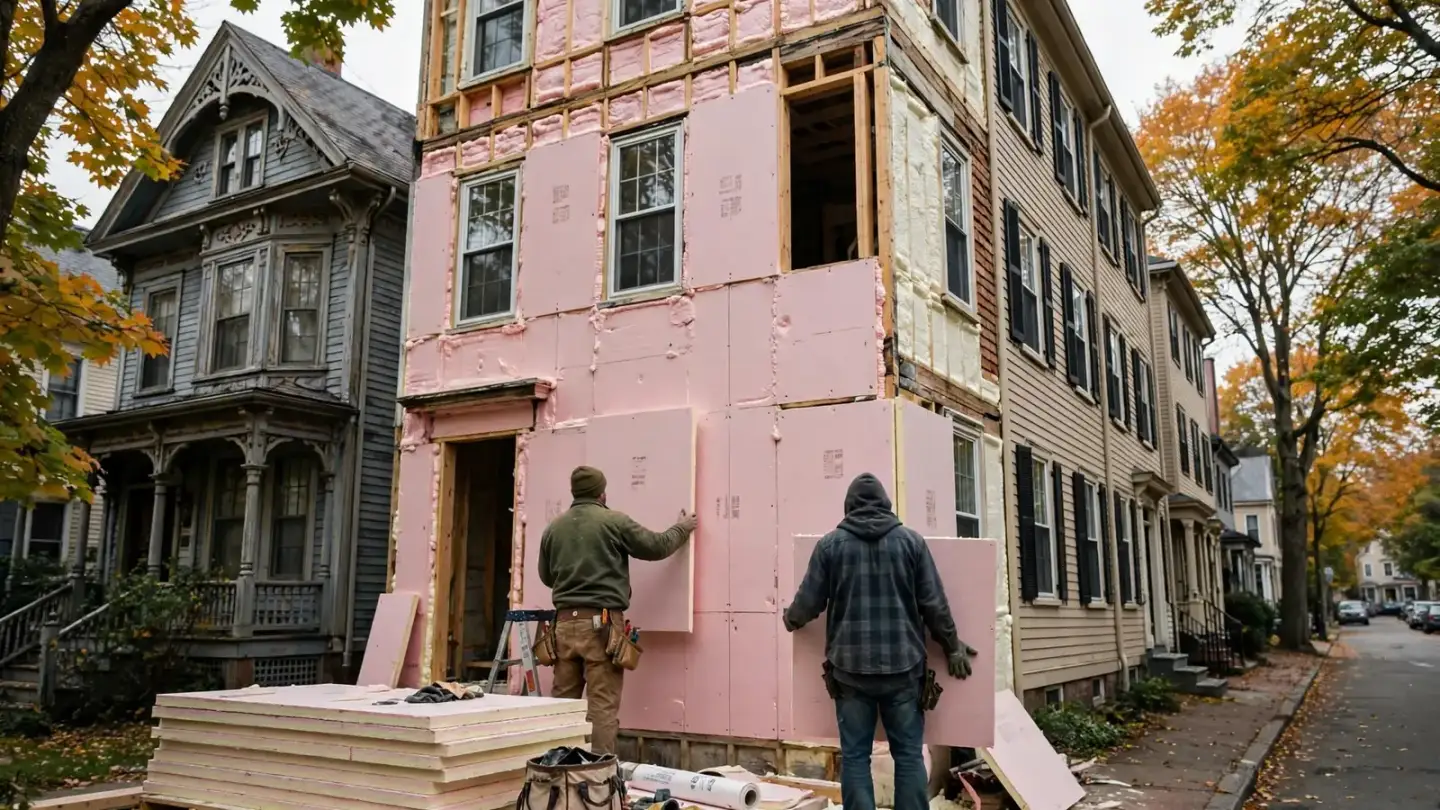
Re-siding is the best time to add continuous rigid insulation outside the sheathing. It reduces heat loss through studs and keeps sheathing warmer, lowering the risk of condensation. Trim and flashing must be adapted to the extra thickness.
How contractors build a cold-climate wall
How contractors build a wall for cold winters
- 1
Air seal
Gaps at windows and penetrations are sealed.
- 2
Insulate
Rigid foam goes on if planned, with taped seams.
- 3
Barrier
Housewrap is lapped properly.
- 4
Flash
Openings and roof joints are flashed.
- 5
Clad
Siding is installed with clearances above grade and roofs.
Upgrade or repair for winter
Repairing for winter or re-siding with insulation
If the walls are sound and dry, repairs and air sealing from inside can improve comfort. If the siding needs replacing anyway, adding exterior insulation at the same time is the most effective upgrade.
Boston winter conditions
What a Boston winter does to a wall
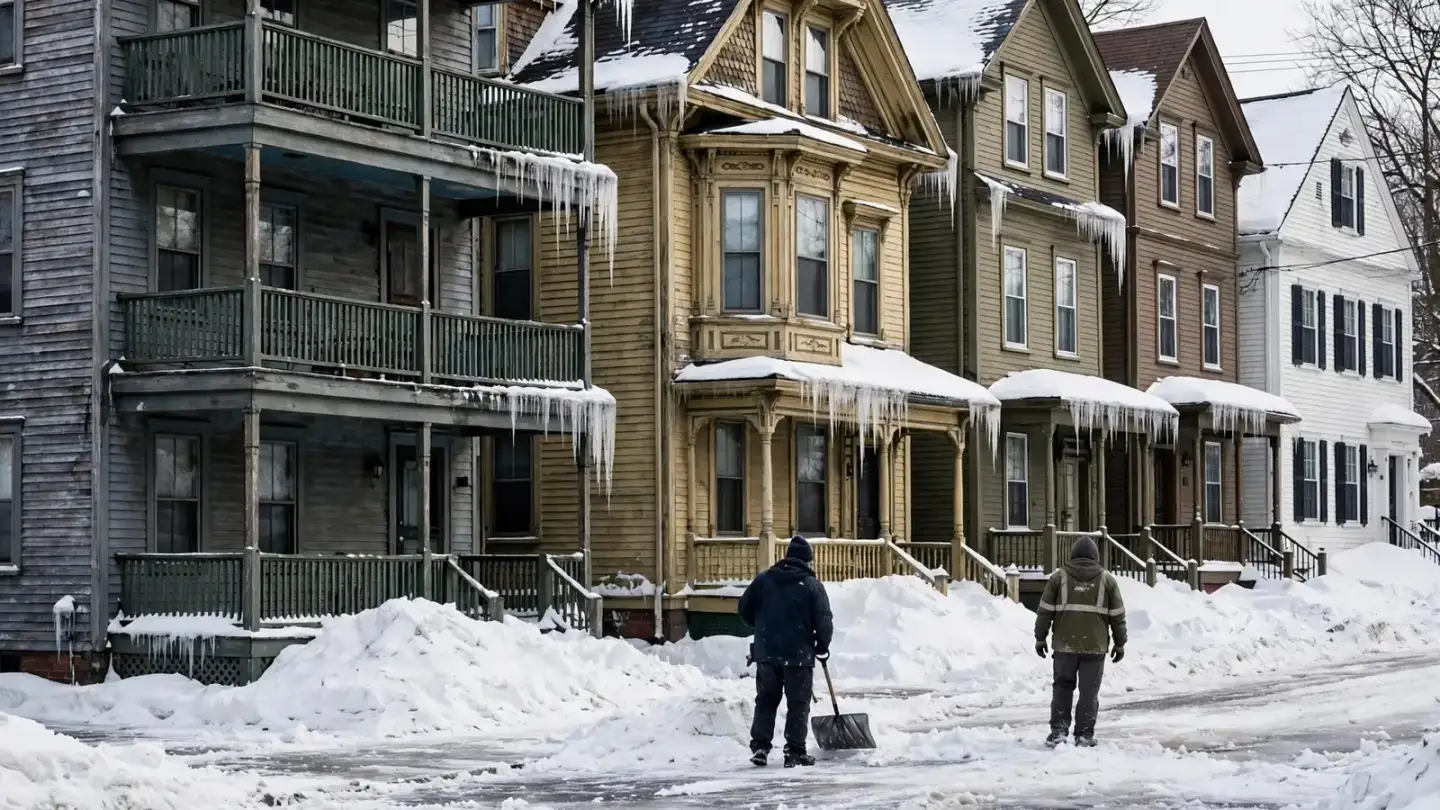
Boston winters swing between deep cold and thaws, often several times a month. Snow arrives with coastal storms, sometimes wet and heavy, and gets piled against walls by plows and shovels. Wind-driven snow finds its way into joints and vents. Each thaw sends meltwater down walls and into any gap, and each freeze expands what got in.
Houses differ in exposure. Coastal neighborhoods get more wind and salt spray. Shaded side yards between triple-deckers stay frozen longer and dry out slowly in spring. Sunny south walls see bigger daily temperature swings, which stresses vinyl most.
Choosing color and profile for winter
Color, thickness and profile choices for winter
In cold climates, thicker vinyl panels resist impact cracking better than thin ones. Insulated vinyl's foam backing adds stiffness. For fiber cement, a factory finish holds up well through freeze-thaw cycles, and keeping boards clear of snow lines protects their edges. Darker colors absorb more winter sun, which can help shed snow but increases movement in vinyl; ask the contractor how a chosen color behaves on your walls.
Energy code and re-siding
Massachusetts energy rules when walls are opened
Massachusetts adopts an energy code that sets insulation and air sealing requirements for new work. When walls are opened during a re-side, requirements may apply depending on the scope. Boston and some nearby communities have adopted stretch or specialized energy codes. Ask your contractor what applies to your project and whether adding exterior insulation makes sense.
Winter installation
What to expect from a winter siding job
Siding work continues through much of the Boston winter. Crews cover open walls with barrier the same day, work around snowstorms and plan painting of fiber cement or wood for warmer days. Vinyl is cut and fastened with gaps suited to the cold so it has room to expand in summer. Expect some days lost to weather, and ask how the contractor protects open walls overnight.
Winter prevention
Preparing siding for winter
- Fix cracks and loose panels in the fall.
- Clean gutters before the first snow.
- Avoid piling shoveled snow against walls.
What to tell the contractor about winter
What to mention about winter problems
- Which rooms are cold or drafty.
- Whether you get ice dams.
- Whether you want to add insulation.
Comfort and condensation
Cold walls, comfort and condensation
A cold exterior wall feels drafty even when no air is leaking, because your body loses heat to the cold surface. Walls with little insulation, common in older Boston houses, are often the coldest surfaces in a room. In very cold weather, moisture from indoor air can condense on those surfaces or inside the wall. Air sealing, insulation and good ventilation together reduce both discomfort and condensation risk. A re-side with exterior foam tackles the wall from the outside without disturbing interior plaster.
Winter siding questions
Questions about siding in cold weather
Does vinyl siding crack in Boston winters?
It can if struck in deep cold, especially older, thinner panels. Thicker panels and careful handling reduce the risk.
Is fiber cement better in the cold?
It is not affected by cold temperatures, but its edges must be kept away from snow and soil.
Does insulated vinyl make a big difference?
It adds stiffness and some insulation. A continuous layer of rigid foam under any siding usually adds more.
Can siding be installed in winter?
Yes, with care. Vinyl is handled gently, and sealants and paint may need warmer days.
Will new siding stop drafts?
Siding alone does little, but air sealing and insulation done during a re-side can reduce drafts noticeably.
Should I add insulation when I replace my siding?
It is the easiest time to do it. A layer of rigid foam outside the sheathing reduces heat loss through studs and keeps the wall warmer. Trim and flashing must be adjusted for the added thickness.
Why does snow keep rotting the bottom of my wall?
Snow piled against siding melts slowly and keeps wood wet for weeks. Keeping clearance between siding and the ground and not piling shoveled snow against walls helps.
Does dark siding help in winter?
Dark colors absorb more sun, which can warm the wall surface slightly, but the effect on comfort indoors is small. Insulation and air sealing matter far more.