Key facts: South Boston
- South Boston lies on a peninsula bordered by Boston Harbor and Dorchester Bay, giving many streets direct exposure to coastal wind [1].
- Climate Ready Boston identifies South Boston as one of the city's coastal neighborhoods facing flood risk from storms and sea-level rise [2].
- Re-siding a South Boston house requires a Short-Form permit from Boston's Inspectional Services Department [3].
- Federal lead-safe rules apply to paid work that disturbs paint on homes built before 1978 [4].
South Boston coverage
South Boston areas covered
The contractor network accepts calls from South Boston's residential ZIP code. Coverage can change, so call to confirm.
- 02127: South Boston, including City Point, the East Side, the West Side near Andrew Square, Dorchester Heights and the Telegraph Hill area.
South Boston housing
What South Boston's houses are like
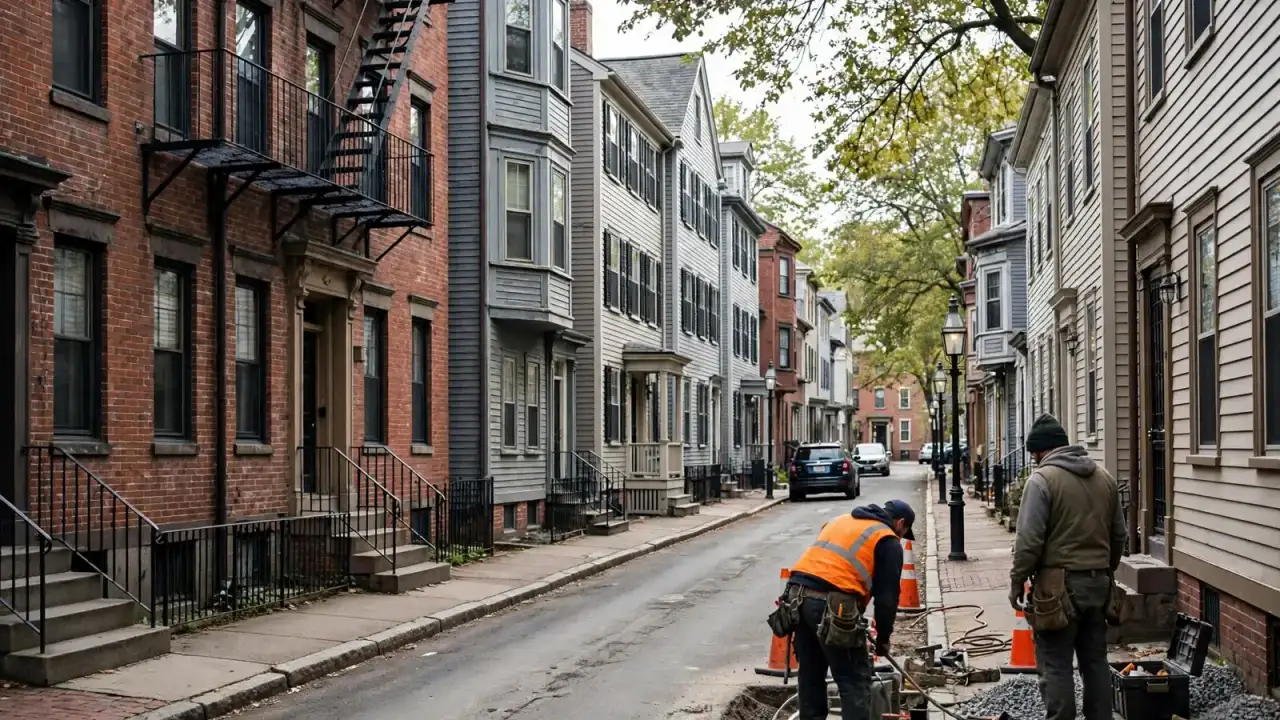
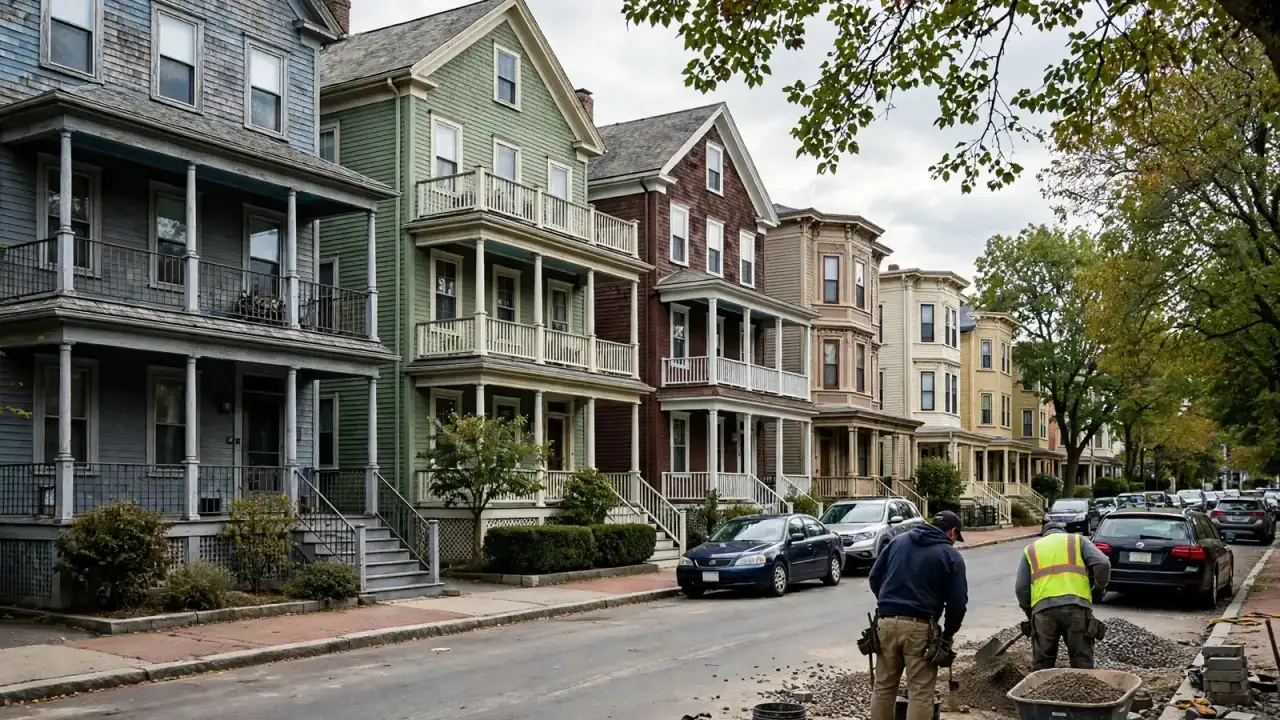
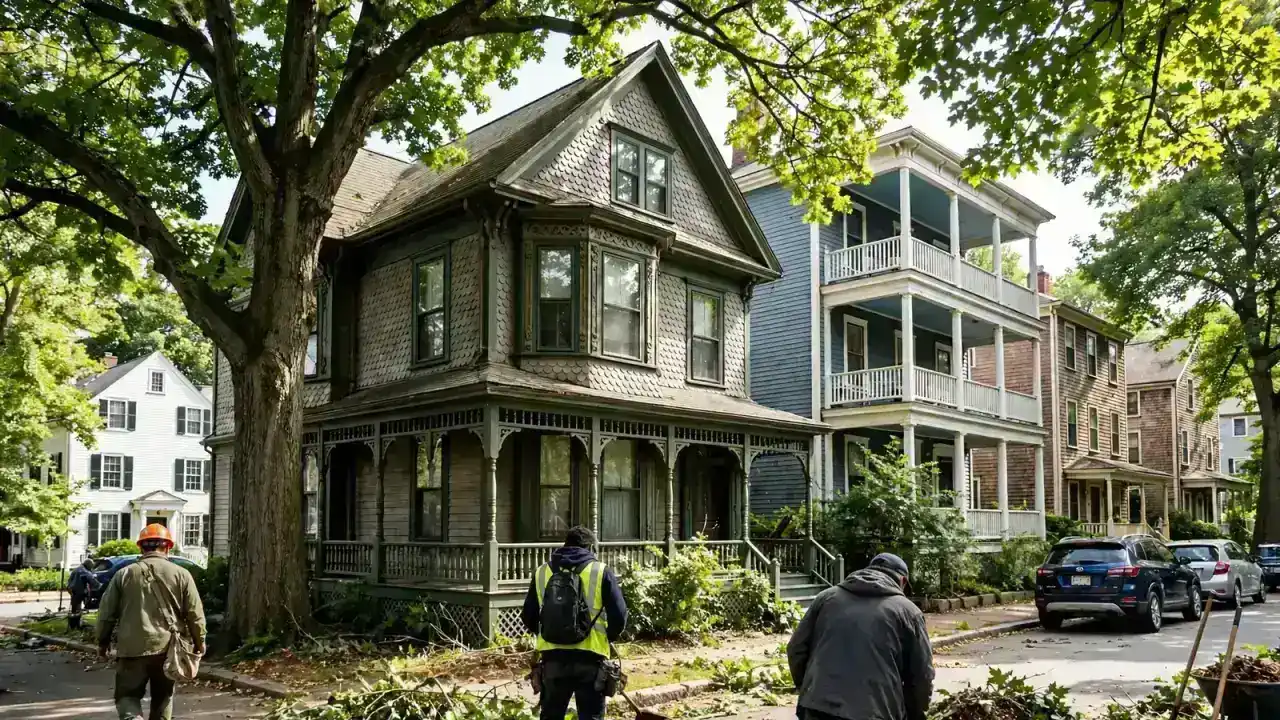
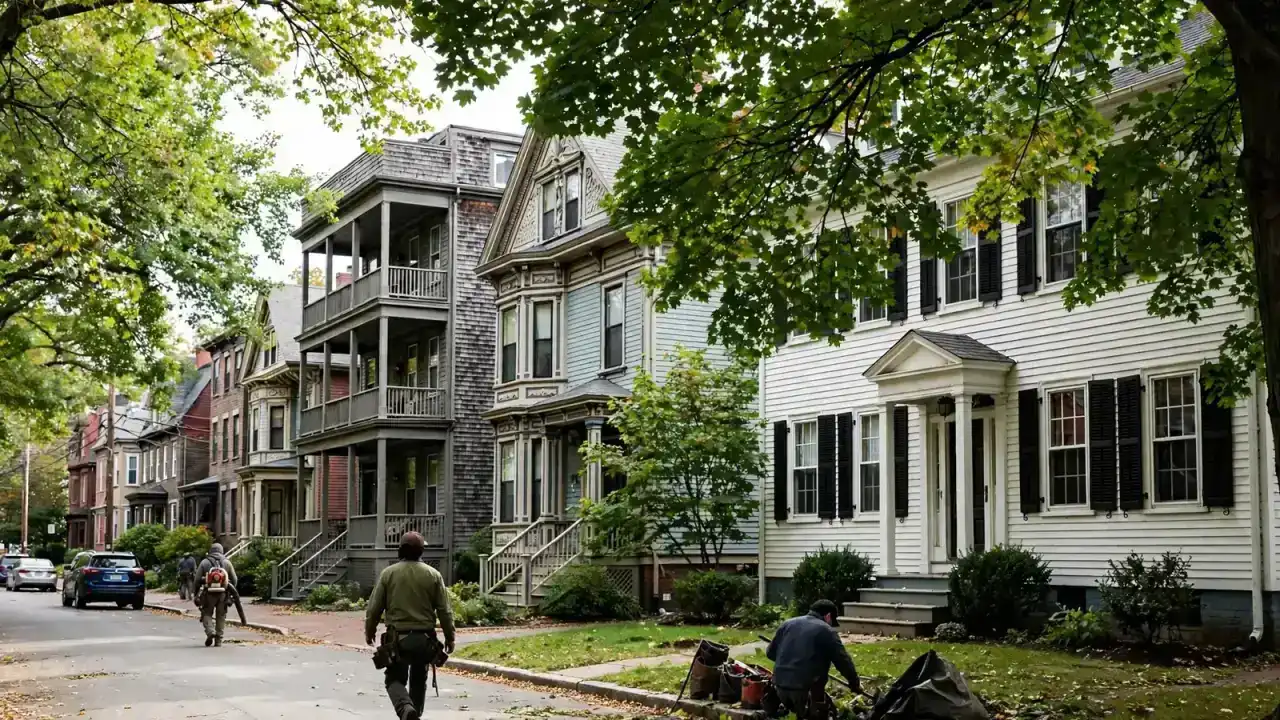
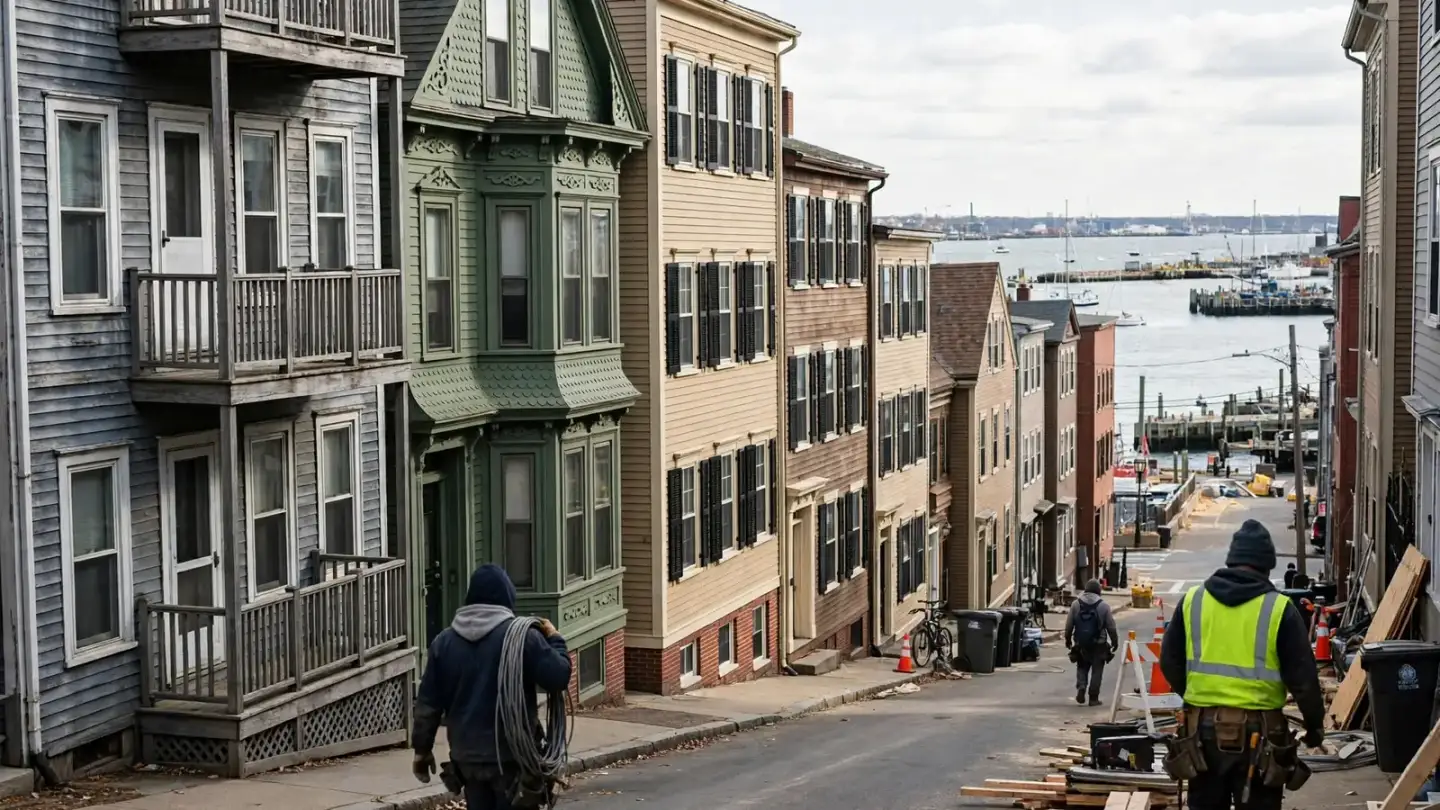
South Boston developed through the nineteenth century as a working neighborhood tied to the harbor, its shipyards and factories. Its housing reflects that history. Narrow wood-frame rowhouses and attached houses line many streets, built shoulder to shoulder with shared or nearly touching side walls. Two-families and triple-deckers fill other blocks, and brick rowhouses appear around Dorchester Heights and along the main streets.
Lots are small and deep. Many houses have only their front and rear walls exposed, with side walls either shared or a few feet from the neighbor. Back yards are compact, often reached only through the house or a narrow passage. Recent decades have brought extensive renovation and new construction, so older wood houses sit alongside modern infill buildings with fiber cement and panel cladding.
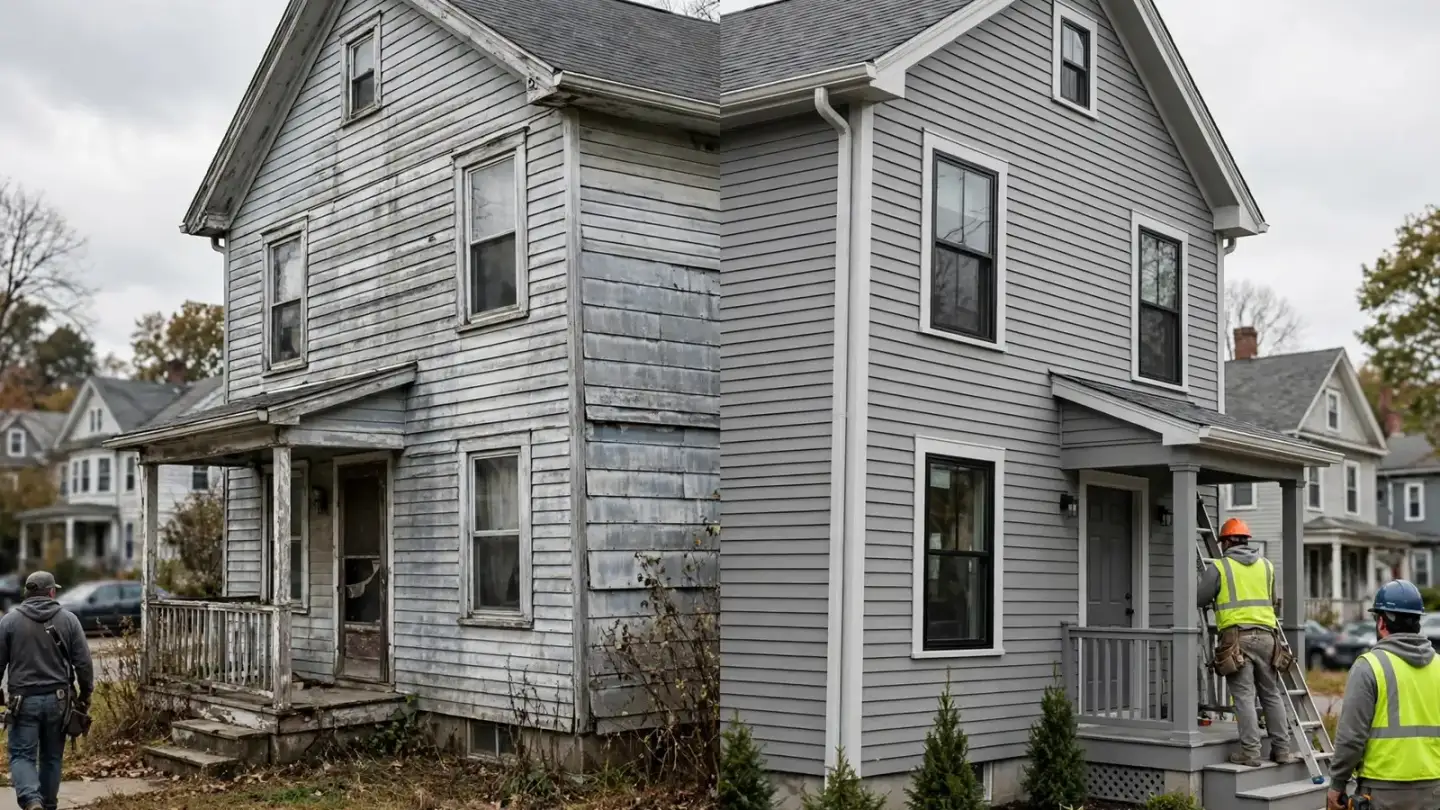
Original cladding on the wood houses was clapboard, much of which was later covered with asbestos-cement shingles, aluminum or vinyl. Many have been renovated recently, sometimes with full tear-offs and new fiber cement or vinyl. Others still carry decades of layers.
Common South Boston siding problems
Siding problems contractors see in South Boston
These come up most often on South Boston houses.
Wind-stripped panels on exposed walls
Houses near City Point and the East Side catch wind straight off the harbor during nor'easters.
Read moreCorroded fasteners and trim
Salt air rusts nails, staples and aluminum trim coil, loosening siding and staining walls.
Read moreGaps between attached houses
Where one house's siding meets its neighbor's, flashing and caulk joints often fail.
Read moreRear additions and decks
Back additions and roof decks added over the years create many roof-to-wall joints that leak.
Read more
Harbor wind in South Boston
Wind exposure on South Boston streets
South Boston sits on a peninsula, with Boston Harbor to the north and east and Dorchester Bay to the south. Streets near City Point, Castle Island and the beaches along Day Boulevard face open water, and nor'easters push wind straight across them. Even streets inland sit on rising ground, such as the hill at Dorchester Heights, where houses catch wind above their neighbors.
Wind loads on siding are highest at corners, gable ends and the tops of walls. In South Boston, rowhouse end units and houses at the end of blocks take the most. Contractors working here often recommend thicker vinyl panels with strong wind ratings or fiber cement, careful nailing into framing and extra attention to corner posts and trim. After major storms, owners should look for panels that have lifted or unlocked before the next storm finishes the job.
South Boston gap figure
Salt air and corrosion in South Boston
Salt air, fasteners and trim in South Boston
Salt spray carried inland from the harbor attacks metal. Ordinary steel nails rust, staining siding and losing their grip. Aluminum trim coil can pit and corrode, and fasteners holding gutters and downspouts weaken. Over time, panels loosen and trim pulls away.
Contractors working near the water typically use stainless steel or hot-dipped galvanized fasteners, corrosion-resistant flashing and trim materials suited to coastal exposure. PVC trim is popular because it does not corrode or rot. Washing siding occasionally to remove salt film helps, especially on walls facing the water.
Attached houses in South Boston
Siding on attached and closely spaced houses
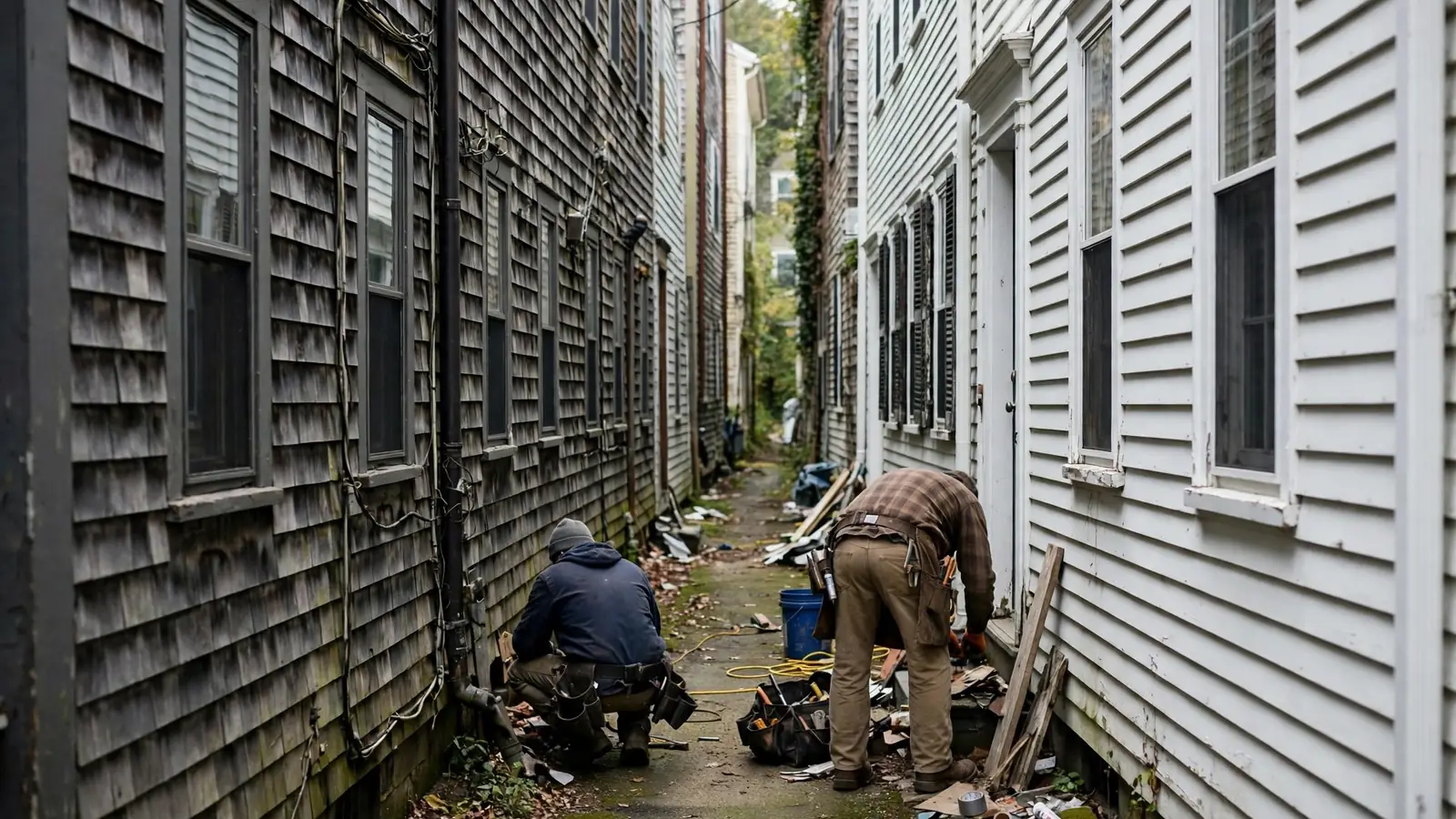
Many South Boston houses share a wall or sit inches from the next one. Where one owner re-sides, the joint between their house and the neighbor's needs careful flashing so water does not run into either wall. Caulked joints there are common, and they fail as houses move and weather. A contractor will usually install metal flashing or a trim detail at the joint and coordinate with the neighbor if their siding needs to be touched.
Side walls in narrow gaps are hard to reach and slow to dry. They may have been skipped in past re-siding jobs, leaving old layers in place. When re-siding, ask whether those walls are included and how the crew will reach them, whether by working from the roof, from the neighbor's side or with special narrow staging.
Rear additions and roof decks
Back additions, roof decks and siding in South Boston
Renovations in South Boston often add rear extensions, dormers and roof decks to gain space and views. Each adds roof-to-wall joints, deck ledgers and door thresholds that need flashing. When those were built without proper details, water runs behind siding where few people look. Contractors repairing or replacing siding on the back of a South Boston house frequently find rot at deck ledgers, around rear doors and below dormers.
Roof decks deserve special attention. Water from the deck surface, railing posts through the roof and doors onto the deck all create leak paths. If siding near a roof deck is stained or soft, have the deck connection checked as part of the repair.
Lead and older layers in South Boston
Older paint and layers on South Boston houses
Most of South Boston's wood houses predate 1978, so the original clapboard likely carries lead paint. Paid work disturbing it must follow EPA lead-safe rules. [4] With houses so close together and children playing on the sidewalks, containment and cleanup matter. Asbestos-cement shingles found under later siding should be left intact or removed by a licensed abatement contractor.
Permits in South Boston
Permits and rules for South Boston siding work
South Boston is part of the City of Boston, so siding replacement needs a Short-Form permit from Inspectional Services, plus an electrical permit if fixtures move. [3] Projects that change the building, such as adding a roof deck or an addition, require a long-form permit and possibly zoning review, which is beyond a siding project. Dumpsters and staging on the street may need a street occupancy permit.
Massachusetts requires Home Improvement Contractor registration for most work on owner-occupied homes with one to four units, and building codes include fire separation requirements for walls close to property lines, which matter on South Boston's tight lots.
Planning a South Boston visit
Planning a siding visit in South Boston
- 1
Street access
Parking is tight; ask about street occupancy permits for dumpsters and material.
- 2
Neighbor coordination
Staging may need access from a neighbor's yard or roof. Talk to them early.
- 3
Rear access
Note how the crew will reach the back of the house if there is no side passage.
- 4
Roof decks and additions
Mention any decks or additions and when they were built.
- 5
Exposure
Tell the contractor whether the house faces the harbor or sits at the end of a block.
- 6
Photos
Take photos of the front, the rear and any side wall you can reach, plus close-ups of rust streaks, gaps and soft spots, so the contractor can see the house before visiting.
South Boston house types
South Boston house types and siding notes
| House type | Where common | Siding notes |
|---|---|---|
| Wood rowhouse | East Side, City Point | Shared walls, front and rear siding, wind exposure |
| Triple-decker | West Side, Andrew Square area | Stacked porches, layered siding |
| Two-family | Throughout | Tight side yards, rear additions |
| Renovated condo buildings | Throughout | Fiber cement and panel cladding, association approvals |
| Brick rowhouse with wood rear | Dorchester Heights area | Wood rear walls and bays need siding care |
Choosing materials in South Boston
Siding materials that suit South Boston
Fiber cement is popular in South Boston for its impact resistance, noncombustibility and painted look, which suits the neighborhood's mix of older and renovated houses. Vinyl remains common on triple-deckers and two-families. In exposed locations, choose products with strong wind ratings and fasteners suited to salt air. PVC trim avoids rot and corrosion. For houses close to neighbors, ask about fire separation requirements, which can affect material choice on side walls.
Condo buildings in South Boston
Siding work on South Boston condominiums
Many South Boston triple-deckers and two-families have been converted to condominiums. Exterior walls are usually common property, so the association decides on siding work. Associations generally want a whole-building approach so materials and colors match. Unit owners should start with the association before calling about siding on their part of the building.
Coastal flooding and siding
Flood risk and the bottom of South Boston walls
Climate Ready Boston identifies parts of South Boston as exposed to coastal flooding in major storms, especially low-lying areas near the waterfront and the Fort Point Channel side. Where flooding is a risk, the bottom of walls matters. Siding and sheathing near grade should be detailed to drain and dry, with materials that tolerate getting wet. If your house sits in a low-lying area, ask the contractor about flood-resistant details at the base of walls.
Winter in South Boston
Winter storms on South Boston walls
South Boston's winter storms combine wind, wet snow and salt spray. Snow drifts against seaward walls, and ice forms on porches and roof decks. The base of walls stays wet, and wind drives snow into joints. Clearances at the bottom of siding, flashing at decks and roofs, and well-fastened corner and trim pieces help houses here come through the season without damage.
Inspecting after storms in South Boston
What to check after a South Boston storm
After a strong storm, walk your block and look up at the front walls, cornices and any bays. Check the rear of the house from your yard or deck for lifted panels near roof decks and additions. Note any rust streaks that appeared after the storm, which can signal fasteners failing. Photograph damage and call before the next storm.
South Boston sections up close
Siding notes for South Boston's sections
- City PointThe eastern tip near Castle Island and Pleasure Bay, with rowhouses and two-families facing open water. Wind ratings, salt-resistant fasteners and storm checks matter most here.
- East SideDense blocks of wood rowhouses and two-families between Dorchester Street and City Point, many renovated in recent decades. Shared-wall flashing and rear additions are common topics.
- Dorchester Heights and Telegraph HillHigher ground around the monument, with brick and wood rowhouses and views over the harbor. Houses here catch wind above their neighbors.
- West Side and Andrew SquareTriple-deckers, two-families and newer buildings closer to the Red Line and the old industrial edge. Layered siding and stacked porches are typical.
- Along East and West BroadwayMixed-use buildings with apartments above shops, often with wood rear walls and bays behind brick or storefront facades.
Front facades in South Boston
Front facades and bays on South Boston houses
Because many South Boston houses are attached, the front facade is the most visible wall and often the only one seen from the street. Bays, cornices and entry hoods give these facades their character, and they are also where water finds its way in. Cornices wrapped in aluminum may hide rotted wood. Bay roofs need flashing where they meet the wall. Entry hoods and stoops send water toward the base of the wall.
When re-siding the front of a South Boston house, contractors often rebuild cornice trim, add proper flashing at bay roofs and restore window trim proportions. Owners who want a traditional appearance often choose fiber cement lap siding with flat PVC trim, which gives crisp painted lines that last in salt air.
Rear walls in South Boston
Rear walls, porches and stairs in South Boston
The backs of South Boston houses tell a different story from their fronts. Rear porches, exterior stairs, additions and roof decks have been added and rebuilt over the decades, often without careful flashing. Rear walls also see less attention, so siding there may be older, more damaged and layered. A contractor assessing a South Boston house will usually spend as much time at the back as the front.
Rear exterior stairs and porches in multi-family buildings must meet egress and safety rules. If siding work requires removing or altering them, that may need additional permits. Ask the contractor to keep porch and stair work clearly separated from siding in the scope.
Renovated South Boston houses
Siding on recently renovated South Boston houses
Many South Boston houses have been gut-renovated in the past two decades, often with new fiber cement or vinyl siding. Even newer siding can have problems: missing kick-outs at roof decks, unflashed butt joints on fiber cement, and vinyl nailed too tight. If your renovated house shows stains, soft spots or waves, the issue is likely an installation detail rather than the material, and targeted repairs can often fix it.
Washing and maintenance in South Boston
Maintaining siding near the water
Salt film builds up on siding near the harbor, dulling finishes and speeding corrosion. Rinsing walls gently with fresh water a couple of times a year helps, especially after winter storms. Avoid high-pressure spraying upward under laps. Check fasteners, gutters and trim at the same time, and replace rusted pieces with corrosion-resistant ones before they fail.
Timing South Boston work
Scheduling siding work on a South Boston block
Spring and fall suit siding work best on South Boston's exposed streets, when storms are less frequent and temperatures are mild. Summer brings beach traffic near City Point and heavy parking demand, which can complicate dumpster placement. Winter work is possible but slower on windy days, when crews cannot safely work high on staging. Allow time for permits, neighbor coordination and any abatement before the start date.
Insulation on South Boston rowhouses
Adding insulation during a South Boston re-side
Rowhouses lose less heat through shared walls, but their front and rear walls are often uninsulated and exposed to cold harbor wind. Re-siding is a chance to add exterior insulation and air sealing on those walls without disturbing finished interiors. On tight lots, the added thickness must not push siding over a property line or beyond what fire separation rules allow, so ask the contractor how they handle it.
Fire separation on South Boston lots
Fire safety between closely built South Boston houses
On South Boston's tight lots, a fire in one house can spread to the next through exterior walls. Building codes set requirements for walls close to property lines, and those rules can influence which siding materials and assemblies are allowed on side walls. Noncombustible cladding such as fiber cement is a common choice where houses nearly touch. A contractor who works in Boston regularly will know how spacing affects your project and whether the building department will ask about it.
Colors and finishes in South Boston
Colors and finishes near the harbor
Strong sun reflected off the water and salt air fade finishes faster on harbor-facing walls. Lighter colors and factory finishes hold their appearance longer. Many South Boston owners choose classic grays, blues and whites with white or dark trim that suit the neighborhood's rowhouse streets. Look at samples on your own wall in morning and afternoon light before deciding.
South Boston siding questions
Questions about siding in South Boston
Do I need a permit for siding in South Boston?
Yes. Siding replacement needs a Short-Form permit from Boston's Inspectional Services Department. An electrical permit is needed if fixtures move.
What siding holds up best near the harbor?
Fiber cement and thicker, wind-rated vinyl both work. Use stainless or hot-dipped galvanized fasteners and corrosion-resistant trim, such as PVC, near salt air.
Can a crew re-side my side wall if it is inches from my neighbor?
Sometimes, with narrow staging or access from the roof or the neighbor's property. Ask the contractor how they would reach it and talk to your neighbor early.
Why does siding near my roof deck keep leaking?
Deck ledgers, railing posts and doors create leak paths. If they were not flashed properly, water runs behind the siding. Have the deck connection checked.
Does my condo association need to approve siding work?
In most condo buildings, exterior walls are common property, so yes. Start with the association.
Will salt air ruin aluminum trim?
It can corrode over time, especially near the water. PVC trim or properly coated metals last longer in salt air.
How can I check a contractor's registration?
Ask for their Massachusetts Home Improvement Contractor registration number and check it on the state's Contractor Hub.
Can my rear wall be re-sided without touching the front?
Yes. Many owners re-side rear walls first because they take the most damage. Matching material and color with the front matters if both are visible from the street.
Do roof decks need permits separate from siding?
Yes. Building or changing a roof deck needs its own permit and review. Siding repairs around an existing deck fall under siding work.
Is fiber cement worth it on a South Boston rowhouse?
Many owners think so. It resists impact and fire, holds paint well in salt air and gives a crisp traditional look. It is heavier and needs dust-controlled cutting on tight lots.
Are rust streaks on my siding a problem?
Often they mean fasteners are corroding. Loose fasteners let panels and trim move. Have a contractor check and replace them with corrosion-resistant ones.